
What Is to Be Done About Law and Order? Crisis in the Eighties, by John Lea and Jock Young (Penguin, 1984), 284 pp. £2.95 paperback.
This book has two themes: the need for “effective policing responsive to the needs of the community and the ending of the drift towards a political marginalisation of the young unemployed” (p. 231). The authors outline two paths of advance. On the one hand, democratic accountability of the police; on the other, increasing the political power and sense of belonging of those who turn to street crime.
These ideas fairly accurately represent the latest stage in the thinking of a whole generation of radical criminologists spawned in the 1960s and 1970s. They believe the left should turn its attention away from exposing the crimes of the rich and powerful, and address the problem of street crime in which victim and offender are both working class. This is to key into the concerns of a majority of the population. Not to do this, claim Lea and Young, is tantamount to “leaving the running to the conservative press” on the issue of law and order.
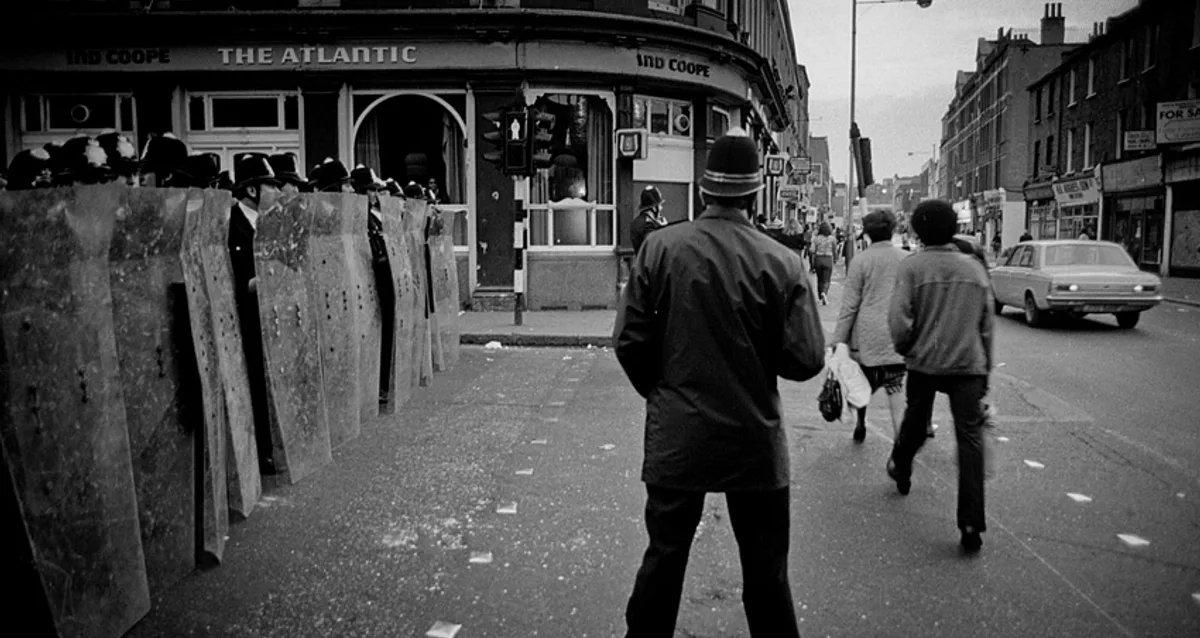
By far the best part of the book is the first four chapters. Here they succinctly summarise many of the valuable insights of radical criminology; namely, the problem with taking official statistics at face value, the complexity of the causes of crime, the truth about black crime, the tooling up of the police force, and the political alienation that lies behind working-class crime.
The problems occur when the authors advance a solution. They fundamentally misconceive the nature of the police, an arm of a class state. They believe the state has only “occasional recourse to violence” (p. 204). Consensus and co-operation are both achievable and desirable. The truth is, however, that intra-working-class crimes against person and property have long existed, but the police force dates from the 1830s and 1840s, when working-class concentration in urban industrial centres demanded a repressive force within these cities.
Revolutionaries do not, as Young and Lea suggest, dismiss the reality of working-class crime or its effects on their victims. What we do recognise, however, is that police protection of the “citizen”, while real, is secondary, and police repression of the unions and workers’ struggle is the fundamental essence of the police. This latter fact reduces the book’s democratic reforms to utopian schemas because the ruling class cannot allow the executive of its state to be held accountable. The book fails – despite being well-written, well-researched and thought-provoking – because it peddles the illusion that such accountability can be more than a transitory product of revolutionary crisis on the road to the destruction of the police, and believes that it can be a normal stable feature of bourgeois democracy.