After Palestinian fighters killed two Israeli soldiers and wounded three others at a checkpoint outside Hebron on 23 October, Prime Minister Benjamin Netanyahu announced a major new offensive in the occupied West Bank. Both Palestinian gunmen were killed in the exchange of fire.
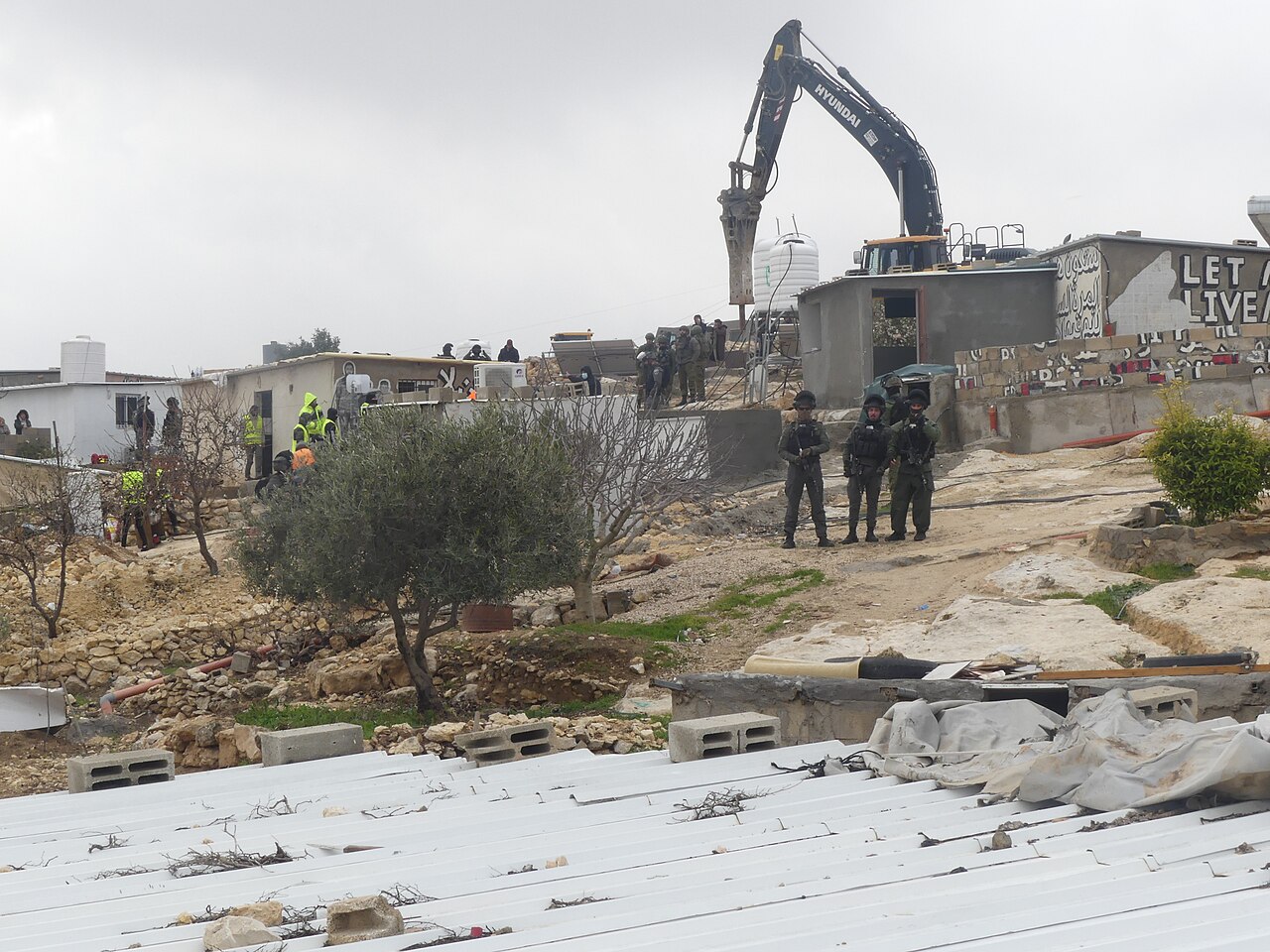
Israeli forces immediately sealed off Hebron and neighbouring Halhul and began bulldozing homes and businesses in the Farsh al-Hawa area. Residents of the al-Jalda and Ein Deir Baha neighbourhoods were ordered to evacuate. By 24 October, Palestinian officials reported that around 1,500 people had been forced from their homes.
Netanyahu, visiting the area, boasted of his plans: “First of all, we will act to destroy this place, to change it completely.”
He announced that the army would evacuate residents, search homes and destroy what it designated terrorist infrastructure. He explicitly invoked the “successful and aggressive model” used in the refugee camps of the northern West Bank in early 2025. According to UNRWA, operations in Jenin, Tulkarem, Nur Shams and El Far’a displaced some 40,000 Palestinians.
Netanyahu threatened an even larger operation across the West Bank, which he claimed would be the biggest since Israel’s occupation began in 1967. He also praised the settlers as models for the Israeli state and pledged further settlement expansion.
Not to be outdone, Israel’s far-right Finance Minister Bezalel Smotrich called for the Palestinian Authority, whose powers are already severely restricted by the occupation, to be abolished. He demanded military operations on the scale of those carried out in Gaza and Lebanon, aimed at dismantling the PA and eliminating armed resistance.
National Security Minister Itamar Ben-Gvir likewise demanded that the PA be dismantled and called for Palestinians to be prevented from using roads in the occupied territory.
Nor does Israel’s main opposition candidate, former army chief Gadi Eisenkot, offer a break with the occupation. Although he claims to oppose settler violence and unauthorised outposts, he supports Jewish settlements approved under Israeli law (which remain illegal under international law) and has declared that the principle of two states for two peoples is “a mistake”. He insists that Israel retain overall security control over the occupied territories. Following the Hebron attack, he praised the soldiers and security forces operating “day and night” on Israel’s various fronts.
These statements come just days before Israel’s 27 October election, with Netanyahu and his far-right allies competing to demonstrate their determination to crush Palestinian resistance.
The Israeli army describes its offensive as a security operation. Yet entire neighbourhoods are being emptied, homes and businesses demolished, and families with no connection to the checkpoint attack driven from their homes. Such reprisals against civilians constitute collective punishment, expressly prohibited by Article 33 of the Geneva Convention.
The connection between military repression and the expansion of settlements is explicit in Netanyahu’s own words. The methods used to empty the northern West Bank refugee camps are now being extended to Hebron, threatening further mass expulsions and the consolidation of Israeli control over Palestinian land.
The international Palestine solidarity and working-class movements must demand an end to the political, economic and military support that sustains Israel’s occupation. In Britain, that means pressing the government to end all arms supplies and military cooperation, impose sanctions and break its complicity in Israel’s crimes.