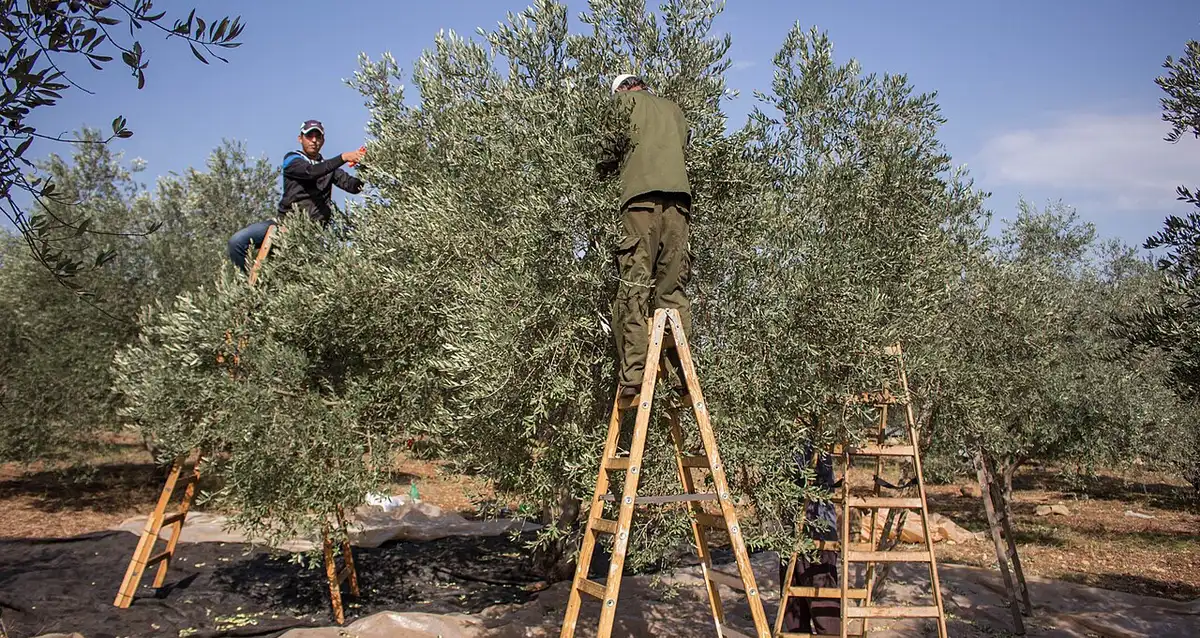
Since the start of the 2026 olive harvest in the occupied West Bank, there has been a surge of brutal violence by Zionist settlers against Palestinian villagers. Gangs of black-clad, masked settlers, armed with clubs, firearms and slingshots, have attacked farmers, stolen their crops, and put olive groves to the torch and bulldozer.
According to the United Nations, there were 199 harvest-related settler attacks between 1 September and 12 October, resulting in one Palestinian death, 124 injuries and damage to more than 2,500 trees and saplings. This was before the official harvest season had even begun.
On 16 October, in Abu Falah near Ramallah, some 80 settlers descended on villagers gathering their olives. The attackers occupied positions above the groves, using slingshots to hurl rocks at the farmers. Israeli military vehicles arrived, but the attack continued. When Palestinians picked up stones to defend themselves, Israeli soldiers fired tear gas in their direction.
The olive harvest is both an economic necessity and a time of celebration for Palestinian rural families, an expression of their national identity in the face of dispossession. Olive cultivation supports between 80,000 and 100,000 families in the West Bank. The income has become even more important since Israel revoked work permits for Palestinians following the Hamas-led attack of 7 October 2023.
The destruction of olive trees, many of them cultivated by the same families for generations, threatens both their livelihoods and their continued presence on the land. Uprooting these trees destroys years of cultivation and attacks one of the most enduring symbols of the Palestinians’ attachment to their homeland.
The attacks burst into the Western mainstream media when, on 16 October, 63-year-old Washington Post photojournalist Heidi Levine was severely beaten by masked settlers while covering the harvest in Abu Falah. Despite wearing a protective vest identifying her as press, she was knocked to the ground and repeatedly kicked. She suffered a broken rib, four fractured vertebrae and a serious hand injury. Palestinians and fellow journalists intervened to rescue her.
Video footage of the attack forced US ambassador Mike Huckabee, a fierce supporter of Israel, to describe it as a “despicable act of terror”. Secretary of State Marco Rubio was more guarded, saying the incident was “not a good look” for Israel.
The following day, settlers attacked European diplomats visiting the olive harvest near Taybeh and assaulted a 78-year-old French mayor. Unusually, ten suspects were subsequently arrested in connection with the two incidents, but by 22 October nine had been released into house arrest.
From her hospital bed, Levine insisted that the real story was what was happening to Palestinian villagers regularly: “I never wanted the story to be about me but about the people I’ve tried to document.”
A system of dispossession
The attackers are often described as ‘hilltop youth’, supposedly a collection of unruly young extremists operating outside Israeli society’s mainstream. Netanyahu and Israel’s Western apologists present them as a handful of rotten apples whose violence embarrasses the state.
In reality, these fascistic gangs are mere auxiliaries to the settlement movement and the Israeli army. They occupy strategic hilltops and establish outposts from which to organise attacks, frequently under the protection of Israeli soldiers. The violence drives Palestinian farmers from their land, which settlers then seek to occupy permanently.
The Israeli state reinforces this campaign through military orders restricting Palestinian access to their own property. According to the Israeli organisation Peace Now, the army has prohibited Palestinian farmers from entering some 8,830 hectares of land without advance military approval. This is nearly 30 per cent more than in 2025 and covers almost one-fifth of the West Bank’s olive-growing land.
Meanwhile, the area from which the army excludes Israeli settlers to prevent violence has decreased, from 1,070 hectares in 2025 to just 689 this year.
Peace Now describes the policy as “a system of dispossession and plunder”. As settlers seize more hilltops with government encouragement, the army closes surrounding land to Palestinians on the pretext of protecting the illegal outposts.
Where permission to harvest is granted, it can be restricted to a day or two, sometimes after the crops have already been stolen or left to rot. Soldiers have also prevented farmers from reaching groves where no formal restrictions exist.
Settlement is accelerating. During 2025 alone, the government approved 54 new settlements, while 86 new outposts were established, 60 of them agricultural farms. A handful of settlers occupying one of these outposts can establish control over far more land than the outpost itself occupies, using armed patrols, grazing and intimidation to drive Palestinian farmers and shepherds away. The army then reinforces these territorial conquests with military exclusion zones.
This policy did not begin with Netanyahu. The establishment of a Jewish state in a country already inhabited by Palestinians entailed their mass dispossession in 1948. The occupation of the West Bank in 1967 and subsequent settlement expansion extended this process into new territory. The settlers’ violence and the state’s military and administrative measures are complementary instruments of colonisation.
The fundamental contradiction remains the Zionist state’s claim to national sovereignty over a territory whose Palestinian inhabitants continue to assert their own national rights. Each extension of Israeli control brings further restrictions on those who remain, and creates new pressures to abandon their land. The settlers’ attacks are not an aberration from this process but one of the principal means of advancing it.
Netanyahu and the opposition
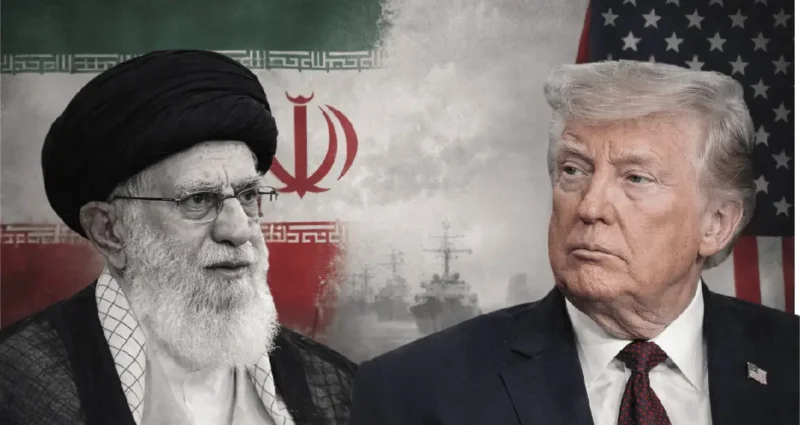
With Israel’s 27 October general election approaching, Netanyahu faces the possibility of losing his parliamentary majority. Donald Trump has thrown his weight behind him, calling him “a Great Warrior Prime Minister” and, in a classic of Trumpian doublespeak, “an even greater Partner for Peace” in the war against Iran.
The endorsement makes clear the importance Washington attaches to Israel’s military role in the Middle East. Whatever disagreements arise between American presidents and Israeli governments, the United States continues to arm and sustain its principal regional ally.
But an electoral defeat for Netanyahu would offer no fundamental solution for the Palestinians of Gaza or the West Bank.
The leading opposition politicians — Yair Lapid, Gadi Eisenkot, Yair Golan, Naftali Bennett and Avigdor Lieberman — have agreed to cooperate in forming what they call a “Zionist, statesmanlike” government.
There are differences between them. Golan’s Democrats recognise the possibility of Palestinian statehood at some unspecified future date, while Bennett and Lieberman openly reject it. Some oppose annexation or particular forms of settlement expansion. But none offers a programme for ending the Zionist state’s domination of the Palestinians and recognising their full national rights.
Their disagreements with Netanyahu concern principally the leadership of the state, the conduct of its wars and the damage being done to Israel’s international standing. The openly racist and expansionist declarations of National Security Minister Itamar Ben-Gvir and Finance Minister Bezalel Smotrich have become a liability in the eyes of many of Israel’s Western supporters.
These differences reflect a real tension within the Israeli establishment over how far and how fast to pursue annexation and settlement, how openly to employ repression, and how to preserve the Western military, political and diplomatic support on which the state depends.
A government without these ministers might restrain some of the settlers’ more blatant violence. It would nevertheless preserve the military power, settlements and national privileges on which Palestinian oppression rests.
This is the fundamental obstacle to the endlessly promised two-state solution. Israeli settlements, roads and military zones continue to fragment the West Bank into disconnected enclaves, while the state that controls them steadily extends its hold over the territory supposedly reserved for Palestinian sovereignty.
Nor could equal national rights be secured simply by proclaiming a democratic state over the whole territory while leaving intact the armed forces, land laws and state institutions through which Jewish national supremacy is maintained. A democratic settlement would require dismantling those structures of oppression.
Break imperialist support for Israel
The steadfast resistance of the Palestinian people to further expulsion from their homeland, the horrors inflicted on Gaza and the pogroms in the West Bank have helped build a mighty international solidarity movement.
Millions have demonstrated against Israel’s crimes, despite attempts by Zionist organisations and Western governments to smear the movement as antisemitic. Jewish-Israeli human rights activists and Jewish anti-Zionists around the world have played an important part in exposing these attacks.
Opposition to Zionism is not hostility towards Jews. Zionism is a political movement whose project of establishing and maintaining a Jewish state in Palestine has depended upon the dispossession and subordination of its Palestinian inhabitants. The expulsion of hundreds of thousands during the Nakba of 1948, the continued denial of the refugees’ right to return and the colonisation of the West Bank are expressions of this national oppression.
Zionism is racism because it establishes the national rights of one people at the expense of another. The right of Israeli Jews to live in Palestine, with full democratic and national rights, cannot justify the denial of those same rights to Palestinians.
The solidarity movement has exposed Israel’s crimes and forced politicians who long defended or concealed them to issue verbal condemnations. But Western governments continue to supply the arms, intelligence, diplomatic protection and economic relationships that sustain the Zionist state.
The limits of these condemnations were exposed by Britain’s own Foreign Secretary, Ed Miliband, who in September announced plans to ban imports from illegal settlements and sanction businesses involved in their expansion. These modest measures, which leave Britain’s wider relationship with Israel intact, provoked an angry Israeli response, including threats to close Britain’s consulate in Jerusalem. After negotiations, the consulate was downgraded to a smaller mission.
The Israeli government’s reaction revealed how closely it identifies the settlement enterprise with its own sovereignty. Britain’s reluctance to go further exposes the contradiction in Western policy: proclaiming support for Palestinian statehood while sustaining the state which continues to colonise Palestinian land.
Their support is not simply the result of the influence of pro-Israel lobbyists or personal sympathy for Zionism. Israel is a powerful military ally through which the United States and its partners seek to maintain their domination of the Middle East, defend their strategic interests and confront governments and movements that challenge them.
That is why condemnations of settler violence coexist with military cooperation and support for Israel’s wars.
We must step up the campaign to end this collaboration. In Britain that means demanding a complete arms embargo, an end to military and intelligence cooperation with Israel, and no use of British facilities to assist its offensive operations.
Trade unions must campaign to stop the production, transport and handling of arms destined for Israel. Universities and colleges should break institutional links that assist or legitimise the occupation. We should demand the severing of diplomatic relations, the closure of Israel’s embassy and the expulsion of its diplomats.
These demands must be taken into the trade unions, workplaces, campuses and streets. The organised working class has the potential to do far more than appeal to governments whose policies make them complicit in Israel’s crimes.
At the same time, we must strengthen links of international solidarity with all Israelis who bravely oppose their government’s actions, and fight for a common struggle of Jewish and Arab workers against Zionism and imperialism.
When we say that Palestine must be free from the river to the sea, this does not mean the expulsion, let alone the genocide, of its Hebrew-speaking population. It means ending Zionist national supremacy and establishing equal democratic and national rights for all who live there, including the right of Palestinian refugees to return.
We fight for a workers’ republic in which land and workplaces are collectively owned and controlled by the working people themselves, Arab and Jewish alike. Such a republic would be part of the revolutionary struggle for a Socialist United States of the Middle East, freeing all its peoples from imperialism, exploitation and national oppression.