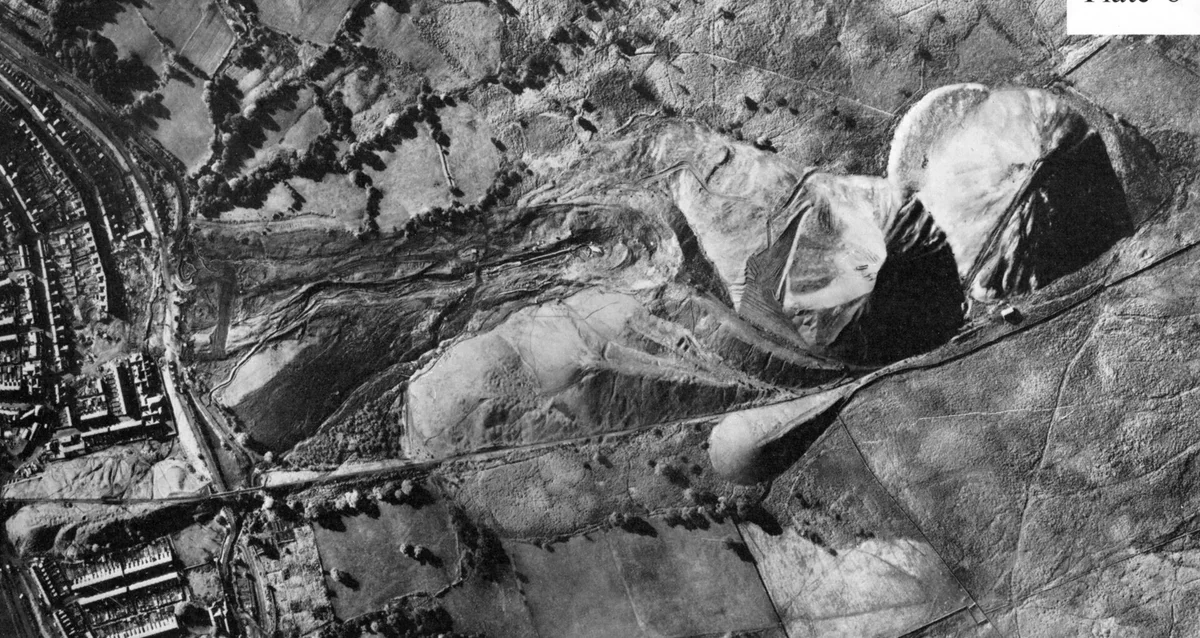
On 21 October 1966, at 9.15am, above the pit village of Aberfan, south of Merthyr Tydfil, some 107,000 cubic metres of coal mining waste broke away from spoil Tip No. 7 at Merthyr Vale Colliery and slid at great speed down the mountainside, destroying a farm, 18 houses and crashing into the primary school below.
The school was full. It was the last day before half-term. The tsunami of slurry killed 116 children and 28 adults, including five teachers. Miners from nearby collieries left work to dig out survivors, some buried up to their necks. The last child to be rescued alive was pulled out at 11am.
The suffering did not end there. A study published in the British Journal of Psychiatry in 2003 found that nearly half the surviving children surveyed had suffered from post-traumatic stress disorder (PTSD), and almost a third were still suffering from it 33 years after the disaster.
The catastrophe was entirely avoidable. The danger had been known for years. But those with the power to prevent it did nothing.
Negligence
As with uranium, gold, oil and other extractive industries, coal mining is intrinsically damaging to the environment. As well as the unsafe working practices endemic to capitalist exploitation of minerals, the question of how to store waste has always been treated as a cost to be minimised.
If the minerals are a ‘gift’ of nature, why shouldn’t the disposal of the waste be nature’s problem? Such was the attitude of the private mine owners, who started production in Aberfan in 1875, and continued under the National Coal Board (NCB) when the pits were nationalised in 1947.
Nationalisation transferred ownership from the coal companies to the state, but it did not put the mines under the democratic control of those who worked in them, or the communities that hosted and served them. The NCB inherited much of the old management, along with its practices and attitudes towards the miners. The coal owners were bought out, but the same managers continued to run the pits, now answerable to the state rather than private shareholders. Workers and local communities had little say over decisions affecting their livelihoods and safety. The pressure to cut costs remained.
Indeed, the tribunal established after the disaster explicitly concluded that the NCB’s complete absence of a proper policy for spoil tips followed directly in the footsteps of its private predecessors.
After filling up the available lowland, mining debris was deposited on the side of the Mynydd Merthyr ridge in seven numbered tips. The ridge had lost much of its topsoil and surface layers through erosion, exposing porous sandstone. Ordnance Survey maps showed numerous water springs on the mountainside. The tips were being soaked from above and below.
Merthyr Tydfil Borough Engineer D. C. W. Jones had warned in July 1963 that depositing slurry on the tip behind the Pantglas schools was a source of danger which he regarded as “extremely serious as the slurry is so fluid and the gradient so steep that it could not possibly stay in position in the winter time or during periods of heavy rain.”
The warning formed part of correspondence between the council and the NCB. Yet the Coal Board failed to investigate the danger properly.
Neither did the warnings only come in the form of letters and geological surveys. In 1939, at nearby Cilfynydd, a huge quantity of mining waste had collapsed, fortunately without casualties. Slides had also occurred at Aberfan in 1944 and as recently as November 1963, when part of Tip No. 7 itself slipped.
The National Union of Mineworkers (NUM) was not unaware of the danger. Local union representatives raised concerns about the tip at two colliery consultative committee meetings following the 1963 slide. Management offered reassurances, but the promised changes were not carried out and the union failed to pursue the matter.
The conflict between safety and employment was brought into the open by the local Labour MP, S. O. Davies, a former miners’ leader. He told the inquiry that he had feared Tip No. 7 might slide onto the village, but when he raised the danger with local miners they warned him: “You make a row about that and what will happen? They will close down the blessed colliery.” Davies admitted that fear of closure had deterred him from taking further action. The NUM disputed his account, and the tribunal doubted whether he fully appreciated the implications of his testimony. Nevertheless, it concluded that fear of unemployment probably influenced the attitudes of many in Aberfan.
Nor were such fears groundless. The NCB itself had linked the future of the colliery to its tipping facilities. In November 1965, it warned Merthyr council that refusing permission to divert overhead power lines for a proposed reorganisation of tipping could shorten the life of the tipping site, with “a possible similar reaction on the life of the colliery”. Merthyr Vale was not actually scheduled for closure. With hundreds of pits closing across South Wales, miners had good reason to fear that making an issue of the tips could put their jobs at risk.
But there was no need to choose between jobs and safety. The NCB had the engineering expertise and resources to investigate the danger and find safer ways of disposing of the waste. The tribunal concluded that a competent civil engineer examining Tip No. 7 in May 1965 would have ordered tipping to stop immediately. Instead, the Coal Board carried on dumping waste above the village, despite repeated warnings.
This was a period when the NUM leadership, under Sir Sidney Ford, accommodated itself to the NCB’s programme of rationalisation and closures. Hundreds of collieries closed and mining employment almost halved during Ford’s presidency. The supposed common interest between workers and management under nationalisation did not prevent the loss of jobs, any more than it guaranteed their families’ safety.
In 1965 the NCB finally circulated new guidance on tipping practices. But it was too little, too late. There was still no effective national policy for tip safety, and the existing tips at Aberfan were left in place.
The men working on the tips themselves had little power to intervene. Leslie Davies, chargehand of the tipping gang, told the tribunal: “I am just a working chargehand.” His job was to get rid of the mining waste, not to determine whether the mountainside was safe. The tribunal absolved the tipping gang of blame: they had neither the training nor the authority to make those decisions. That power lay with management.
Denial
One Lord Alfred Robens was chairman of the NCB from 1961 to 1971. Although Robens had once been a Labour MP for a mining constituency and was initially considered on the left, like many before and since he ended up firmly on the right.
It was a Tory prime minister, Harold Macmillan, who appointed Robens. His close relationship with the NUM leadership made him particularly useful in overseeing the contraction of the coal industry with minimal risk of strike action. When Harold Wilson took over in Number 10, he kept Robens on.
Robens ruled the NCB like an industrial baron. Hearing of the disaster on the morning of 21 October, he saw no reason to cancel the ceremony installing him as Chancellor of the University of Surrey. While miners and local residents were desperately digging through the slurry to find survivors, Robens was attending the ceremony in Guildford. NCB officials even falsely assured the Secretary of State for Wales, Cledwyn Hughes, that their chairman was personally directing relief work. Robens did not reach Aberfan until the following evening, some 36 hours after the disaster. When he finally appeared, he told television reporters that the landslide had been caused by an underground spring whose existence could not have been known — although the springs were marked on Ordnance Survey maps and familiar to local residents.
The tribunal set up to investigate the disaster sat for 76 days, making it the longest such inquiry at the time. It heard from 136 witnesses and singled out Robens in particular for “giving inconsistent answers”.
Its report was published on 3 August 1967. Its conclusions were damning. The tribunal agreed with counsel for the bereaved families that the National Coal Board had “stubbornly resisted every attempt to lay the blame where it so clearly must rest — at their door”. Its senior officials had known, even before the inquiry began, that the instability of Tip No. 7 could have been foreseen.
Nine NCB officials were criticised, though none were disciplined. Nobody was prosecuted. The NCB eventually paid out around £160,000 in compensation, including £500 for each child killed, having originally offered just £50 to bereaved families.
Robens carried on his subterfuge even after the verdict. The story he concocted was that he had offered his resignation, which was promptly turned down by the government.
In 1997, the release of previously secret government papers revealed that Robens had helped determine not only the wording of his resignation letter but also the reply rejecting it, sent by Minister of Power Richard Marsh. He had even organised a campaign of support among NUM branches, with the cooperation of the Coal Board and union leadership.
For his contempt and evasion of responsibility, Robens was rewarded with another four years at the NCB, overseeing further pit closures, and subsequently with appointments to the boards of industry and finance. He was even appointed by Barbara Castle’s Labour government to chair an inquiry into workplace health and safety in 1970. Its 1972 report recommended greater reliance on industry’s self-regulation rather than detailed statutory requirements.
Injustice
The working-class community of Aberfan had to fight for every ounce of justice it got.
The Mayor of Merthyr helped establish the Aberfan Disaster Fund, which eventually raised £1.75 million to assist those who had lost their homes, their families and their livelihoods. Nearly 90,000 contributions came from ordinary people across Britain and worldwide. This generosity stood in stark contrast to the attitude of the Coal Board and government.
The treatment of the bereaved by the Charity Commission added insult to injury. Its officials even considered requiring parents to demonstrate the closeness of their relationship with their dead children before receiving payments from the fund.
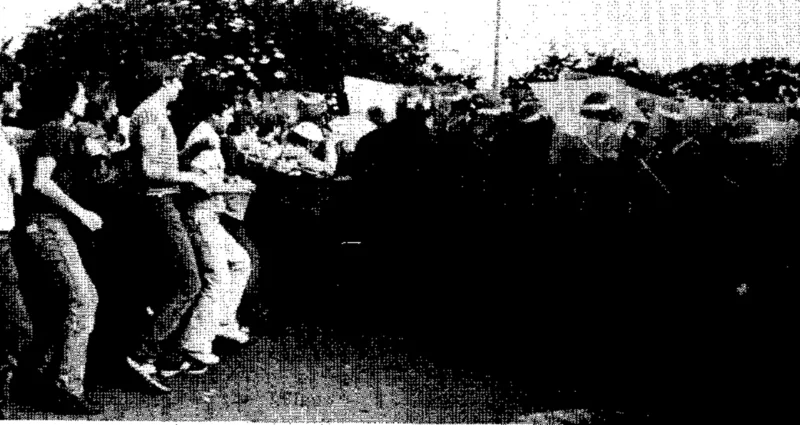
Meanwhile, the NCB stubbornly dragged its heels over removing the remaining tips from Mynydd Merthyr. In 1968, frustrated residents confronted Welsh Secretary George Thomas at the Welsh Office, dumping coal slurry on the floor to demonstrate their determination to have the danger removed.
Even then, Harold Wilson’s government insisted that the Disaster Fund contribute £150,000 towards the cost of dismantling the tips. Money donated to help the victims of the NCB’s negligence was being used to relieve the NCB and the state of their own responsibility.
S. O. Davies, whose fear of pit closure had deterred him from acting before the disaster, subsequently became an outspoken critic of the treatment of Aberfan. He opposed using the Disaster Fund to pay for removing the tips and boycotted a ceremony honouring Harold Wilson. Deselected by Labour in 1970, officially because of his age, he stood as an independent socialist and defeated the official Labour candidate by more than 7,000 votes. His re-election was a rebuke to a Labour establishment which had protected the Coal Board while the community struggled for justice.
Only in 1997 did Tony Blair’s Labour government return the £150,000, without interest or allowance for inflation. Another ten years passed before the Welsh Assembly government provided £1.5 million to compensate for the lost value, alongside £500,000 for the Aberfan Education Charity.
The colliery finally closed in 1989. The landscape has been restored, but the wider consequences of deindustrialisation remain. Merthyr Tydfil is still among the poorest parts of Britain, with low household incomes, poor health outcomes and life expectancy significantly below the national average.
This is the legacy of the coalfields after successive waves of pit closures, culminating in Margaret Thatcher’s assault on the mining communities. The industry which had sustained them was destroyed, without the investment and alternative employment needed to secure their future.
But the danger of the coal tips remains. Nearly 2,600 disused coal tips are monitored in Wales, of which 368 are classified as having the potential to affect public safety. Landslides at Tylorstown in 2020 and Cwmtillery in 2024 were reminders that Aberfan’s legacy is not merely historical.
The Welsh government passed new legislation in 2025 to regulate disused mine and quarry tips, with a new authority due to assume responsibility in 2027. The Welsh and British governments have committed more than £230 million towards coal-tip safety. But the cost of making the remaining tips safe will be far greater. The communities that supplied generations of coal to British industry should not have to fight over who pays to clear up the mess left behind.
Nor is this contradiction confined to mining. Scottish Water remains publicly owned, while Welsh Water has operated without shareholders since 2001. Yet Welsh Water was responsible for 155 pollution incidents in 2024, according to Natural Resources Wales. Different forms of ownership have not, by themselves, eliminated the conflict between controlling expenditure and protecting people and the environment.
And this is just in Britain. Across the world, mineral extraction continues to expose workers and communities to dangerous conditions and environmental destruction. Cobalt mining in the Democratic Republic of Congo and gold mining in Sudan are entangled with the struggle for control of resources, involving regional and imperialist powers.
The lesson of Aberfan is not simply that private industry is dangerous. Nationalisation had replaced the coal owners with state-appointed managers, but it had not given the miners or their communities control over production, investment or safety. The NCB possessed the knowledge and resources to prevent the disaster, while the people living beneath the tips had neither the power to compel action nor any guarantee that challenging management would not threaten their jobs. When disaster struck, those responsible were protected by the same political establishment that had appointed them.
Sixty years on, the demand must be for a fully funded programme to make every dangerous coal tip safe, with public disclosure of risks and effective control by workers and local communities over the work required. The costs must not be imposed on the people who have already paid for the industry’s profits with their labour, their health and, in Aberfan, their children’s lives.
Ultimately, ending the reckless exploitation of labour and nature means expropriating the owners of the mining industries and placing them under the democratic control of the workers who operate them and the communities that depend upon them. That fight, for a socialist and internationalist solution, begins with the struggle for safety, accountability and justice for those whose lives have been sacrificed to the interests of capital.