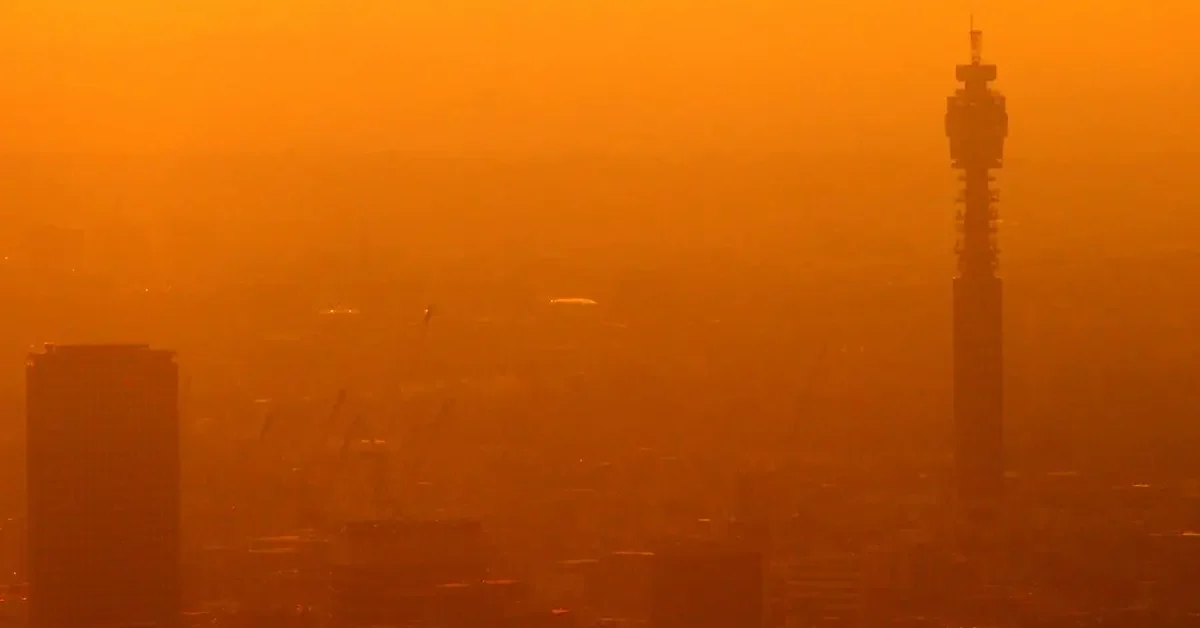
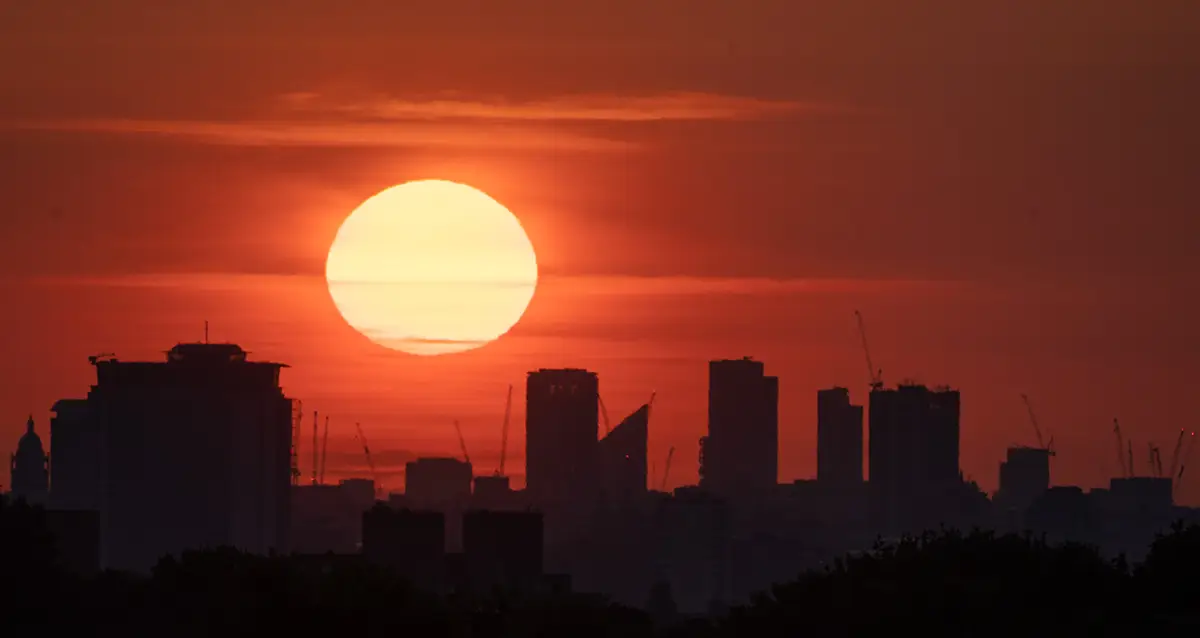
Britain and Europe have been hit by the most severe June heat on record. The Met Office reported 37.7C at Lingwood, Norfolk, beating the 1976 record by more than two degrees. The record tumbled on three consecutive days, under the first red extreme-heat warning ever issued.
Across Europe the World Health Organisation has linked more than 1,300 excess deaths to the heat since 21 June, with Germany reaching 41.7°C and France recording its hottest day since measurements began. Europe is heating at almost twice the global rate.
This is the backdrop to another rise in the energy price cap. Households that cannot keep a flat below 30°C, that cannot run a fan all night, or that ration cooling the way they already ration heating, are the same households about to pay more for the electricity to do it.
A new climate
Heatwaves are not new, but heat like this is. The World Weather Attribution group found this June would have been around 3.5°C cooler in 1976 and 2°C cooler in 2003, with the hottest days now warming at three times the rate of the planet as a whole.
The cause is not a mystery, and it is not ‘humanity’ that is to blame. It is our mode of production: two centuries of development built on coal, oil and gas, run by companies that have understood the consequences for decades and burned the fuel anyway because there was profit in it. The carbon in the atmosphere is the waste product of that profit.
Capital generates the heat and imposes the vulnerability to it. It leaves workers in unsafe jobs, tenants in heat-trapping homes, children in classrooms built for another century and patients in hospitals whose systems fail in heatwaves.
It is a tabloid complaint that the country seizes up the moment the weather turns too hot or too cold. The real scandal lies elsewhere. The firms keep the profit and pass on the cost: heat deaths, cancelled operations, spoiled food and lost wages land on workers and the public. Privatised utilities, water firms and outsourced contractors treat services as something to extract rent from, built and run on the cheap with no plan for climate change.
The same divide decides who is exposed and who is shielded. Those with money work from home, cool their houses or leave the city. Everyone else keeps the country running in the heat, driving buses, stacking shelves, nursing patients and holding classrooms together.
Five years ago, these were praised as ‘key workers’ who kept the country going during Covid— but nevertheless sent into a deadly hazards without proper protection, dying at higher rates than the workforce as a whole. Nothing has been learned. The pandemic showed that capital treats ‘essential’ workers as expendable precisely when their labour matters most, and the heatwave is showing it again. The hazard has changed; the exposure and the official silence around it has not.
Get The Spark in your inbox
Workers Power’s weekly newsletter
Too hot to work
Britain has no legal maximum working temperature. The Health and Safety Executive calls heat a hazard and tells employers to manage the risk but sets no point at which work must stop. It is unlawful to transport cattle, sheep or pigs when the outside temperature passes 30C, yet a warehouse picker, a delivery driver or a bus driver can be sent out in far higher temperatures.
Some hospitals quite literally failed. As the heat peaked, the Norfolk and Norwich University Hospitals declared a critical incident with no working MRI scanners after their cooling systems gave out, cancelling more than 360 appointments. In Portsmouth, Queen Alexandra Hospital lost the chiller units serving operating theatres and cardiac labs. At least six trusts declared critical incidents, and a report last year found nine in 10 NHS buildings unfit for sustained extreme heat.
The unions have the answers—on paper. The TUC wants employers to act above 24°C and to let workers stop at 30°C, or 27°C for strenuous jobs. Unite, Unison and GMB back stronger protection. Even the government’s own Climate Change Committee recommends a statutory maximum workplace temperature. But what protects workers is workplace organisation.
A start has been made in the schools. Nine education unions have produced a joint heatwave protocol that commits head teachers to plan with union safety reps in advance to curtail heat-generating activity. A red warning triggers an ‘immediate risk assessment’ which could force closure of unsafe rooms or the whole school.
When this June’s red warning hit, more than a thousand schools shut, many because reps and members forced the issue rather than waiting for permission. The NEU’s position is to impose a 26°C upper legal limit.
Every workplace needs a heat plan, negotiated by safety reps and agreed in workplace meetings: risk assessments drawn up by members, cooling and ventilation, drinking water, shade, reduced workloads, altered hours on full pay, and a stated temperature at which work stops.
Above all it needs the collective right to refuse unsafe work without loss of pay or victimisation. Often referred to as ‘Section 44’ (of the 1996 Employment Act), workers can and should collectively refuse to work in unsafe sites, citing ‘serious and imminent danger’. Legally workers are immune from disciplinary action or loss of pay for taking Section 44 action.
Buses turned into greenhouses in the heatwave. Sadiq Khan told London’s private operators that drivers’ conditions were ‘unacceptable’ and said anyone in a cab too hot to drive safely could stop without penalty. Welcome words. But how much is a mayor’s say-so worth at the depot?
There is no legal maximum for a bus cab and the rule that cabs should have cooling does not require cooling systems to work. Drivers have reported cabs above 40°C, one at 48°C, while being ordered by operators to stay in service. Unite has fought, bus by bus, but should instruct its members to refuse to work in dangerous conditions.
People’s homes are not much better. The Climate Change Committee warns that the country is built for a climate that no longer exists; on current trends 92 per cent of existing homes could be at risk of overheating by 2050, and heat-related deaths could reach 10,000 a year without action.
Tenants have the least control and the least money to install shading or cooling. These are the households the rising price cap hits hardest. Keeping cool is becoming, like keeping warm, something the market rations by income.
We need a publicly owned programme to retrofit homes, schools, hospitals and workplaces with insulation that works against heat as well as cold, alongside ventilation, shading, green space, public cooling centres and a transport system upgraded for hotter summers. The work should be done by directly employed, unionised labour, not contractors chasing a margin.
For a workers’ transition
The heat has coincided with a fight inside Labour and the unions over Ed Miliband, net zero and North Sea oil and gas. Unite and GMB attack his climate policy as a threat to jobs. Unison and a group of economists defend it as a source of jobs.
Both are wrong. Labour’s clean-energy plan is trapped inside the market: private developers securing lucrative public guarantees for investor confidence. That is green capitalism, not a workers’ transition. But new oil and gas will not cut bills, because it sells into world markets. It will not secure jobs, because the basin is already declining and companies sack workers the moment profit demands it. And it deepens the climate crisis caused by burning fossil fuels.
Workers in oil, gas, refineries, ports and energy supply chains must not be abandoned. Their skills are needed. We fight for no compulsory redundancies, full pay, and retraining and redeployment into publicly owned climate jobs. Open the books. Nationalise energy, the grid, ports and refineries without compensation, and run them under workers and consumers’ control.
This is where the heat and the price cap meet again. An energy system run for profit overcharges households in winter and leaves them sweltering in summer. Offshore wind, solar, grid upgrades, home retrofit and public transport belong in a single democratic plan, decided by elected committees of workers, union reps, community delegates and consumers. Energy, water, housing, land and transport have to be taken out of the market and planned for human need and ecological survival, with climate justice for all.
The heat is not a forecast anymore. It is in our cabs, wards, classrooms and homes. Asking capital to invest its way out will not work, and a transition run by the bosses will be paid for by the workers. What is left is class struggle climate politics: safe work enforced by the unions now, public investment in adaptation, and the essentials of life taken into common ownership and democratic control.