- The British in Ireland: A suitable case for withdrawal, Geoffrey Bell, Pluto: 1984.
Geoff Bell’s latest offering from Pluto Press is certainly his most flawed. Much narrower in their subject matter, The Protestants of Ulster (1976) and Troublesome Business (1982), provided a great deal of ammunition for socialists seeking to explain both the reactionary character of Unionism, and the pro-imperialist record of the Labour Party on Ireland. In his latest book, he goes much further by attempting to outline a socialist strategy for solving the Irish Question. It is at this point that Bell’s politics seriously undermine the value of this book.
The strengths of The British in Ireland lie in his dissection of Ulster loyalism, and through it the reactionary nature of the partition of Ireland in 1921. Bell places the religious bigotry of Paisleyism in the context of the need to defend Protestant workers’ social and political privileges. Through his account of the Orange statelet’s actions, Bell is able to give the lie to the notion of ‘Two Nationism’. This idea—so pervasive on the Labourite and Stalinist left—suggests that such privileges either do not exist or are not politically important.
Bell demonstrates the utopian and ultimately pro-imperialist logic of any ‘socialist’ strategy that tries to treat Catholic and Protestant workers as essentially equal because they are both exploited by capitalism.
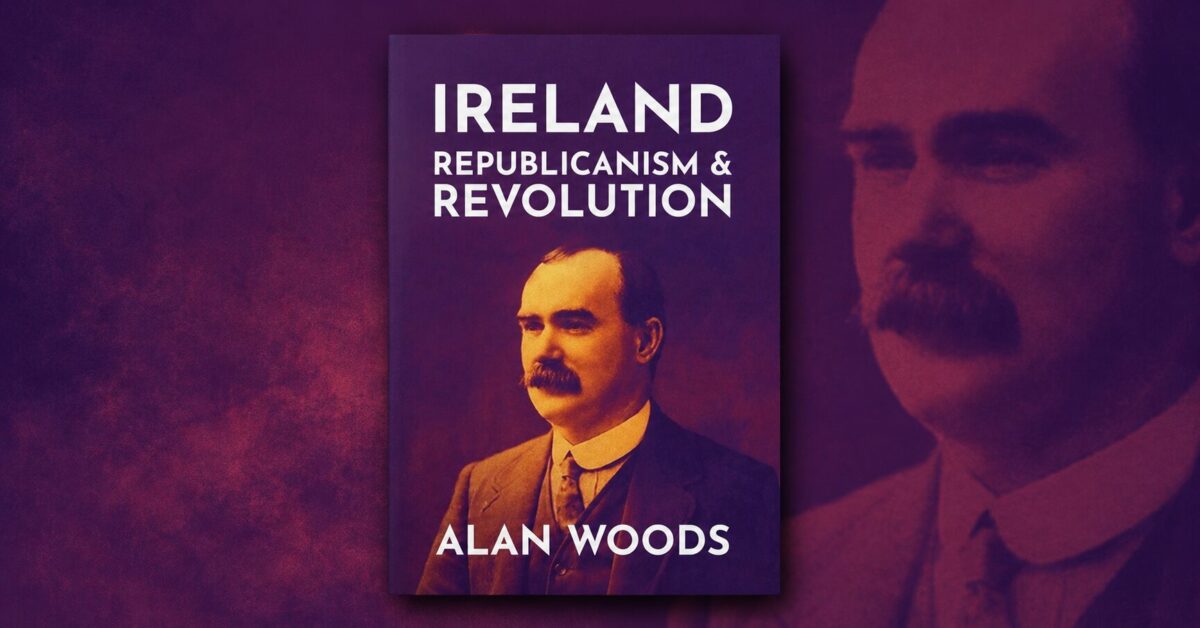
There is one flaw in this chapter—’Why loyalism?’. It occurs when Bell tries to insist that James Connolly fully understood Unionism. He correctly states that the Irish delegates to the Second Congress of the Third (Communist) International had a naive view of Unionism, one which underestimated the grip of Loyalism on Protestant workers. But to play off Connolly’s ‘less starry-eyed’ view of the Protestants against this will not do. Connolly did not give ‘a sound materialist examination of reality’ (p. 67). In fact, the great revolutionary wrongly believed that plebeian Unionism would give way to industrial working-class solidarity as Orange landlordism’s power faded in the early part of this century.
For most of his life, Connolly explained the sectarian divisions as a result of skilful ruling-class manipulation. Certainly, on his return to Ireland in 1910 as a union organiser, Connolly abandoned much of his earlier optimism, but he embraced then a view which dismissed the Protestant workers until after the national question was solved. After 1912 Connolly expressed the view that Protestant workers would have to be coerced into accepting Home Rule.
It is not surprising that Bell should slide over all this. Essentially, Sinn Féin—whom Bell faithfully follows—hold to the same view today. On the other hand, revolutionary communism, while recognising the need for coercion against sections of the Unionist population, also advances class demands that can split the Protestant bloc and win over decisive sections of Protestant workers to the struggle against imperialism.
By far the major weakness in Bell’s book is Bell’s attitude to present-day Sinn Féin. He effectively underwrites their political strategy and does so with that characteristic USFI fig-leaf of an argument that the British left would do well to ‘not judge the Provisionals on the basis of its own tactics, strategy or obsessions (!), and instead to remember the wisdom of Connolly’s remark that “each nation must work out its own means of salvation”‘ (p. 59).
In short—Sinn Féin are Irish Marxists. Bell forgets that our only ‘obsession’ is that working class power, leadership and independence of programme is a precondition of a progressive 32-county republic, and that Sinn Féin’s programme and record eternally insist that ‘Labour must wait’.
Bell is guilty of incredible irresponsibility when he says that we must not ‘complain of the Provos’ lack of programmatic clarity’ because ‘there is no organisation in Western Europe as far to the left as the Provisionals which can still boast their kind of mass support’. Has Bell forgotten the price the Chilean workers have paid these last ten years for heeding similar advice with regard to Allende?
In the final chapter—’Why socialism?’—Bell also outlines the tasks of a solidarity movement in Britain. Here Bell rightly stresses the need to campaign around an end to the Unionist veto, for the disbanding of the RUC/UDR, and repeal of the PTA. But he wrongly rejects the importance of the demand ‘Troops Out Now’.
He takes this view because the malevolent role of the troops has ‘won greater acknowledgement’ (p. 113). This is a ridiculous statement and can only be made by one blinded by the ‘greater acknowledgement’ given by certain constituency activists within the Labour Party.
The many-millioned bulk of British trade unionists remain largely impervious to the logic of this position, however. In fact, the Troops Out Now slogan expresses the principle of unconditional opposition to British imperialism. As such, it has been attacked for years by Stalinists and liberals who wish to water it down as a sop to Unionist sentiment.
These flaws in the book are crucial, but elsewhere Bell scores some important points. His chapter on ‘Why Ireland?’ reveals the rich vein of radical writing on Ireland from the Levellers to the Chartists. Other positive features of the book include a useful refutation of the ‘bloodbath theory’, often advanced against troop withdrawal, and a detailed exposure of the reformist labour organisations North, South and in Britain, and their failure to understand or tackle the roots of sectarianism. As a result they have fallen victim to this sectarianism. There is, in addition, an excellent bibliography of introductory texts to most of the problems raised by the situation in Ireland.
Overall then, the book is a political hybrid. Bell is a Labour Party member now. But in a previous life Bell was part of the centrist ‘Trotskyism’ of the United Secretariat of the Fourth International. There, at least, he learned how to develop a materialist analysis of Loyalism. But his book also demonstrates the chronic weakness of that apprenticeship: a hopeless lauding of left Republicanism and retailing Sinn Féin ‘socialism’ as the way to achieve a united Ireland.
As a result, we have a book which in the hands of a militant with average trade union consciousness provides some antidote to the head-fixing of the bosses’ media. Yet Bell has also given us a book which merely compounds the catalogue of confusion over socialist strategy and the political basis of solidarity work. Certainly worth buying, but read with care.