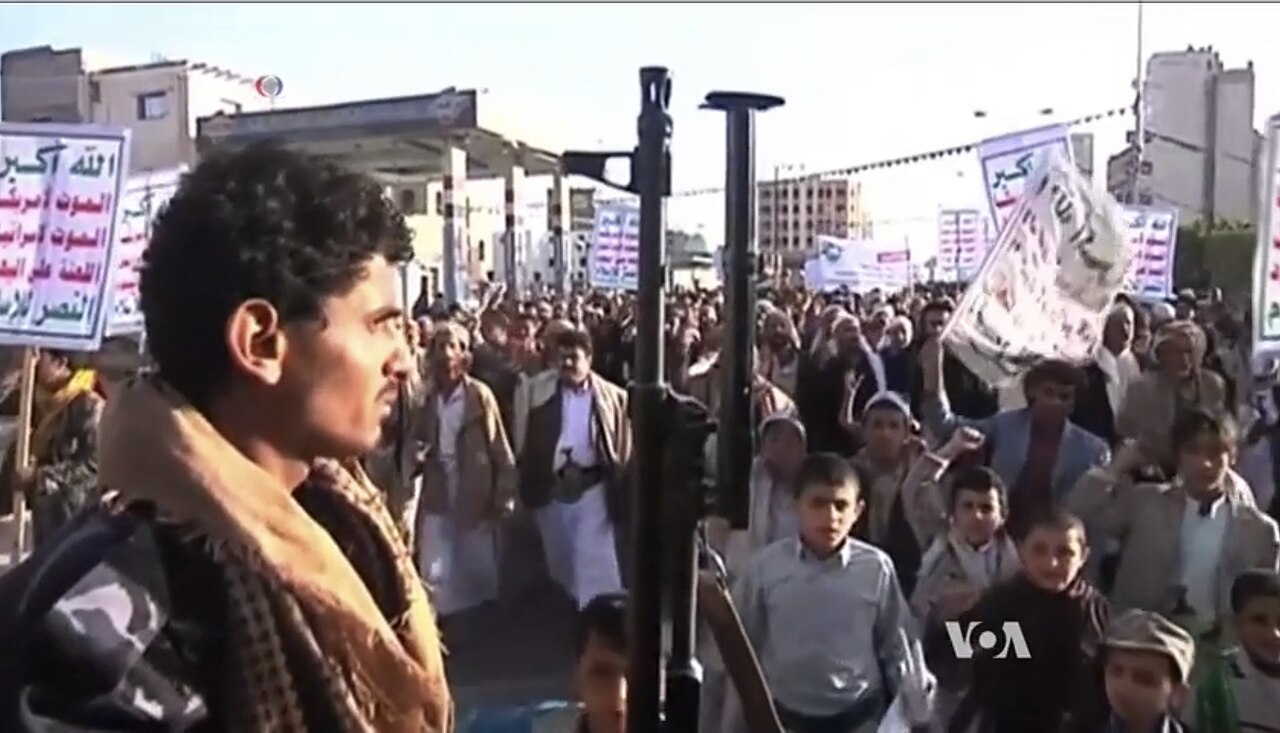
Ansarallah – also referred to as the “Houthis” – has struck a devastating blow against Saudi Arabia and its allies in Yemen.
In September Ansarallah carried out a lightning offensive in the west of Yemen, effectively seizing control of the crucial Red Sea coast, including the port of Mocha and the island of Perim. Almost simultaneously, a vital East-West oil pipeline deep in Saudi territory was struck, in an attack attributed to Iran-aligned forces in Iraq.
This victory was not just a humiliation for Saudi Arabia – the backers of the “official” Yemeni government – it is also a major strategic advance for the “Axis of Resistance” against Western imperialism. With shipping through the Strait of Hormuz already severely disrupted by the conflict with Iran, the capture of the Red Sea coast is another chokepoint upon which they can apply pressure. The Red Sea is particularly crucial for shipping from Asia to Europe.
War
The conflict in Yemen, if the mainstream media refers to it at all, tends to be described simply as a “civil war”. It is a civil war, but the term obscures the decisive role played by Saudi Arabia and the UAE in arming, financing and intervening alongside rival Yemeni forces against Ansarallah.
The Gulf monarchies have, along with Israel, long been the main drivers of reaction in the region, pursuing the interests of Western capital. Saudi Arabia now backs the Presidential Leadership Council – the internationally recognised but discredited government dependent on Riyadh. The UAE, meanwhile, has mostly backed southern secessionist forces.
Britain has played an infamous role in this war. British aircraft and weapons have been used by Saudi forces in Yemen, while Britain has provided maintenance, training and military support. On 22 September the government announced that an RAF Voyager would provide air-to-air refuelling for Saudi operations, explicitly citing trade, energy supplies and British economic interests.
Ansarallah began as a religious movement based in the tribes of northern Yemen, fighting on behalf of Yemen’s large Zaydi minority against the dictatorship based in Sanaa. It became an important power broker in the unrest that led to the removal of President Saleh, having participated in the 2011 uprising. Allying with Saleh against the new government in 2014, then turning on him, Ansarallah emerged as the predominant political force in north Yemen, in part due to the general collapse of most other cohesive political entities. Large sections of the Yemeni army defected to them. It has also enjoyed the support of Iran throughout the conflict, though claims that it is simply Iran’s proxy are incorrect.
Ansarallah’s rise to prominence was based on several factors. Zaydi Shiism is a minority religion in Yemen, concentrated in the northwest. In areas under its control, Ansarallah has been careful to cultivate alliances and avoid alienating local populations. It has also gained support among populations neglected by previous regimes.
Ansarallah has gained support within Yemen through its continued opposition to Saudi interference in the country, and by taking the fight against genocide to Israel.
With the defeat of Saudi-backed forces on the west coast, Ansarallah has consolidated its position as the dominant political and military force in northern Yemen.
Get The Spark in your inbox
Workers Power’s weekly newsletter
Anti-Imperialism
The nature of imperialism, and how it oppresses many different classes of people across the world, means that resistance to it can be led by many different, often contradictory, forces.
Yemen has been under the heel of Western imperialism for nearly two centuries. While it is a poor country, it is strategically placed at the entrance to the Red Sea. Its large population relative to the region has the potential – if Yemeni democratic rights are asserted – to be a centre of resistance.
Ansarallah has emerged as the leadership of resistance to Saudi intervention in Yemen in part because it has mobilised the grievances of the dispossessed and neglected. By asserting their rights against the Gulf monarchies and their compromised Yemeni allies, they have given expression to the democratic and anti-imperialist impulses of sections of the Yemeni people.
This is not to say that Ansarallah’s ideology or governing practice is “progressive”. Its religious programme is conservative, and its method of governance – compromise and alliances with tribal leaders – at best lends itself to a continuation of the status quo in many aspects of Yemeni life. Its rule is also authoritarian, including repression of political opponents and restrictions on women.
The defeat of Saudi intervention would nevertheless be a blow against imperialism. Revolutionaries can support the expulsion of Saudi and other foreign forces without giving political support to Ansarallah.
The road to the liberation of West Asia and the Arab peoples runs through the masses of oppressed people in countries such as Yemen. For now, the principal armed leadership of resistance to Saudi intervention has been supplied by Ansarallah.
A victory for Yemen over Saudi Arabia will not just be a strategic blow against imperialism. It is a symbol of some of the poorest people in the world winning a crushing victory against forces armed with the latest Western military technology.
Ansarallah today also possesses missiles and drones, including with Iranian assistance, but the disparity in wealth remains enormous. The humiliation of Saudi-backed forces has generated real enthusiasm across the region.