Popular mobilisation was decisive in securing this victory. Now we must continue taking to the streets, defeat the far right once and for all, and build an independent political alternative that serves the working class, young people and all oppressed groups.
The Brazilian people have shown that they are strong enough to defeat the far right and its plans against the working class, young people and the most oppressed sections of society. Lula’s victory represents a major defeat for Bolsonarism and for those who sought to intensify attacks on existing rights. But it also sends a message to the government: the Brazilian masses have shown that they are not prepared to continue paying for the crisis created by the capitalists.
The neoliberal government of ‘Lula 4.0’ will face a population unwilling to go on accepting austerity measures and new ‘fiscal plans’ that run counter to working-class interests.
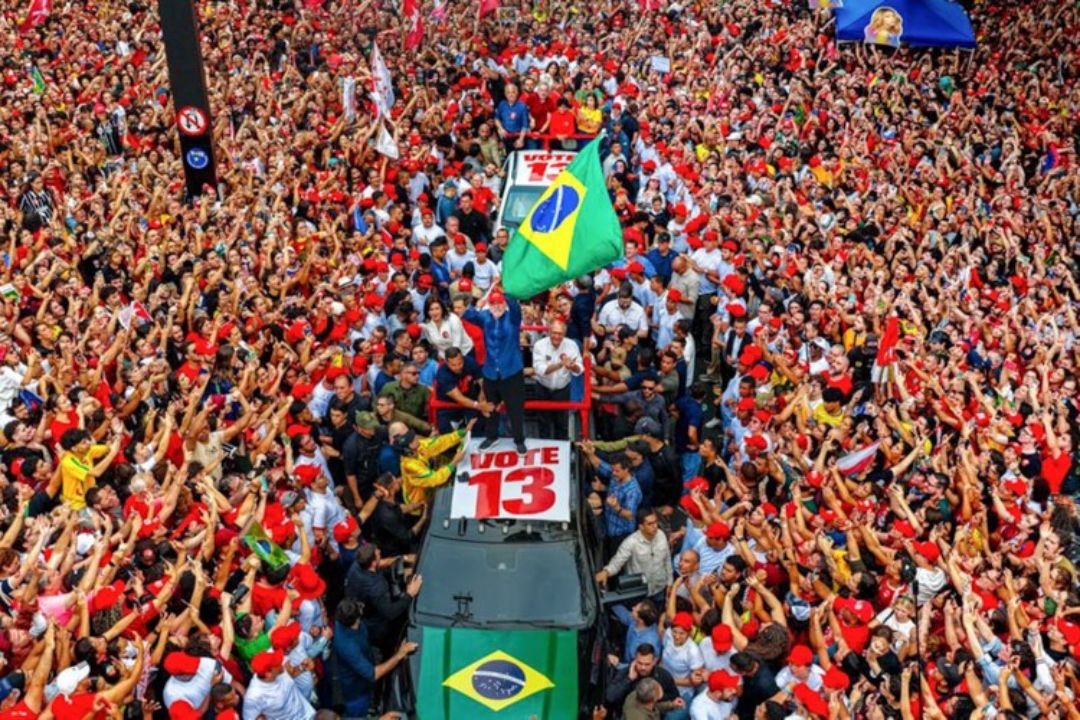
Popular mobilisation was the decisive factor in this victory. Thousands took to the streets spontaneously, with young people at the forefront, without waiting for a call from political leaders. On the Monday after the first round, a wave of demonstrations began to spread across the country.
Mass rallies and demonstrations in cities large and small, campaigns to persuade voters to switch sides, assemblies, meetings and countless other initiatives showed the determination of broad sections of society to fight.
This initiative did not come from above. It was driven by thousands of people who understood the seriousness of the situation and acted together to halt the advance of the far right. Young people played a key role, showing that they would not passively accept a future of authoritarianism, insecurity and the erosion of rights.
Bolsonaro, Trump, Milei and the entire far right defeated
The electoral defeat of Bolsonarism also represents a setback for sections of the international far right that were counting on their allies making gains in Latin America. Bolsonaro, Milei and Trump share an agenda of attacking social and democratic rights, strengthening authoritarian policies and mounting an offensive against working-class organisations.
Trump intervened directly in the Brazilian electoral process. He sought to secure victory for Flávio Bolsonaro. But popular mobilisation and the election results thwarted that effort. The defeat of Bolsonarism shows that the far right is not invincible and that mass mobilisation can hold back its agenda.
We cannot, however, underestimate the strength of these forces or assume that an electoral defeat alone will bring their reactionary offensive to an end. The far right has a social base and international connections, and will continue to draw on them to win support and regain ground.
We won this battle. The fight continues!
The immediate reaction of Bolsonarism to the results — questioning the outcome and Flávio Bolsonaro calling on people to ‘defend Brazil’ — demands vigilance and mobilisation. We need to watch these groups’ next moves and be ready to respond to any attempt to delegitimise the popular vote or threaten democratic rights.
We have won an important victory. But the struggle against Bolsonarism and the far right continues. Our goal must be to defeat this political project, dismantle its base of support and prevent it from once again threatening the rights and freedoms of working people.
To achieve this, we cannot abandon the streets. The mobilisation that made this victory possible must continue, spread and develop lasting forms of popular organisation. It is not enough to take to the streets only at decisive moments during elections: we must strengthen our organisation in workplaces, schools and neighbourhoods, and build unity to confront attacks, whoever is in government.
To defeat the far right, we must address the needs of the people
Mobilisation against Bolsonarism must also bring tangible gains for the majority of the population. We must respond to the needs of the 99 per cent: the working class, young people, women, Black people and all oppressed groups. This means tackling insecure work, fighting inequality, expanding social rights and securing decent living conditions.
The experience of recent years has shown the limits of a project based on reconciling the interests of workers with those of big business, bankers and agribusiness. Without breaking with the interests of those at the top, the needs of those at the bottom will continue to be frustrated, creating space for the far right to grow.
That is why we cannot abandon the streets. We need to sustain the mobilisation and strengthen our organisation. The struggle to end the six-day working week — six days of work followed by one day off — is a powerful example: popular mobilisation brought this demand to the fore and pressured the government to take a stand in favour of reducing working hours.
Building an independent left-wing political alternative
The strength shown in the streets raises a fundamental strategic question: how can we turn this mobilisation into lasting organisation and a political alternative capable of confronting both the far right and the limits of class conciliation? We in Revolução Socialista called for a vote for Lula in the second round. But that does not mean trusting his government to do what is necessary in the interests of the people: break with imperialism and capitalism.
We advocate building a socialist alternative, independent of the government and committed to the interests of the working class and oppressed groups. An alternative that does not merely administer the existing system, but confronts exploitation and oppression and fights for a society organised according to the needs of the majority.
This alternative cannot be built solely through agreements among leaders or during election campaigns. It must emerge from struggles, grassroots organisation and the participation of those who took to the streets. It must give political expression to the collective strength demonstrated in this historic mobilisation and offer a vision of change that goes beyond elections.
The antifascist victory showed that, when people mobilise, they can defeat reactionary agendas. Now we need to build on that momentum, strengthen and expand our organisation, and advance towards a socialist, anticapitalist and revolutionary alternative.
Originally published by the International Socialist League, 26 October 2026.