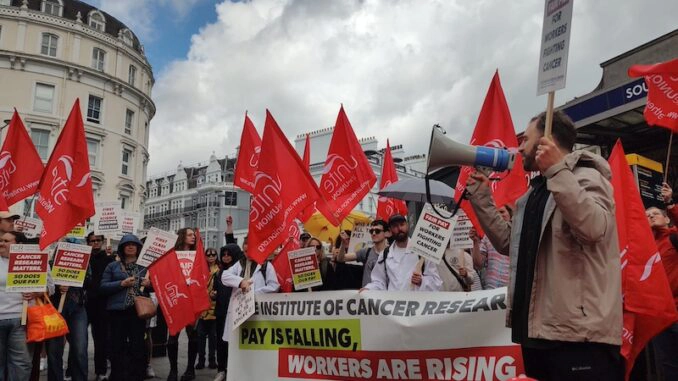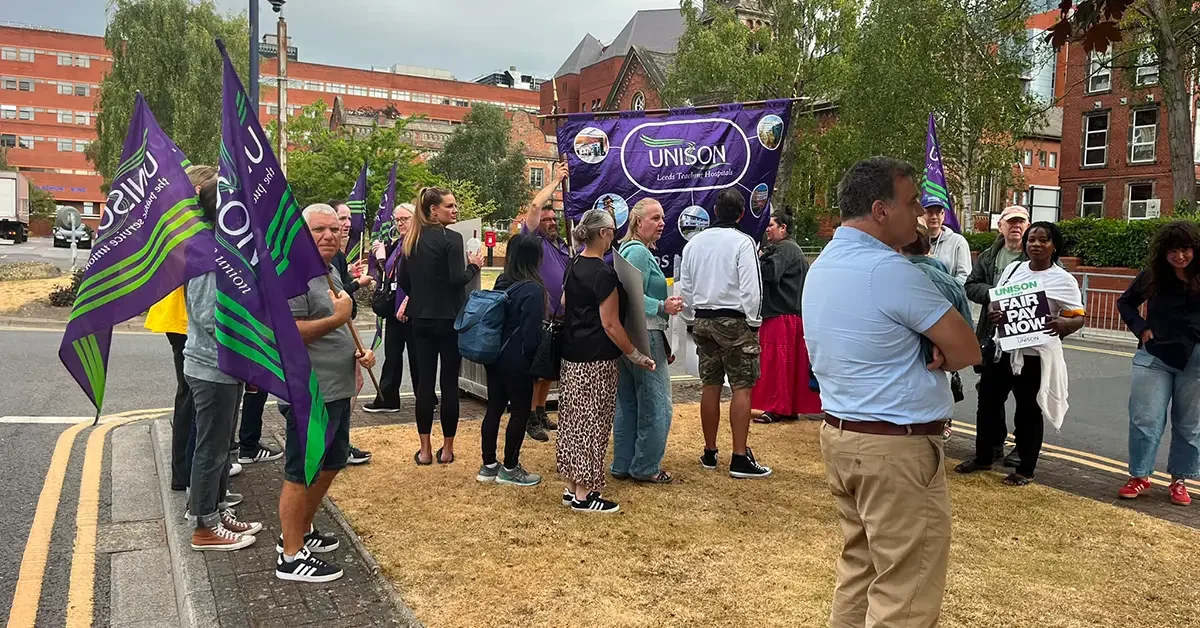
PCS is to ballot civil service members for strike action and action short of strike. Following a national executive committee (NEC) meeting on 19 August, the union confirmed on 1 September that it had written to the government rejecting its 3.5% pay offer and demanding talks on ‘fair pay’. The union says that ‘a major campaign of industrial action is now needed’ to shift ministers.
The NEC’s statement argues the 3.5% average uplift will not keep pace with rising living costs and that inflation could ‘wipe out any pay rise entirely’ by the end of the year. Conference policy commits the union to seek 10% for all members, a minimum wage of £18 an hour and a £5,000 increase to London weighting.
In May, Fran Heathcote said the remit simply ‘builds on the progress made in the previous years’. She has now climbed down and agrees that the union ‘will be proceeding with our planned ballot’.
The ballot is a welcome development, and the mandate being sought is wider than any national campaign PCS has run in recent years. It also arrives at the very end of the window conference set for it, for reasons that have nothing to do with the government.
Wider ballot
The ballot covers pay, job security, pensions, hybrid working and other terms and conditions. Members in MHCLG are in an ongoing dispute over office attendance requirements and closures, alongside job cuts. Foreign, Commonwealth and Development Office (FCDO) members have already struck over redundancies. At the MoD, members are disputing the delay in implementing the pay award.
By naming those issues in a national ballot, the union is no longer asking members in dispute to take action and make demands in isolation. They are linked to the national ballot.
That breadth of issues cuts both ways. A national dispute that names office attendance and job security lets branches already fighting see their own dispute in it. This could help turnout get above the 50% threshold. But a ballot that covers everything can end up bargaining over nothing. Members are entitled to know what a win looks like on each issue, not just on the headline pay figure.
Ballot delayed by the suspension of the NEC
Conference had already passed policy: motion A375, against Left Unity opposition, instructing the incoming NEC to launch a national pay, jobs and conditions campaign, with a strike ballot of civil service members by the end of September if talks made insufficient progress.
When the Cabinet Office published its 3.5% pay remit for 2026–27 on the conference’s final day, Heathcote bypassed the newly elected NEC to rush out her own members’ email, presenting it as proof that talks were working.
The decision to ballot could not be taken until 19 August because the body charged with taking it had been out of action for most of the summer. The immediate fight in June was over standing orders. Left Unity and the general secretary insisted the new NEC operate under the previous year’s rules, including a gagging clause stopping NEC members reporting discussions back to members, and a requirement that any presidential ruling could only be overturned by a two-thirds majority, the same mechanism former president Martin Cavanagh used to rule by decree in 2024–25.
The Coalition for Change (CfC), which had won the presidency and a 21–14 NEC majority on a platform of member-led democracy and a serious pay fight, proposed report-back rights, more frequent meetings, extra subcommittees and a simple-majority override of the president.
Then Heathcote walked out of the 11 June NEC meeting and closed down the online call rather than let the issue be debated. Officers were subsequently instructed to stop the National Disputes Committee (NDC) clearing any business at all.
That paralysis had a direct cost for members. FCDO members fighting job cuts of up to a quarter of UK-based staff had a strike mandate sitting with the NDC while it sat idle. On 7 July, under pressure to release it, the NEC majority voted, under protest, to revert to Left Unity’s old standing orders in full. Only then did the NDC clear the FCDO action, which finally went ahead on 16 July with further strikes on 12 and 26 August.
FCDO members were right not to wait any longer. But to get one dispute moving, CfC members on the NEC felt they had to give up the democratic reforms they had just been elected to deliver. The general secretary got what she wanted in June by holding a strike hostage until July. The national ballot that conference ordered by the end of September was only agreed once the NEC had surrendered. A ballot delivered on those terms shows what has to be given up to make the machinery move at all.
Nor is the argument inside the union settled by the announcement. The general secretary has made the case that pay is already being ‘restored’, pointing to cumulative average civil service increases of 8.89% against cumulative CPI inflation of 5.99% over the two pay rounds since Labour took office in 2024.
However, civil service pay has fallen in real terms by roughly 12% at the most junior grades and by up to a quarter at the most senior end of the pay scales since 2010. PCS’s own research found wages would need to rise by 18–62%, depending on grade, just to restore 2010 levels.
Being ‘proud’ of this year’s 3.5% offer only makes sense if the fight for more has already been abandoned. Members will notice if the ballot is run as a formality by people who spent May defending the remit.
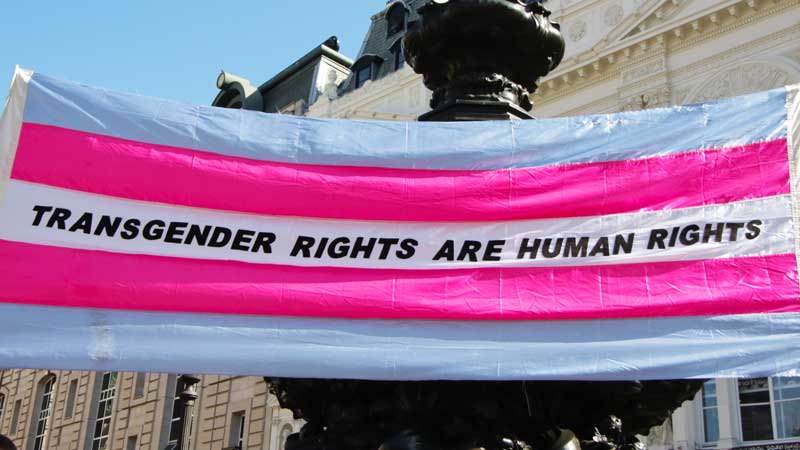
Trans rights guidance
The EHRC’s post-Supreme Court guidance and the new Equality Act Code of Practice, in force since 5 August, are already being used by civil service employers as cover for measures that have little to do with single-sex spaces. Civil Service HR has moved to scrap up to 13 weeks of paid special leave that trans staff could take for gender-affirming treatment and recovery, provision so narrowly used that the administrative cost of dismantling it will rival any savings.
Staff networks, however, warn this is only the opening move. Facilities access is being rewritten so it is no longer up to the individual but ‘discussed with a line manager’, which in practice means managers policing who uses which toilet, outing trans and non-binary staff in the process, and drawing in cisgender colleagues who don’t fit a stereotype.
The NDC has, at last, issued bargaining guidance instructing branches to resist exclusionary changes. That’s necessary, but it’s a document, not a plan. What we actually need is organised support for reps who will be first in the room when a manager tries to enforce a new facilities policy.
This failure is unsurprising. This is the same Left Unity that used the National Standing Orders Committee to keep trans rights motions off the agenda at conference in both 2025 and 2026, ten of them ruled out this year alone, and that tried in 2025 to instruct delegates to use toilets matching their sex assigned at birth or the disabled facilities. A faction that fights this hard to stop its own members showing solidarity with trans colleagues was never going to organise the fight to defend them.
What now?
Announcing the ballot is the easy part. It has to clear a turnout threshold across a fragmented civil service bargaining unit, on a list of issues that only holds together if members in each department can see their own dispute in it: office attendance, job cuts, pensions, the lot. That work is done in branches and workplaces, not in committee. The last issue called for a rank-and-file campaign rooted there rather than in any one faction, something wider than CfC, built the way ‘PCS Says No’ was in 2023. There is still little sign that anything on that scale has taken shape.
And the route to this announcement should not be forgotten once ballot papers are out. A left NEC cannot out-administer a bureaucracy that controls the machinery between elections: the decision conference ordered by September was delayed until late August by the suspension of the NEC itself, and released only in exchange for the standing orders.
It can only be backed by members and reps organised enough to act with officials where possible, and independently of them where necessary: building the pay and conditions campaign from the branches rather than waiting for briefings that may not come, and organising trans workers and allies to defend facilities access before a manager tries to enforce a policy. Democracy in PCS won’t be won by more committee votes. It will be won, if at all, by a membership organised enough to act whether or not the general secretary’s office consents.