
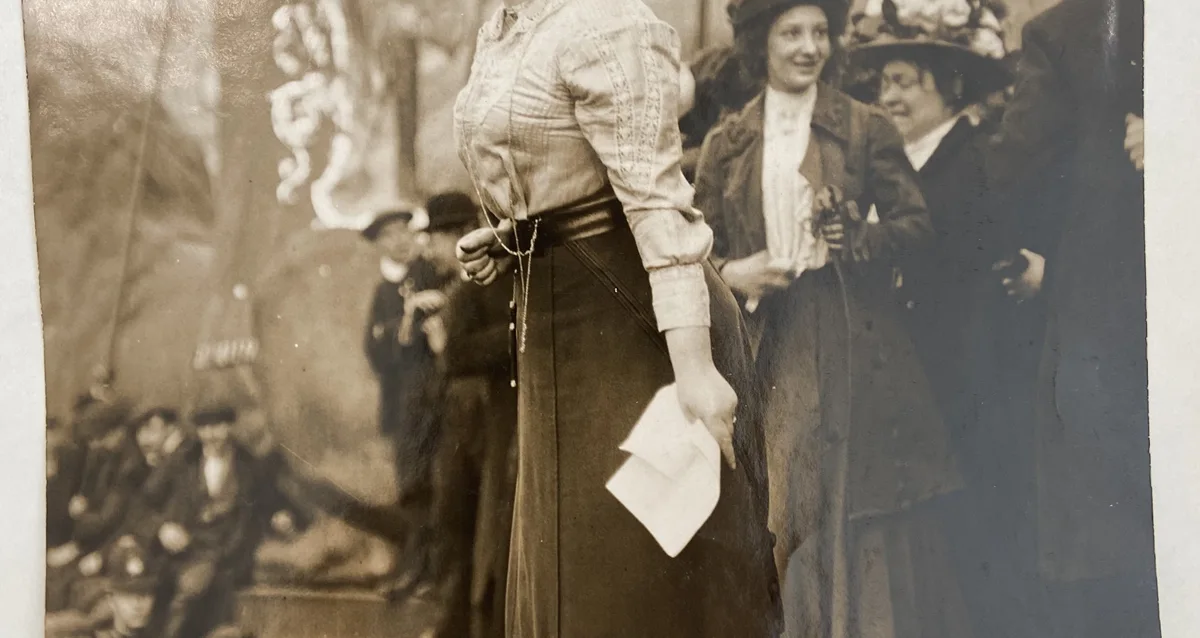
Women in Trade Unions, by Barbara Drake, Virago, 1984, £4.50 paperback.
This book was first published in 1920, written by Barbara Drake, who was a Fabian and the niece of Beatrice Webb. She carried out numerous detailed investigations of the role of women in particular trades before producing this remarkably detailed and fascinating account of women and trade unionism. Virago have done a great service in making this work – long out of print – available to socialists and trade unionists today.
The book is divided into three parts. The first deals with the history of women in the labour movement from the “Combinations” of the eighteenth century through the craft unions of the nineteenth to the general unions of the early twentieth century. The mountain of information she marshals demonstrates how women themselves organised in unions, and were not simply organised by men. At the same time she shows the enormous material difficulties that confronted women in this task. At the end of the First World War women, having been used as “diluted labour” during the war, were being driven out of the factories. Yet, despite this, Drake records that women continued to struggle against their use, by the bosses, as scabs against the working men:
“Whilst trade union men are pressing forward towards the goal of economic freedom, trade union women – with infinite courage and patience, and free from bitterness against men because they are excluded from trades whose hard-won traditions they have been unable to uphold – have set themselves to the task of wiping out forever from their name the time-long stain of ‘black-leg’ labour.” (p. 67)
The second part of the book is a detailed empirical study of the situation of women in the trade unions. This demonstrates both the difficulties encountered, and the possibilities of women becoming a decisive force in the unions. A similar study of today’s unions would be a useful source of information for women activists.
The final section looks at problems which remain familiar. The difficulties women face in getting jobs, overcoming male prejudices, getting equal pay for equal work, and winning the right to play a full role in the trade unions – all these are shown to be as old as capitalism itself.
As a Fabian, Drake had only a gradualist, reformist perspective for overcoming these problems. Organisations of emancipation she looked to included that band of imperialist robbers, the League of Nations. Nevertheless, as a piece of social investigation this book is extremely valuable.