
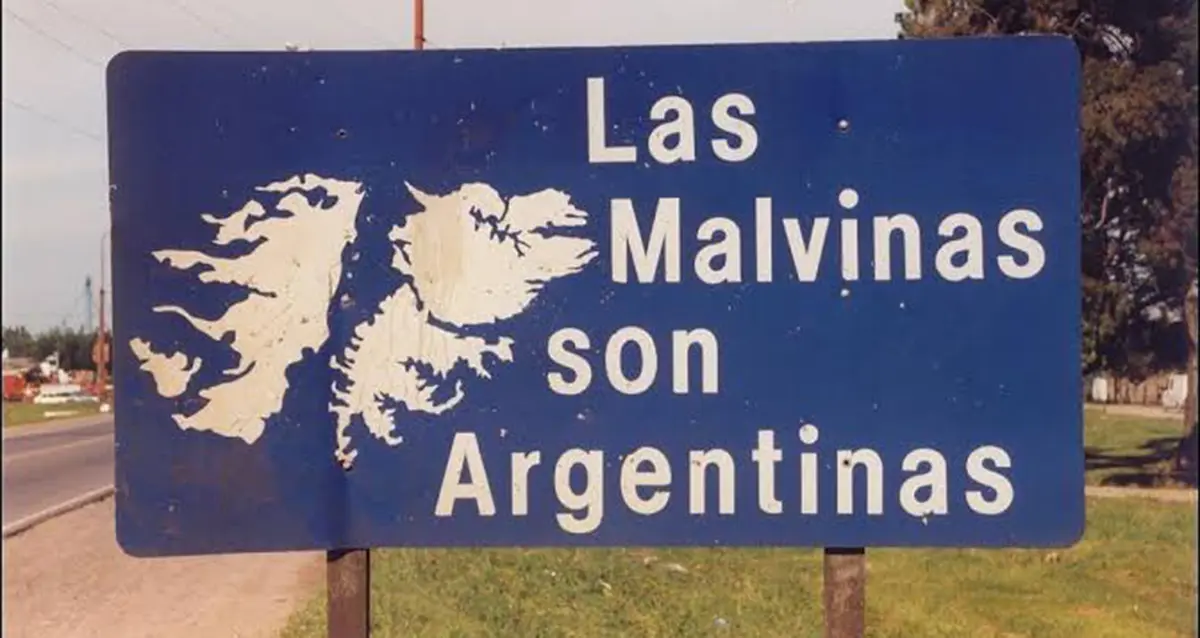
Argentina’s right-wing populist president Javier Milei has announced that ‘the winds of change’ are blowing over Argentina’s historic claim to Las Malvinas, which Britain insists is part of its territory despite the fact that the Falklands, as it calls them, are 8,000 miles from its shores and only some 300 miles from the South American mainland.
Referring to British and Israeli companies’ plans to drill in the Sea Lion oilfield near the islands, Milei has threatened that ‘Argentina will not stand idly by’ and that ‘any further advance on the Malvinas Islands will be considered a violation of our national security’.
He has also threatened sanctions against companies involved in the drilling project and announced new funding for a naval base in Tierra del Fuego, his country’s southernmost province, to strengthen Argentina’s military presence near the islands. Milei added:
‘Our role and relevance as a country in the world has changed dramatically. The Malvinas are our future—we need to recover these islands, which are nationally relevant. There is no other path forward.’
One obvious purpose of Milei’s turn to the Malvinas is to rally nationalist sentiment at a time when his government faces growing opposition to its attacks on jobs, wages, public services and democratic rights. In that respect there is an analogy with the Argentine military junta headed by General Galtieri, which seized the islands in 1982 while confronting a mounting domestic political crisis.
But it would be wrong simply to reduce Argentina’s claim to a diversion manufactured by whichever government happens to be in office. The claim itself is a longstanding national grievance against British colonial rule.
The ‘wind of change’ filling Milei’s sails also emanates from the White House. Milei, whom Donald Trump has called his ‘favourite president’, has appeared alongside him repeatedly in the United States. Trump backed a $20 billion financial package for Argentina and openly linked continued US support to Milei’s political fortunes. More recently he has called into question Washington’s traditional support for Britain’s position over the Malvinas.
This does not make Milei an anti-imperialist. Quite the reverse. He is closely aligned with Trump and Israel and has courted some of the most reactionary sections of US and international capital. In April he received Peter Thiel, together with representatives of Thiel Capital and Founders Fund, at the Casa Rosada.
His programme is one of privatisation, deregulation and opening Argentina still further to international capital. The contradiction is clear, but nevertheless a government deeply integrated with imperialist capital is still able to take up a legitimate national claim against an imperialist power.
Britain’s claim
Britain’s claim to the Falklands, which it occupied in 1833 after expelling the Argentine garrison and establishing permanent British administration there, rests today on the argument that in a 2013 referendum 1,513 of 1,517 voters backed remaining a British overseas territory.
Labour Foreign Secretary Ed Miliband has accordingly declared that the islands ‘are British and will remain so’ and that the islanders’ right of self-determination is ‘paramount’. Defence Secretary Wes Streeting has said Britain’s commitment to the islands is ‘absolute and unshakeable’.
But contrary to the brazen misrepresentation by successive British governments, the sovereignty question has never been settled in Britain’s favour. The United Nations continues to list the Malvinas as a Non-Self-Governing Territory. UN General Assembly Resolution 2065 recognises the existence of a sovereignty dispute between Britain and Argentina and calls on the two governments to negotiate a peaceful settlement.
The 2013 vote certainly shows that the present island population overwhelmingly wishes to remain British. But this does not amount to a national right of self-determination which can indefinitely perpetuate British colonial sovereignty.
The islanders have democratic rights which must be protected in any settlement. Their right to remain, their civil and cultural rights, and extensive democratic local self-government should be guaranteed. We oppose any expulsion, discrimination or forced assimilation. But the wishes of a population established under British colonial rule cannot simply confer an eternal title on Britain to territory whose sovereignty remains disputed.
The present oil dispute also exposes the material interests behind all the rhetoric about national rights. The islands provide Britain with a strategic foothold in the South Atlantic, a base from which to project military and political influence in the region, and control over valuable natural resources. The democratic language of ‘self-determination’ is mobilised as a cynical cover for these imperial interests.
The Sea Lion project makes this unusually clear. The UK government explicitly claims that the islanders’ ‘self-determination’ includes the right to exploit offshore resources. The project is operated by Israel’s Navitas Petroleum and Britain’s Rockhopper Exploration under licences issued by the island government, with production expected to begin in 2028.
Britain has no right to exploit the resources of a disputed colonial territory. These assets should be transferred from British and Israeli companies to Argentina, while demanding alongside Argentinian socialists that they are brought into public ownership under workers’ control.
The 1982 war
Casting a baleful shadow over all this is the 1982 war. Under Margaret Thatcher, Britain sent a naval and military task force to retake the territory after its occupation by the Galtieri junta. The Falklands War resulted in 649 Argentine and 255 British servicemen being killed, along with three civilian islanders.
Labour, then just as today, rallied round the flag whenever imperialist Britain’s interests were at stake. Its supposedly left-wing leader and ‘lifelong peacemonger’ Michael Foot gave enthusiastic support to the dispatch of the ‘task force’, as Britain’s Royal Navy fleet of warships was called.
Thatcher’s victory transformed her government’s political fortunes and contributed substantially to the Conservative landslide in the 1983 general election. It would be too simple to say that the Falklands victory alone enabled her subsequently to inflict historic defeats on the industrial working class—headed by the miners, but including the dockers, print workers and others.
Economic developments, divisions within Labour and the betrayals of the Labour and trade union leaderships also played their part. But the war strengthened Thatcher and the ruling class, fed a wave of chauvinism and helped create the political conditions for the neoliberal offensive whose effects remain with us today.
In 1982 Workers Power responded to the war hysteria in Britain by making it clear that this country, despite its bourgeois democracy at home, was an imperialist power still clinging to outposts of empire, whereas Argentina was a country dominated and exploited by imperialism—by then principally US and international finance, though Britain had historically played a major role there. In Marxist terms, Argentina was a semi-colony.
That did not mean political support for Galtieri’s murderous dictatorship. Workers Power argued that Argentine workers should take advantage of the crisis to strengthen their own organisations and fight to nationalise imperialist holdings under workers’ control. The struggle against British imperialism and the struggle against the junta were not counterposed alternatives.
Lesson for today
Clearly, the benefit of hindsight enables us to recognise that not every judgement we made during a rapidly developing war was or could have been correct. Workers Power no. 32 argued that an Argentine military defeat would be more likely to demoralise the working class than rapidly bring down Galtieri.
In fact, the defeat precipitated a deep crisis of the dictatorship and hastened its collapse. That prognosis was wrong. But this did not retrospectively make Thatcher’s victory progressive or remove the distinction between an imperialist country and a country oppressed by imperialism.
That distinction remains as important today as it was then. It is highly unlikely that Milei will invade the islands, or that Britain would respond in the same way as Thatcher. Britain no longer has the same naval forces with which Thatcher assembled her task force, although it does now maintain a permanent military presence on the islands, including the Mount Pleasant base.
The relationship with Washington has also changed. Reagan ultimately rallied to Thatcher and provided Britain with decisive US support. Trump’s present attitude is plainly less reliable from London’s point of view.
But Workers Power maintains, categorically, that Argentina has a legitimate claim to the Malvinas and that Britain should negotiate their transfer to Argentine sovereignty.
Workers Power therefore reaffirms the position we took in 1982, consistent with more than four decades of support for anti-colonial struggles and international working-class solidarity. Today that solidarity also has an organisational expression in the International Socialist League, alongside our comrades in Argentina’s MST, who fight Milei and the Peronists while making the recovery of Argentine sovereignty over the Malvinas part of their programme.
The islanders, whether of British or Argentine origin, must have their democratic rights, their right to remain and substantial local self-government guaranteed. But Britain cannot invoke them as a permanent veto against decolonisation. We oppose British countermeasures, sanctions, military threats or increased military expenditure intended to maintain the colonial possession.
If Britain were again to use military force to maintain its control, communists in this country would oppose that war and work for the defeat of British imperialism while maintaining complete political independence from the Argentine government.
At the same time, Argentine workers should place no confidence in Milei or the Peronist opposition. A president who courts Trump, Netanyahu, Peter Thiel and international finance cannot offer a consistent struggle for genuine national sovereignty. Argentine workers must fight his attempts to dismantle their social gains, their jobs and their democratic rights while opposing British colonial rule.
The British labour movement should break from its servile patriotism towards its own capitalist class and develop links of internationalist working-class solidarity with its Argentine sisters and brothers. The Malvinas should be returned to Argentina, the democratic rights of the islanders should be guaranteed, and their resources should serve working people rather than British, Israeli or Argentine capital.