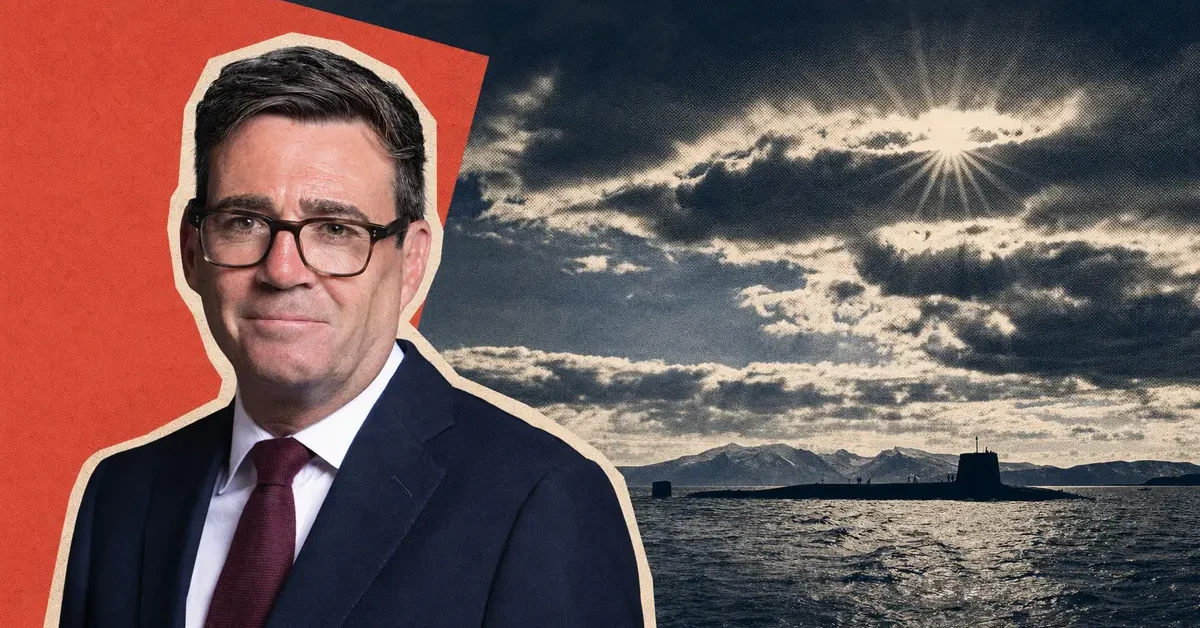

Andy Burnham’s big themes, announced since his appointment as prime minister, include a promise to deliver the ‘biggest changes in 40 years’. He claims Margaret Thatcher’s legacy of neoliberalism led to a retreat of the state from areas of social provision.
He also admitted that Labour had failed to reverse this, delivering a not-so-veiled criticism of Tony Blair and Gordon Brown. Correctly enough, he stated: ‘Four decades of the neoliberalism that began in the 1980s have not been kind to the places that built our party, nor to the communities across the UK in rural and coastal areas.’
Policies
He has talked of reintroducing the state in areas like social care and devolving greater planning and spending powers to mayors and local authorities. Other measures are aimed at the cost-of-living crisis, such as a 5% cut in VAT on household electricity bills, a cap on single bus fares and a pledge to end rough sleeping by Christmas.
But details on how he is going to pay for his ‘10-year plan for the future’ must await the new chancellor John Healey’s Budget on 28 October. Back in May, Burnham committed himself to Keir Starmer and Rachel Reeves’ fiscal rules, constraining spending and taxation. Healey has emphasised that this will be ‘built on fiscal discipline’ and ‘meet our fiscal rules’.
Burnham has pledged a major overhaul of social care, aiming for a national care service first pledged in Jeremy Corbyn’s 2017 and 2019 manifestos. A commission led by Baroness Casey, established in 2025, has been tasked to report by summer 2027. We need to fight to ensure that, like the NHS, it is free at the point of use.
The government has also said it is looking at reforms to bring the social care workforce up to NHS standards in terms of pay and promotion grades. It has announced a £343m plan to open up to 159 new NHS mental health facilities in England.
But as well as welfare, there are pledges for warfare. Indeed, putting Healey, who resigned as Defence Secretary in protest at Starmer’s failure to boost military spending, in charge of the Treasury is a vote for warfare, not welfare.
New Defence Secretary Wes Streeting said that £8.4bn had been committed to the next phase of the UK’s nuclear arsenal, which currently supports 47,000 jobs, forecast to rise to 65,000 by 2030. Healey as Chancellor is not only a pledge not to tax the rich or big business; it is also a signal to the chiefs of staff that they will not have to tighten their belts.
Back in June 2025, Burnham supported the Fossil Fuel Non-Proliferation Treaty—a proposal to phase out coal, oil and gas—saying, ‘there should be no turning away from net-zero’. Now he claims he will take a pragmatic approach and that Britain must still use oil and gas, raising the possibility that he might approve the Rosebank oil and Jackdaw gas fields.
Demands
Burnham is playing with Old Labour themes and issues popular with the party rank and file and some leaders of the affiliated unions. Socialists need to respond not just by warning that they are deceptive (they are) but by demanding Labour makes good on its promises: end homelessness and rough sleeping; establish a publicly owned and funded social care system; fund councils for effective devolution.
As for the cost-of-living crisis, we need to demand that Burnham intervenes to grant pay increases to public-sector workers—nurses, doctors, firefighters, teachers and civil servants. And make the rich pay to cover the shortfall, at least at the level they used to pay before Thatcher’s counterrevolution.
Just as important will be the fight to stop Burnham echoing Starmer, Badenoch and Farage on the immigration witch-hunt. He has kept the vicious Shabana Mahmood as Home Secretary, signalling a continuation of her ‘stop the boats’ crackdown on refugees.
And on Palestine we will need to force him to go beyond Foreign Secretary Ed Miliband’s limited sanctions. We must fight to get Britain to break all its ties, economic and military, with Israel. We need to demand the release of all those imprisoned for actions, or indeed only words, in support of Palestine Action, and an end to the use of terrorist legislation to crush free speech.
Though the Employment Rights Act has removed some restrictions on unions, like electronic balloting for strike action, the abolition of the 50% minimum turnout requirement has still not been implemented. It needs to go now! Even then, Labour hasn’t implemented all the changes the unions asked for. Indeed, the unions must demand the total repeal of all the anti-union laws, dating back to Thatcher’s first term in office, and the passing of a trade union rights act.
At this year’s Labour Conference, we need a mass demonstration to mobilise the union rank and file, Labour Party members and the social and democratic movements to pressure Burnham to fulfil all his positive pledges and to oppose his defence of the anti-working-class measures of previous Tory and Labour governments.
In this way, if, or rather when, Burnham betrays his promises, a powerful force of the working class and the socially oppressed will have been organised that can replace Labour with a fighting working-class party—a party fighting not just for reforms, but for power: the power to abolish capitalism and introduce socialism.