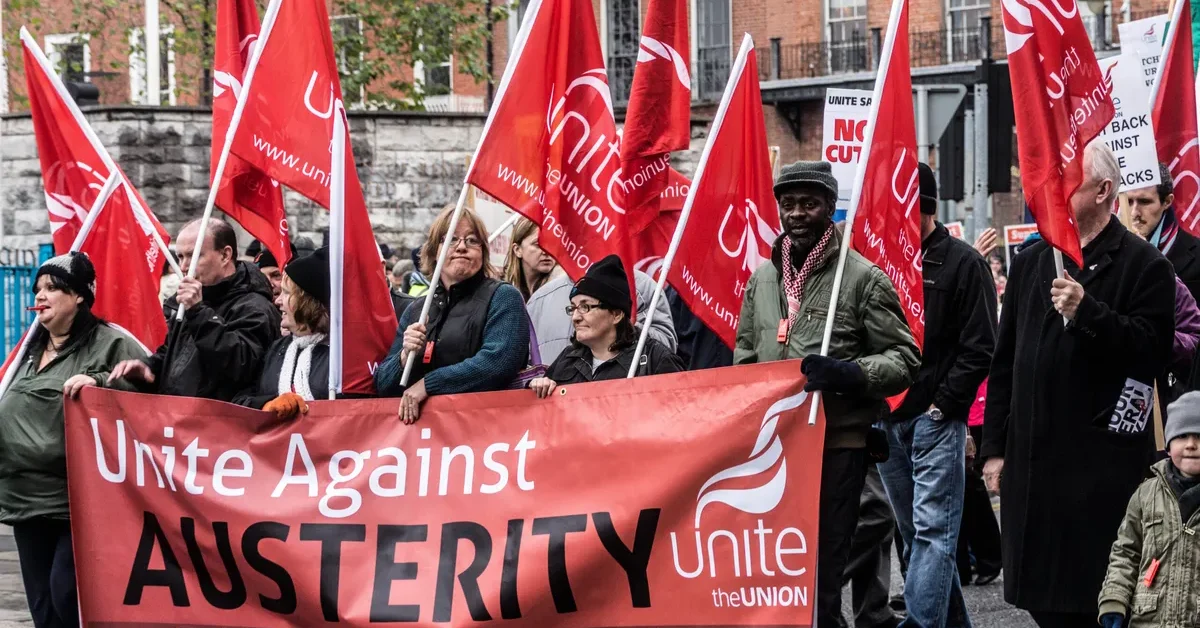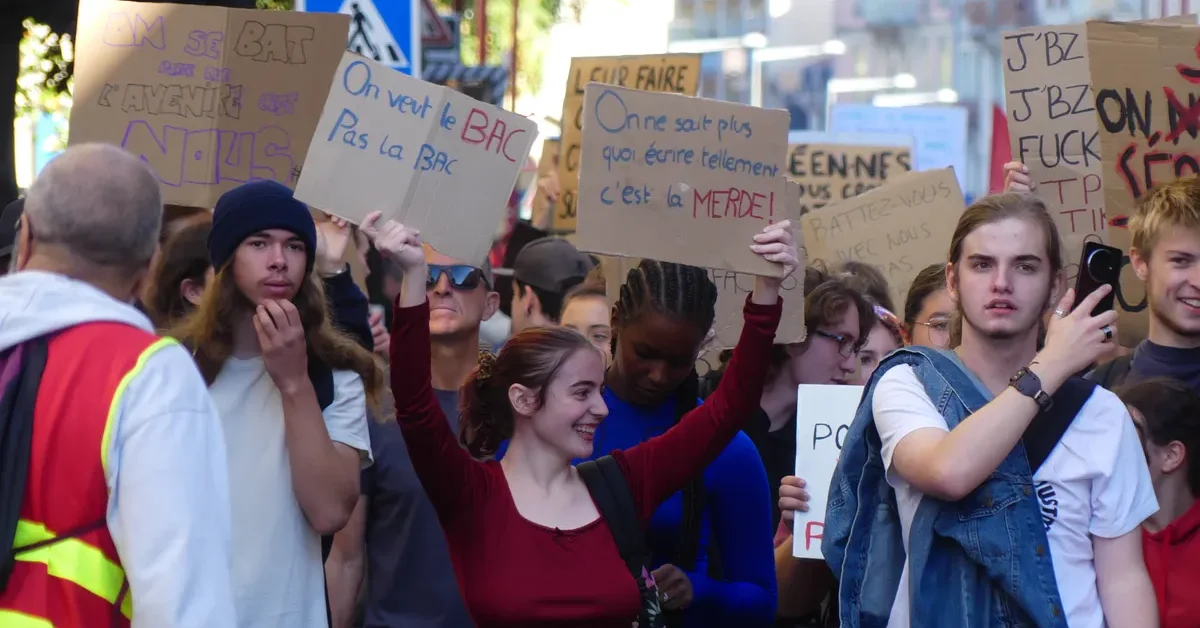

The militant anti-fascist wing of the movement, led by young people and communists, gathered at Sackville Gardens. Our aim: disrupt Britain First’s March for Remigration, stop them from marching where they wanted, and delay them as much as possible. Hundreds of activists took part.
There was a substantial Your Party presence (40–50 people) from all over the North, including several local Manchester proto-branches, as well as activists from Liverpool, Warrington, and Leeds. Many activists who weren’t part of the Your Party bloc took heart at the sight of YP banners—showing the party’s potential to organize workers if it can be wrested from electoralism and become a party of class struggle.
The antifascists stood against several hundred fascist thugs and their leader, Paul Golding, who had come to Manchester to terrorize its diverse population. Britain First had threatened to ‘storm Manchester’ in a video demonising Muslim and migrant populations. But on 21 February, the people of Manchester stood up to their hatred. No Pasaran.
We set off from Sackville in two groups. One went to Piccadilly to meet the Britain First demonstration at Store Street near Piccadilly station, helping delay the fascists for more than an hour before being kettled by police—just metres away from the Stand Up to Racism (SUTR) demonstration, which did nothing to break the kettle.
The second, larger group marched onto the junction of Princess Street and Portland Street, directly blocking the fascist route and refusing to move. We held the junction for nearly two hours, delaying the fascists further. Police made repeated attempts to break the lines with force but were repelled. Scare tactics including dogs were used, but we stood firm.
When word came that the fascists had been rerouted, we moved on. The police were unable to stop us, and we marched down onto Oxford Road, confronting the fascists separated by riot vans and mounted police. After about 40 minutes, the fascists were forced to retreat to loud chants of “the workers united will never be defeated.” After seeing off the fascists, we broke through a weak police line and started to march down to join activists at Castlefield.
Around 200–300 activists became separated from the main protest after police blocked off Oxford Road with horses. They attempted to find an alternative route, heading for the fascists’ rally location and managing to block police vans and force their way through hastily assembled police lines. Eventually, the anti-fascists made it to the end point of the BF rally before the fascists arrived. Unfortunately, police had mobilized a large number, and fencing plus the canal prevented us from occupying the space. The fascists arrived less than 10 minutes later, and isolated groups of them tried to approach the anti-fascists until the larger group rejoined.
At their end point, the fascists were rained out and booed. We were easily within earshot of their rally, and our boos and chants echoed as they tried to start their speeches. Ashlea Simons gave her speech, and then the BF crowd started to leave, meaning Paul Golding had to give his speech to a mostly empty crowd and was forced to cut it short.
After the defeat of last summer, when Britain First marched through Manchester and the counterdemonstration was split between a Stand Up to Racism (SUTR) demonstration and a small group of militant antifascists who were kettled early and forced to watch fascists march, the results of February 21st were very different. Most of the left organised outside of SUTR, explicitly aiming and organising to stop Britain First.
Lessons for the Anti-Fascist Left
Overall, the fascists were held up for more than two hours, and by the time they reached their end point, the weather prevented them from holding their planned speeches. Social media posts show they did not have a good day, complaining that their numbers had halved by the time they reached Castlefield—a significant victory for the anti-fascists.
However, there are lessons to learn. The counter-demo disrupted the Britain First march and ruined the fascists’ day but could have been more effective.
The SUTR protest, organised in competition with the main anti-fascist march, divided our numbers. Their support could have enabled us to fully occupy the rally space and prevent speeches entirely.
The main draw of SUTR is their links to trade unions, who promote and speak at their demonstrations. However, several local trade union branches chose instead to support and attend the main protest, demonstrating the potential to win far greater numbers of trade unionists to militant opposition to the far right.
There were dicey moments as people left Castlefield Bowl, with fascists in surrounding pubs coming out to abuse and threaten counter-protestors. Some were assaulted, and the police were nowhere to be seen. The police will not defend us—we must urgently organise stewarding groups for self-defence against these thugs.
The strength of this counterdemonstration shows a growing layer of young activists who are sick of passive anti-fascist work and know it doesn’t stop fascists. Victories like this show our power when we engage in collective action. It is the job of communists to win those standing up to police and fascists on the street to a programme for the revolutionary overthrow of the capitalist system they defend.