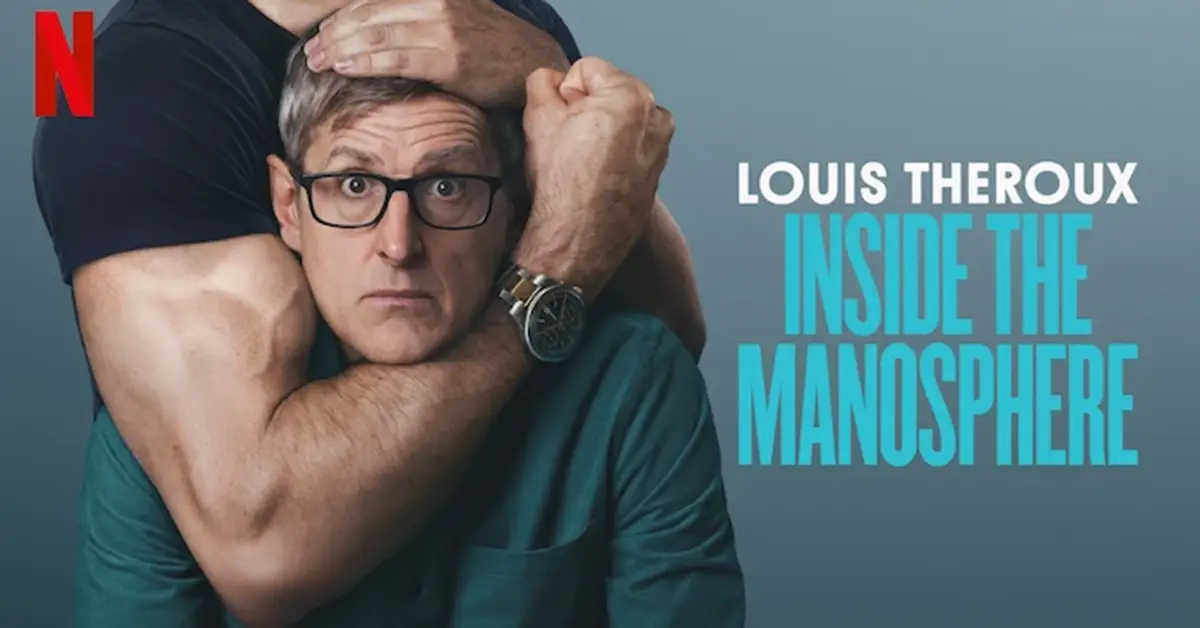
Louis Theroux’s documentary on the ‘manosphere’ shines a light on a poisonous, right-wing misogynist ideology and the grifters who have built social media empires selling it to young men. But Theroux never really addresses what sits beneath it: a capitalist system that offers many young men insecurity, isolation and no serious future, while allowing con men to profit from their frustration.
The ‘manosphere’ is an umbrella term for male-focused, anti-feminist online communities. In Theroux’s film it is represented mainly by influencers who package extreme views on women and society inside a slick self-help framework. They flaunt wealth and promise viewers the same rewards, provided they work hard enough—and buy the right course. Their target is young, impressionable men, often already struggling, to whom they offer a story that blames women, feminism and minorities for their pain.
The ideology holding this together is the ‘red pill’. The term is borrowed from The Matrix. To be ‘red-pilled’ is to claim awakening to a hidden truth: that society is not biased against women, but privileges women at men’s expense. In its basic form, red pill ideology says feminism has gone too far, overturned the ‘natural’ order between the sexes, and made men society’s real victims. It borrows the language of evolutionary psychology to argue that men and women are naturally and permanently different.
Several ideas follow. The ‘sexual marketplace’ treats dating like an economy, where people are ranked by status and attractiveness, and relationships become transactions rather than human connections. Men are divided into ‘alphas’ who dominate and ‘betas’ who submit. ‘Hypergamy’ – the claim that women are hardwired to seek the highest-status mate available – is used to justify misogyny and relentless male status-seeking. The figures of the ‘chad’ and the ‘incel’ stand for the winners and losers of this imagined sexual economy.
Red pill thinking mimics the language of radical awakening: seeing through ideology, rejecting false consciousness, identifying hidden power structures. But it arrives at reactionary conclusions. Instead of locating male alienation in capitalism and class society, it redirects anger sideways and downwards, towards women, LGBTQ+ people, and racial and religious minorities. The manosphere does not invent young men’s frustration. It hijacks it.
What becomes clear watching these influencers is that they are both entrepreneurs and ideologues. The spread of their worldview is bound up with the financial exploitation of their followers. Controversy generates views; views generate followers; followers are monetised through courses, supplements, trading advice and sponsored content.
That does not mean they do not believe the bile they peddle. Many clearly do. But the manosphere is also a market. It sells ‘self-improvement’ to vulnerable young men while funnelling their attention and money towards its leaders. Under capitalism, even identity and self-worth become marketable. The manosphere sells masculinity as a product: if you feel inadequate, it is because you have not yet bought the right course, supplement or mindset.
Two figures in the documentary illustrate this hypocrisy. One is Harrison Sullivan, known online as ‘HS TikkyTokky’. He livestreams his life and antagonises members of the public while viewers suggest ‘pranks’ to inflict on strangers. The film shows the cruelty of this content model, where humiliation becomes spectacle and spectacle becomes income.
Sullivan runs an OnlyFans management company and promotes its content to his audience, while expressing contempt for the women who produce it. He calls it ‘disgusting’ and says: ‘I’m not trying to be a misogynist, but I’d disown my daughter if she ever did OnlyFans.’ He introduces Louis to his girlfriend as ‘the dishwasher’. We later find out she is called Kacey and is herself an OnlyFans model.
Similarly, Myron Gaines, real name Amrou Fudl, hosts the Fresh and Fit podcast under the banner of ‘male improvement’. He regularly invites OnlyFans models onto the show, supposedly to discuss dating, only to berate them for their profession and ridicule their intelligence. Segments are then clipped and circulated across social media, often with gambling brands attached. He profits from the women he publicly despises.
The contradiction is sharpest in the movement’s embrace of so-called ‘traditional values’. These men present themselves as champions of a return to natural order: women in the home, monogamy restored, feminism rolled back. But their tradition is conspicuously one-sided.
Justin Waller, another influencer Theroux meets, repeatedly talks about ‘one-way monogamy’: the idea that a man can have other sexual partners while his partner must remain faithful. Many of these figures maintain multiple partners, or consume and profit from the content of sex workers, while forbidding their wives and girlfriends from exercising the same freedom. ‘Traditional values’ here means maximum freedom for men and enforced restriction for women.
Another thread running through Theroux’s interviewees is a deep conspiratorial mistrust of ‘the establishment’: governments, institutions and, most revealingly, Jews. Fudl’s wider record includes repeated antisemitic statements and Nazi imagery. The documentary does not discuss this.
It would be easy to treat this antisemitism as a personal prejudice disconnected from the manosphere’s sexism. But the two are ideologically linked. This kind of conspiracy thinking senses a hidden ruling power but cannot name it correctly. Sometimes it calls that power feminism. Sometimes it reaches for the old antisemitic fantasy of Jews controlling the world. In both cases, it diverts anger away from capital and towards scapegoats.
Liberal blind spot
In one revealing exchange, Sullivan turns the questioning on Theroux, challenging him to say whether Israel is committing genocide in Gaza. Theroux does not answer. For Sullivan, this proves Theroux is ‘paid by the Jews’. In reality, despite his best attempts to hold up a mirror to society, Theroux remains within the limits of liberal media.
This is the documentary’s central weakness. Theroux’s trademark method – open-ended questions, gentle curiosity, letting subjects talk themselves into corners – does not serve this subject well. It has produced brilliant television when turned on figures whose worldviews are personal or eccentric. The manosphere is not eccentric. It is an organised, monetised and politically consequential movement with real effects on real people.
Theroux does push back on overt antisemitism. He also asks, rather tentatively, whether the wives and girlfriends of these men are happy. But he mostly allows the ideology to stand on its own terms. The cumulative effect is a degree of unearned platforming.
Most seriously, the film almost entirely ignores the women these men affect. Mothers, partners, teachers and colleagues of manosphere adherents are largely absent. We hear a great deal about how these ideas make men feel, but little about the concrete harm they do to women.
When Theroux does speak to women, the encounters are heavily controlled. Interviews with the partners of influencers take place with the men’s permission and often in their presence. When the women become inconvenient, they are ushered away. In one especially uncomfortable scene, a female assistant of Fudl is texted and told to stop speaking to Theroux. She does so immediately, without explaining why.
Theroux rarely asks deeper structural questions because mainstream documentary-making usually stops at individual behaviour and psychology. It may criticise prejudice, cruelty and manipulation, but it rarely questions the society that produces them. The film never seriously asks what conditions make the manosphere possible.
Many young men drawn to the manosphere face real problems: insecure work, low pay, poor housing prospects and a sense that the future has been closed off. Capitalism produces suffering and alienation, making people increasingly isolated from one another. The manosphere provides a simple, emotionally satisfying answer: women and feminism are to blame.
Capitalism and patriarchy are not separate systems running in parallel. They are historically intertwined and mutually reinforcing. The manosphere’s ‘traditional values’ agenda is presented as a revolt against modernity, a nostalgic return to a natural and ordered past. It is nothing of the sort. The ‘traditional family’ they fetishise is not natural. It is a historically specific arrangement that developed alongside capitalism and has served its needs ever since.
One of the greatest achievements of the 20th-century women’s and workers’ movements was the limited socialisation of domestic labour through childcare, maternity benefits, unemployment support and social care for elderly and disabled people. When these functions are pushed back into the nuclear family, they are performed for free, mainly by women, rather than paid for collectively through taxation. This comes on top of the cooking, cleaning, childcare and emotional maintenance that remain women’s burden in most families. What the manosphere calls ‘traditional values’ is a domestic labour arrangement that serves capital.
This is why its obsession with controlling women’s sexuality, labour and mobility is not simply bigotry, though it is certainly that. It is also a programme, whether or not its adherents recognise it, for reinforcing domestic servitude and shifting responsibility from the state back to the family.
Inside the Manosphere is a worthwhile, if uncomfortable, watch. It gives a useful window into a movement shaping the minds of young men. Despite its limitations, seeing these figures up close – with their contradictions, cruelty and naked commercialism exposed – is valuable. But the film also shows the limit of liberal exposure. The manosphere does not only need to be observed. It needs to be opposed, politically and socially, by a movement that can answer alienation with solidarity, and misogyny with working-class struggle against the system that breeds it.