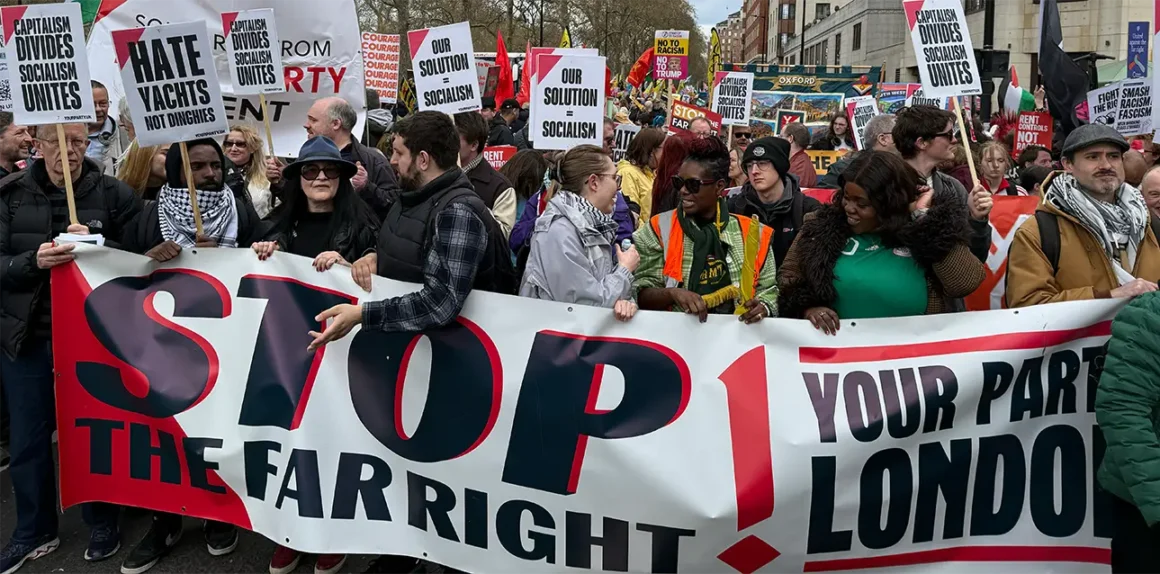

Your Party is holding elections for its Central Executive Committee (CEC). This is the first time the leaders of the new party will have been elected, and the CEC elections are all the more important because November’s conference voted for the party to have a collective leadership rather than a single leader.
386 candidates are standing for 24 seats on the CEC. Most of these candidates are standing independently, but the majority of seats are likely to be won by the two national slates. ‘The Many’ slate is led by Jeremy Corbyn, and Zarah Sultana is supporting the ‘Grassroots Left’ (GL).
Members can vote for four public office holders (reserved seats for those who are already MPs or councillors) and two regional representatives. Until 29 January, members can endorse candidates (who need to reach a threshold of 75 endorsements to appear on the ballot paper) and then the actual voting begins on 9 February.
The Stakes
While this internal party election may pale in importance compared to what’s happening in the world today, with the Gaza genocide, the rise of the far right and increasing inter-imperialist machinations, the stakes for this election are high.
The emergence of Your Party reflects real desire for change. The question is, will it become a genuine force of working class struggle and socialism, or simply another electoral project disconnected from the real battles?
A mass, working class party in Britain could use its strength to block arms exports to Israel. It could challenge the ‘common sense’ racism we have been drip fed for decades and blame the bosses, not migrants, for low pay and failing services. It could campaign for better housing, to save the NHS and support striking workers. Your Party, despite its myriad problems, still represents the best opportunity in decades to build such a party.
This election presents an opportunity to replace the current leadership who have demonstrated time and again that the type of party they want to build isn’t really a party at all. Membership of a party implies having a say in what it stands for (even Labour and the Liberal Democrats allow their members this) but Corbyn’s clique envisions a passive, atomised membership who will do the door knocking but leave the politics to the leaders. The November conference made all this clear.
The success of Your Party now depends on the grassroots taking control of the organisation and driving it forward as a party of struggle – on the streets, in union branches, workplaces, universities and colleges as well as at the ballot box.
The Grassroots Left Slate
While the GL recognises the importance of standing candidates in elections, it calls for a party ‘not defined by electoralism’. It puts the working class at the heart of the party and recognises the need to resist the rise of racism and the far right in our communities rather than just at the ballot box.
A key frustration of YP activists are the barriers to establishing local branches that can begin this essential work. In lieu of any support or direction from the party’s leadership, members organised themselves into local branches across the country. However, these ‘proto branches’ have been denied access to the data required to contact local members and launch themselves officially, made harder by the false choice presented at conference which forces branches to assemble 20% of their constituency membership to formally launch.
The GL slate commits to empowering members to create grassroots structures, and Sultana has stated that a GL led CEC would recognise the ‘proto-branches’ on day one. The GL promises to ensure branches receive 50% of all membership fees and give branch committees access to full membership data for their area, with the aim to create a truly mass socialist party with the branches at its root.
This bottom-up approach recurs in other parts of the platform, from the party’s approach to the trade unions and the establishment of autonomous youth and student structures. Though the detail of the proposal for a ‘rank and file’ trade union approach is yet to be seen, the contrast between this and the existing leadership’s Worker’s Movement Commission is promising, given that the latter proposes a strategy of cosying up to the union tops. This is unlikely to lure the General Secretaries away from Labour, the core of their political strategy, but would result in a party which does not challenge the interests of the trade union bureaucracy and won’t seriously challenge Labour left MPs to break with the Labour Party.
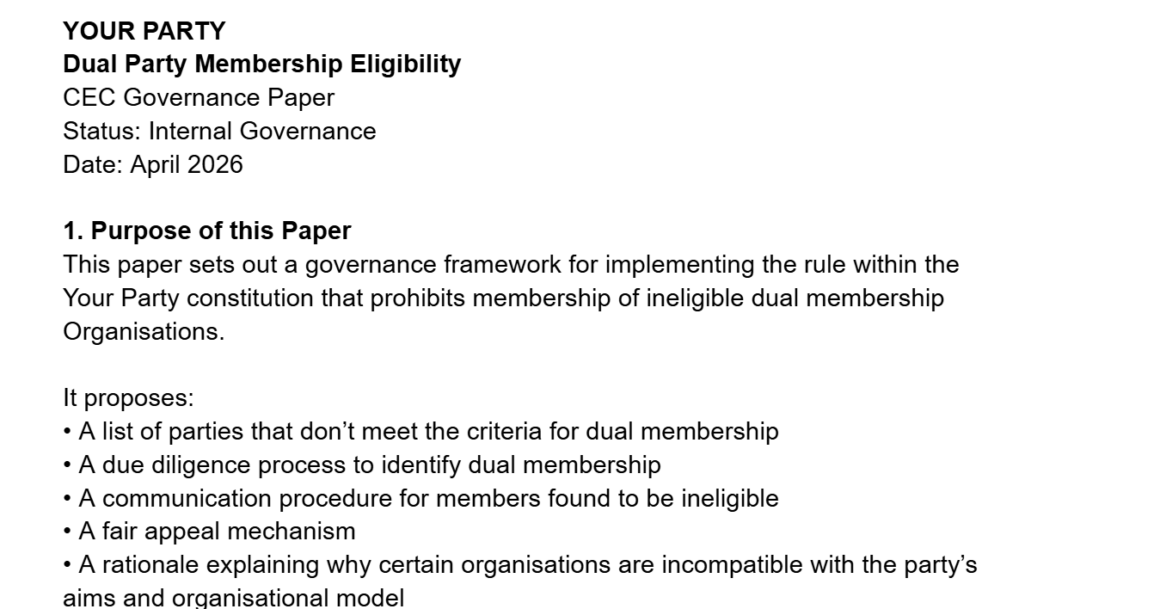
Another key issue has been witch hunts of the left. Sortitioned members of the Socialist Workers Party and Counterfire were expelled on the eve of the November Conference or refused entry when they arrived, and several candidates were barred from standing in the CEC elections based on existing membership of other ‘parties’. This is despite the conference voting to allow members to hold dual membership of other parties, and the fact that the affected organisations are part of, rather than opposed to, Your Party.
GL opposed the undemocratic exclusion of the far left from the CEC elections, and all those organisations that have been excluded must surely now back the GL candidates as the only option to prevent such exclusions being made permanent.
Of course, the GL platform falls far short of what revolutionary communists argue is necessary to create a true class struggle party. The platform calls for a party that “only participates in national government alone or in coalition of the basis of a socialist programme”. This ambiguous wording leaves the door open for an unprincipled lash-up with the Greens, or even a future left-wing Labour Party.
The demands that follow – abolish the Monarchy, the House of Lords and first past the post – have been smuggled in by the Democratic Socialists and are hardly the last word on programme. In a situation of rising poverty, inter-imperialist rivalry and accelerating crises, what is needed is not a democratic republic as these demands imply but a workers’ republic, based on the far deeper democracy of workers’ councils. The programme of Your Party should be developed through the class struggle, such as through organising to fight cutting budgets and organising defence of oppressed communities against the fascists, not tacked on to a CEC slate.
The highly popular demand for a worker’s wage for all elected officials is nowhere to be seen, and Zarah Sultana has been evasive on this subject when questioned, claiming it is a matter for members to decide at conference. No wonder, given she currently claims a cushy MP salary of £84,144, far more than the national average of £38,000.
Independent Candidates
In addition to the two main slates, there are several independent left wing or socialist candidates running in this election. Many of these offer inconsistent reformist programmes like Crispin Flintoff, some are running on ‘independents slates’ such as former Labour MP Chris Williamson’s ‘Republican Slate’, some are principled working class militants.
However, the decisive struggle here is over the character and direction of the party. That doesn’t mean blind confidence in Sultana or the GL, but it does mean that the essential programme of the slate – democracy and a working class orientation – are preconditions if Your Party is to be resuscitated, and we support the slate on that basis. All those independents who truly wish to fight back against Corbyn’s incompetent and anti-democratic leadership should withdraw their candidacy and support the GL slate.
While the platform isn’t perfect, it offers a party with a future as opposed to Corbyn’s dead end. As Your Party branches engage in local and national political struggles and debate strategy, revolutionaries can and must bring their politics and proposals to the table and demonstrate the need for revolutionary rather than reformist strategy for getting rid of capitalism. To get from here to there starts with rescuing Your Party from its terminal decline by voting in a new leadership. Of course, getting the GL elected is only the start of the struggle. It will then be up to members to organise to hold their leaders to account and demand they implement their promises without delay.
The endorsement period closes on 29 January, and voting will take place from 9 – 23 February. Class fighters should campaign for the slate in their branches, organise political meetings and continue to make the argument for Your Party to transcend electoralism and become a party of the picket line and of the street.