
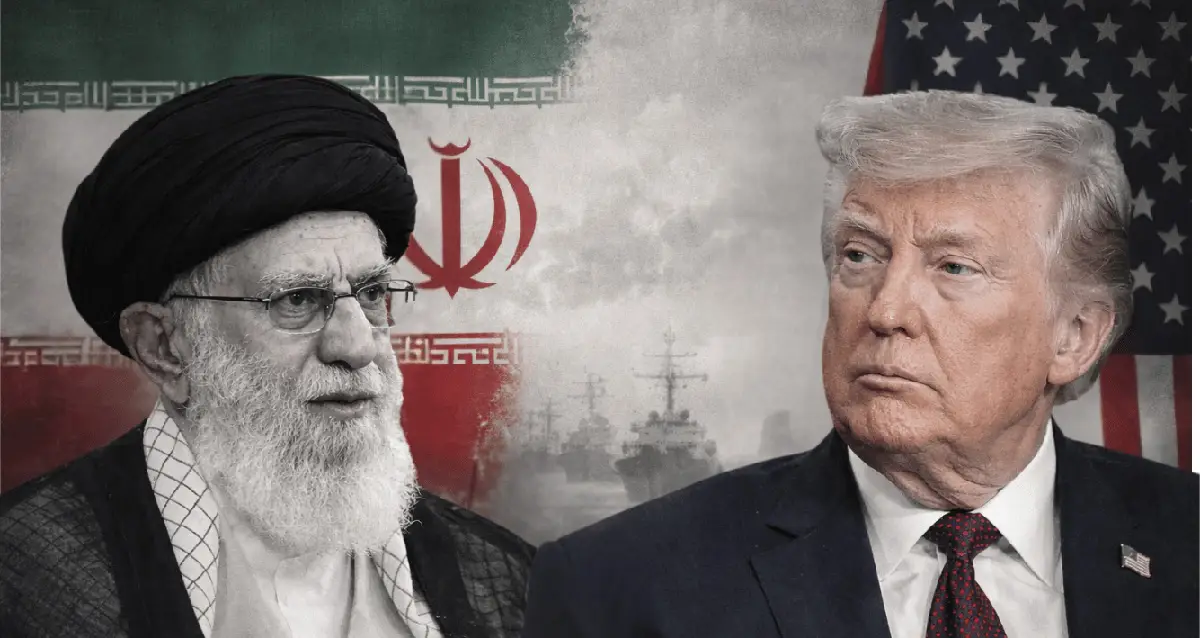
Trump began the war demanding unconditional surrender, calling on Iranian citizens to free themselves and take back their country. Three months on, with Trump desperate to protect his falling approval rating, the US and Iran have jointly announced a 14-point ‘Memorandum of Understanding’ (MOU). The document which Trump signed at the Palace of Versailles (no irony intended) contains key concessions from the US, with the most contentious areas deferred for 60 days.
Art of the deal
The MOU, which both parties have agreed to convert into a binding treaty within 60 days (with the option for this period to be extended by agreement) opens with a declaration of immediate and permanent cessation of hostilities on all fronts, including by US and Iranian allies, meaning Israel and Hezbollah. This explicitly covers Lebanon, with both governments committing to guaranteeing Lebanese territorial integrity and sovereignty, and each pledging not to initiate any future military action against the other.
On access through the Strait of Hormuz, the US commits to lifting its naval blockade within 30 days, with commercial traffic progressively restored. Iran will arrange safe passage for commercial vessels, complete de-mining within the same window, and open discussions with Oman and other Gulf states on the long-term administration of the Strait.
The financial benefits to Iran are significant. US Treasury waivers for Iranian oil exports and all associated services are to take immediate effect. Frozen Iranian assets are to be unlocked, and all American sanctions lifted including unilateral US measures and UN Security Council and the International Atomic Energy Agency (IAEA) sanctions. The US further commits to assembling a reconstruction and development fund for Iran worth at least $300 billion.
On the nuclear question, Iran reaffirms that it will not acquire or develop nuclear weapons, and both sides agree to resolve the status of Iran’s enriched material stockpile, with blending down under IAEA supervision. The longer-term shape of Iran’s enrichment capacity is deferred to the full treaty negotiations, with both parties committed to holding the current status quo in the interim.
The terms represent a strategic defeat for the US and Israel. The reopening of the Strait was the only concrete gain the US secured, and it was open before the war started. The return of IAEA inspectors, hailed as a victory by JD Vance, is only restoring the position as it was before the 12 day war last year. The reaffirmation of the Iranian commitment never to possess a nuclear weapon was contained in the Obama deal which Trump ripped up in 2016. In return, Washington has handed over total sanctions relief and surrendered its leverage over Tehran.
Get The Spark in your inbox
Workers Power’s weekly newsletter
Strategic defeat
At his G7 speech on 17 June, Trump made his most significant concession, acknowledging that Iran has a right to enrich uranium. He also let slip the real driver of his desperation for a deal: the US has only around four weeks of strategic petroleum reserve remaining. Citing the need to avert a ‘worldwide depression’, he said, ‘the one president I did not want to be was the late, great Herbert Hoover. I didn’t want to see economic catastrophe. If you kept this going, that could have happened.’ The irony of the situation appears to be lost on him.
Red line after red line has been crossed. Days after the war started, Defence Secretary Pete Hegseth stated the US objective was to ‘destroy the missile threat’ posed by Iran. At the G7, Trump said, ‘missiles aren’t the problem’ admitting Iran had to have some. On enrichment, the administration had previously demanded the complete elimination of Iran’s nuclear programme. As recently as May, Secretary of State Marco Rubio said Iran needed to ‘walk away from enrichment’. At the G7, with Rubio standing directly behind him, Trump argued it was unreasonable to deny Iran enrichment when other countries had it: ‘You have to use a little common sense.’
On frozen assets, held since the Iranian revolution in 1979, Trump made another major concession, stating ‘it’s not our money, it’s their money. I guess we’re going to have to give it back.’ With all sanctions lifted and a $300 billion investment fund promised, the Iranian regime emerges from the war significantly strengthened, having secured desperately needed cash and a clear political victory against US imperialism on its core red lines, while the US-Israel relationship is more fractured than at any point in recent memory.
That is not to say that Iran has not paid a heavy economic price. The rial has lost 60% of its value, food inflation reached 105% by February with bread and cereals up 140%, and the IMF forecasts a 6.1% GDP contraction in 2026 with inflation running at nearly 69%.
The deal has brought immediate market relief, with Brent crude falling to around its pre-war level, but economists warn against optimism. Approximately 80 mines remain in the central channel of the strait and clearing them will take time and resources. Oil production will take long to recover from widespread damage to facilities across the region, and prices are therefore likely to remain high.
That is of course assuming that the ceasefire holds. Considerable tensions remain, particularly over Iran’s plan to charge fees for transit through the Strait after the 60 day toll free period concludes, which is strongly opposed by the US, and over the extent of any curbs on Iran’s domestic enrichment programme.
The food situation may worsen before it improves. Gulf states supply approximately 45% of global sulphur and around a third of urea exports, both critical to fertiliser production, and these have been stranded by the conflict. The shortage operates on a six to nine month lag, meaning its full impact on food prices will not be felt until after this planting season.
Ceasefire in name only
The most significant potential spoiler is Israel and its territorial ambitions in Lebanon. Following the signing of the MOU, the IDF continued to advance in Southern Lebanon, prompting a Hezbollah attack on an Israeli tank which killed four soldiers. Israel murdered 83 Lebanese and wounded 141 in retaliation.
A ceasefire was announced on the evening of Friday 19 June, but Saturday brought further Israeli strikes, killing 16 and wounding 12, including a strike on a three-storey residential building in the southern town of Barish that killed an entire family. There have been more than 100 Israeli strikes in Lebanon since the ceasefire was announced.
After Hezbollah’s retaliation Israeli foreign minister Itamar Ben-Gvir took to X and launched a genocidal tirade: ‘For every tear of an Israeli mother, a thousand Lebanese mothers must weep. All of Lebanon must burn! […] the blood of our sons and the security of our citizens are not forfeit… this commitment takes precedence over every other consideration’.
Iran’s response has been to close the Strait. This action has been described as the ‘first step’ and if Israel continues ‘further steps will be planned and taken to force the enemy to comply with its obligations’. As a result of these attacks further US/Iran negotiations due to take place in Switzerland were abruptly postponed. Talks have now resumed and the Strait has been reopened, although the situation remains unstable.
Iran has consistently made Israeli withdrawal from Lebanon a precondition of peace talks, while the war remains popular with the Israeli public, who largely view the MOU as a betrayal. The rifts between Trump and Netanyahu have widened sharply since they launched the war ‘shoulder to shoulder’. Trump reportedly called Netanyahu ‘fucking crazy’, become increasingly public in his frustration with Israeli conduct in Lebanon. Facing corruption charges and an October election, Netanyahu’s position looks precarious.
No peace
The MOU is no peace settlement for working people. This deal was stitched together between imperialist powers and regional elites over the heads of those who bore the real cost. Iranian workers have watched their wages disintegrate as the currency collapsed. Lebanese families have been killed in their homes. Billions more will feel the fertiliser shock in their food bills well into next year. The financial windfall from sanctions relief and reconstruction funding will flow to the Iranian state and its associated elites. Workers will see none of it.
Across the world, governments will reach for austerity to repair the damage of a war fought over oil and imperialist dominance. Working people had no hand in starting it and will gain nothing from MOU concessions. Our job is to resist every attempt to pass the costs on to us, and to build the international solidarity that can challenge the system that produced this war in the first place.
The struggles against war and the food crisis are openings that socialists must seize. Building a new revolutionary workers’ International, capable of coordinating resistance across the globe, is the only way to confront a capitalist system that produces war, poverty and hunger as surely as it produces profit. We will not end these things by reforming that system. We will have to overthrow it.