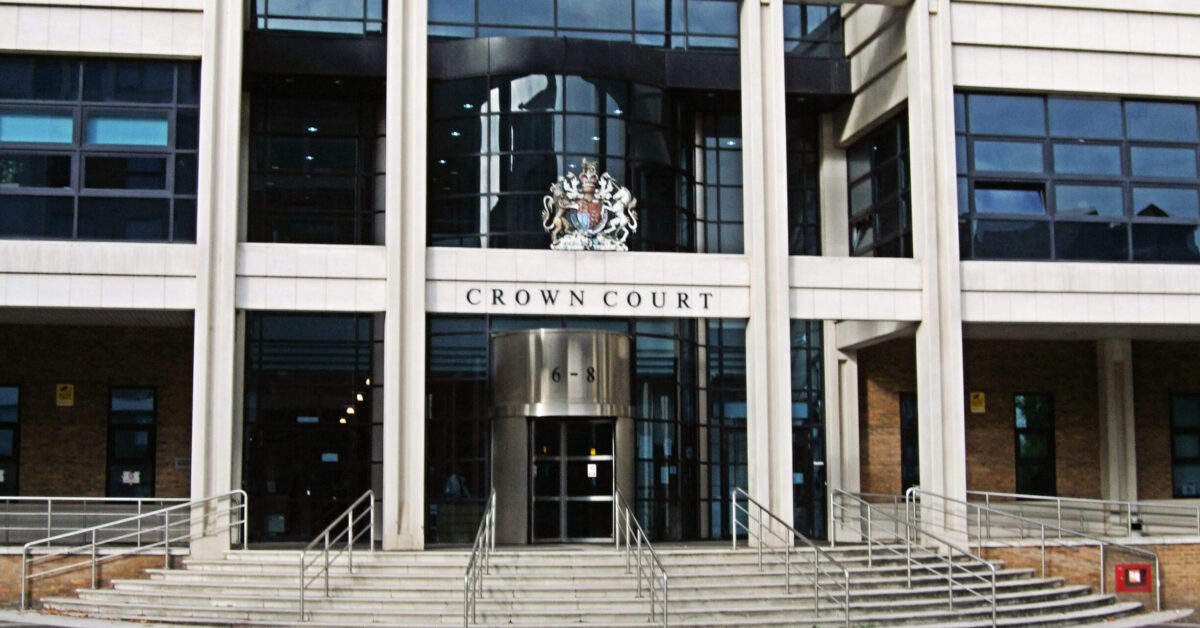
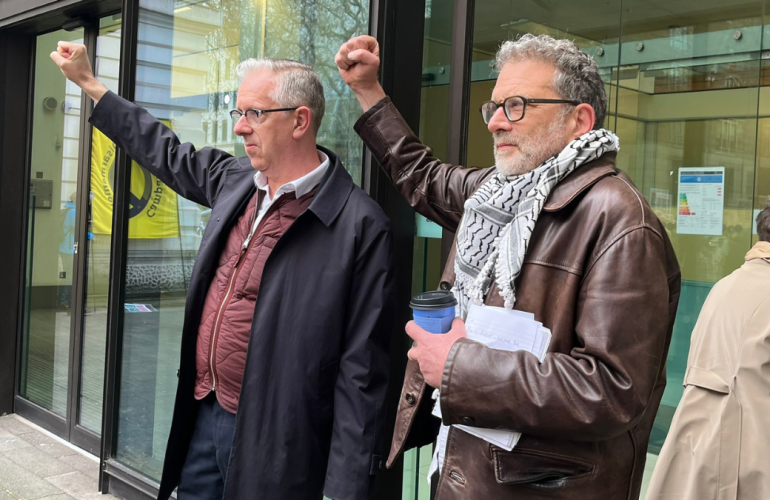
The guilty verdicts handed down on 1 April against Ben Jamal and Chris Nineham are an attack on the right to protest. Both men were convicted for their role in organising the 18 January 2025 national demonstration for Palestine, after police blocked the march to the BBC. They have been punished for leading a peaceful mass protest against genocide and against a broadcaster that has consistently failed to tell the truth about Gaza. We stand with them and support their appeal.
This case should alarm everyone concerned with democratic rights. The state has criminalised protest organisers for defying political restrictions imposed by the police. A central argument of the defence was that those conditions were themselves unlawful. District Judge Daniel Sternberg dismissed that argument and, extraordinarily, declared that he was not obliged to give reasons for doing so. The message is clear: when a movement becomes politically inconvenient, public order law will be used to contain it and punish those who lead it.
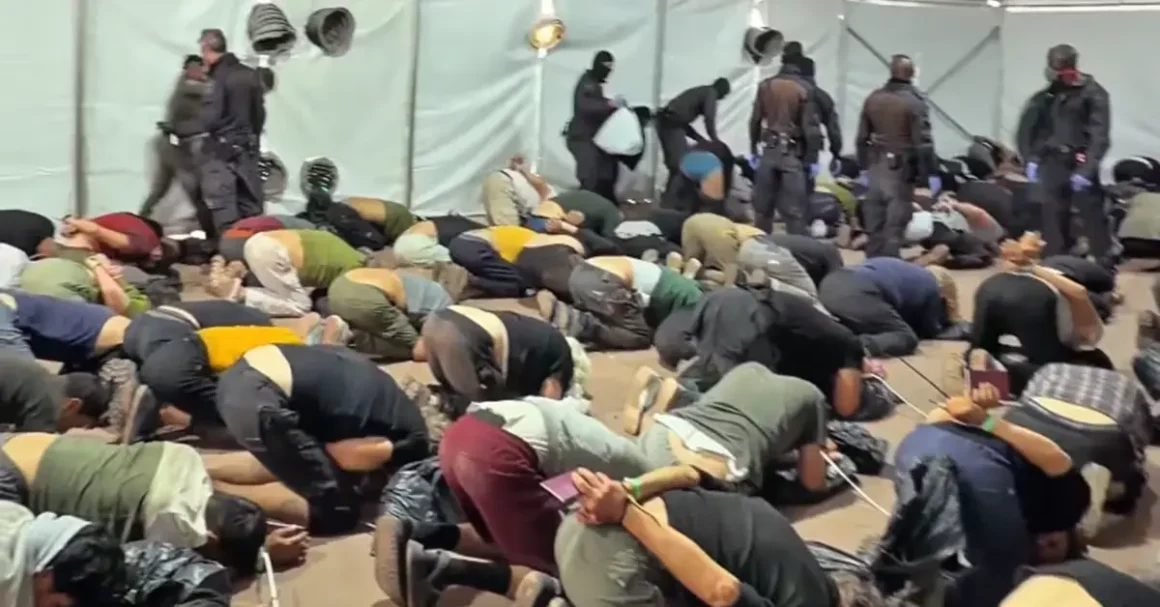
This is part of a wider clampdown. Palestine demonstrations have faced route restrictions, mass arrests and repeated attempts to redraw the limits of what is permitted in public life. The same pattern is visible in the persecution of the Filton 24, who have faced punitive treatment and prolonged pre-trial imprisonment as part of the state’s campaign against Palestine Action. Arrests over alleged support for Palestine Action now run into the thousands. Even after the High Court ruled proscription unlawful, the Metropolitan Police says it will resume arrests while the government pursues its appeal.
The double standard is plain. The same state that criminalises Palestine organisers and persecutes the Filton 24 has handed Whitehall, Parliament Square and Trafalgar Square to Tommy Robinson’s far-right mobilisation on 16 May, while refusing the proposed route for the annual Nakba demonstration. Tommy Robinson’s Unite the Kingdom demonstration in September 2025 was addressed by Elon Musk, who called for the dissolution of parliament and told the crowd that ‘violence is coming’ and they must ‘fight back or die’. Disorder followed. The state is not neutral: it is determining which forms of mass politics may occupy the streets.
Trade union leaders were right to warn that these prosecutions attack the right to protest. But statements are not enough. The labour movement must demand that these convictions are overturned on appeal, that the policing of 18 January is independently investigated, and that the anti-protest regime built up by successive governments is dismantled.
Workers Power Political Committee, 1 April 2026