

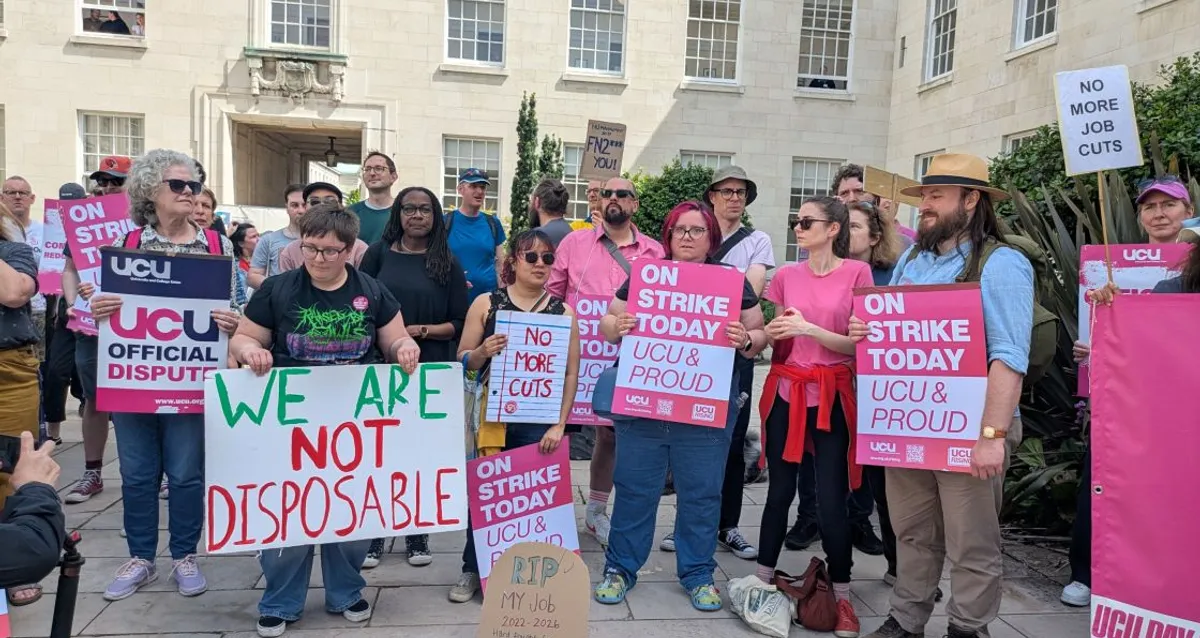
University of Nottingham staff are mounting a ten-week strike against plans to axe hundreds of jobs, close departments and increase workloads.
University and College Union (UCU) members began sustained strike action on 5 October, scheduled to continue until 11 December, following a two-day walkout at the end of September.
The university’s governing council has approved plans to eliminate around 560 jobs and close its Music and Modern Languages departments. Students face larger classes, fewer courses and reduced individual support.
UCU is demanding that management rule out compulsory redundancies and departmental closures, protect teaching and research, and negotiate seriously over alternative proposals submitted by staff.
Management claims the restructuring is necessary to address financial difficulties, including an £85 million deficit in 2024–25. But UCU disputes the justification for compulsory redundancies. Undergraduate recruitment has improved, the university now reports a surplus, and staff have proposed alternative savings that would protect jobs and courses.
Staff and students fight back
The strike follows a marking and assessment boycott earlier this year and a prolonged campaign against the cuts.
Nor is UCU fighting alone. Last year, Unison members organised against plans to eliminate hundreds of support staff posts, winning a temporary guarantee against compulsory redundancies. In July, the UCU, Unison and Unite branches jointly challenged the university council over its handling of the restructuring.
Students have also organised opposition. The Save Nottingham Languages campaign has gathered signatures, organised protests and challenged plans that would leave the East Midlands without a university offering modern languages degrees.
These struggles need to be brought together. Joint staff–student assemblies, involving the existing anti-cuts campaigns and all three campus unions, could coordinate solidarity and deepen the resistance.
Take the fight to the government
Nottingham is not an isolated case. University workers at Edinburgh, Dundee, Goldsmiths and elsewhere are fighting similar attacks.
The danger of leaving each university to fight alone is that negotiations become a question of how many jobs can be eliminated through voluntary rather than compulsory redundancy. This may protect individuals from dismissal, but still means fewer staff, heavier workloads and courses closed.
The demand must be for no compulsory redundancies, no loss of posts and no course closures. But the underlying crisis cannot be resolved through local negotiations alone. Decades of marketisation have left universities competing for tuition fees and international students, with workers and students paying the price when their financial plans fail.
The government must be made to fund higher education properly.
On 14 October, a special UCU higher education conference voted to pursue a national dispute with the Education Secretary over funding and consult members on industrial action. A separate proposal for urgent coordinated action across the sector failed on a tied vote.
The decision to pursue a national dispute must now be translated into action. This requires a rank-and-file movement linking the struggles at Nottingham, Edinburgh and elsewhere, bringing UCU, Unison and Unite members together around common demands and pressing the union leaderships to organise a national fight.
At Nottingham, regular members’ meetings and an elected strike committee, working with the existing student campaigns, can help keep control of the dispute in the hands of those fighting it.
The immediate battle is to stop the cuts, not simply negotiate how they are carried out. The wider fight is for free, publicly funded higher education, with universities run under democratic staff and student control rather than as competing businesses.