On 12 February, La France Insoumise (LFI) MEP Rima Hassan — a high-profile figure in solidarity with Palestine — spoke at a meeting organised by students at Lyon’s Sciences Po. On the margins of the event, the far-right “femo-nationalist” women’s group Némésis held a counter-protest. Némésis is well known for staging provocations at left-wing demonstrations, usually under police protection. This time, police did not escort their action. Némésis later admitted that it had asked some “friends” to come and “keep an eye on things from a distance”. Quentin Deranque was reportedly among them.
Clashes broke out between these Némésis supporters on one side and antifascists and people attending the meeting on the other. Deranque was left brain-dead and died the following day.
It quickly emerged that Deranque was an activist in Action Française, the royalist movement and the oldest far-right organisation in France, historically notorious for its antisemitism. He was also a member of the neo-fascist group Allobroges Bourgoin, and had been sent as a delegate to the 9 May 2025 march in Paris, which commemorates the death of a neo-Nazi militant with a parade of fascist symbols. More recently, Mediapart reported on Deranque’s online activity, including open admiration for Hitler.
The exact circumstances of the clash remain unclear. That did not stop France’s bourgeois political establishment from rushing to conclusions.
Some newspapers illustrated reports of Deranque’s death with photographs of Rima Hassan, exposing the Islamophobia and anti-Palestinian racism that treated her as a presumptive culprit before any investigation had taken place. Jacques-Élie Favrot was widely presumed responsible, and in some cases directly accused of murder. Gérald Darmanin, now justice minister and previously interior minister, declared that “it is clearly the ultra-left that killed him”. Fascist groups have been given a wide media platform. France Culture, for example, invited a spokesperson from La Cocarde, the fascist student union, to comment on the affair.
Rallies in support of Deranque were organised across the country on Sunday 15 February. In Paris, several hundred people gathered outside the Panthéon. National Rally MEP Pierre-Romain Thionnet thundered that “the hands that killed Quentin are Jean-Luc Mélenchon’s little hands”. Far-right parliamentary aides and municipal candidates circulated calls online for the killing of leading figures in LFI and for the extermination of antifascists. LFI offices in several major cities have already been attacked, accused variously of being “murderers” or accomplices. On 18 February, the party’s Paris headquarters was targeted with a bomb threat. On 21 February, fascists from across Europe marched in Lyon in Deranque’s honour.
While the government has reinforced the label of “extreme left”, part of the Socialist Party has moved to break with LFI, and the trade-union leaderships have responded by calling for respect for the rule of law — and in some cases for property. The cumulative effect has been to legitimise the government’s framing of events and to strengthen the far right.
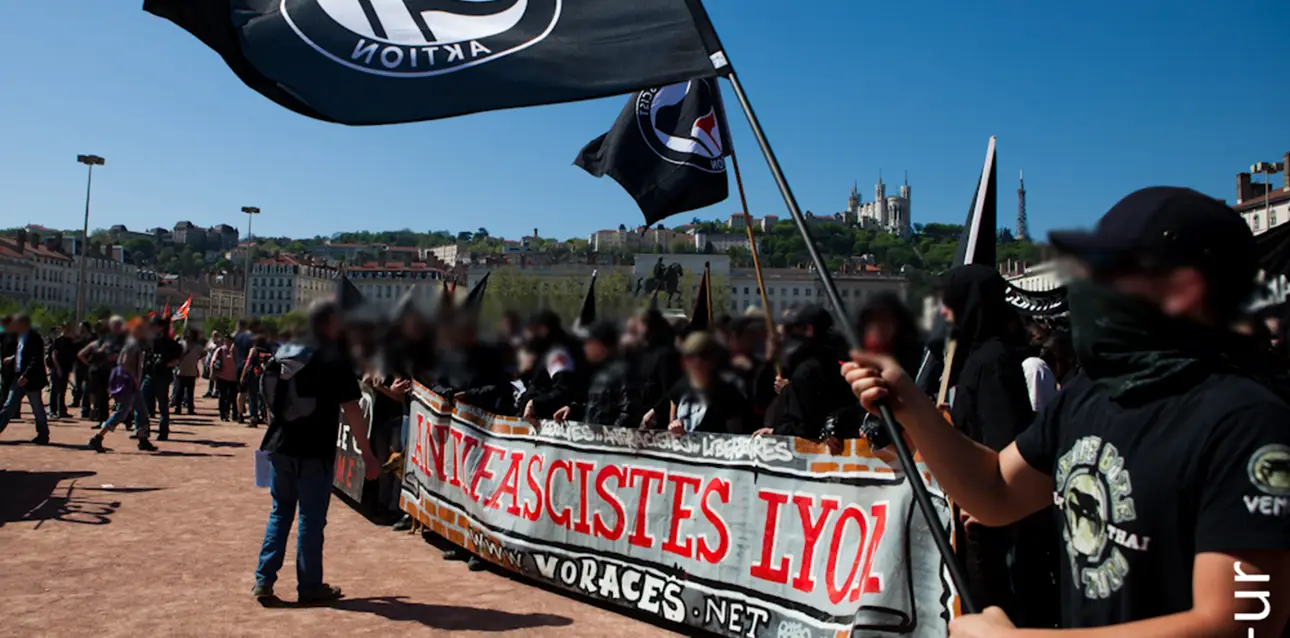
Despite the far right’s claim that Jeune Garde is “La France Insoumise’s militia”, this is false. Jeune Garde was founded before it had any organic links with LFI and was a separate organisation in its own right.
Lyon has become the main French centre of violent far-right groupuscules, so an antifascist response was not long in coming. Weekly clashes between the two camps have continued, even after the formal dissolution of violent organisations on both sides. The far-right group Lyon Populaire re-emerged as Audace Lyon, while former Jeune Garde antifascist activists have plainly continued their activity beyond 12 June 2025, the date of the group’s dissolution.
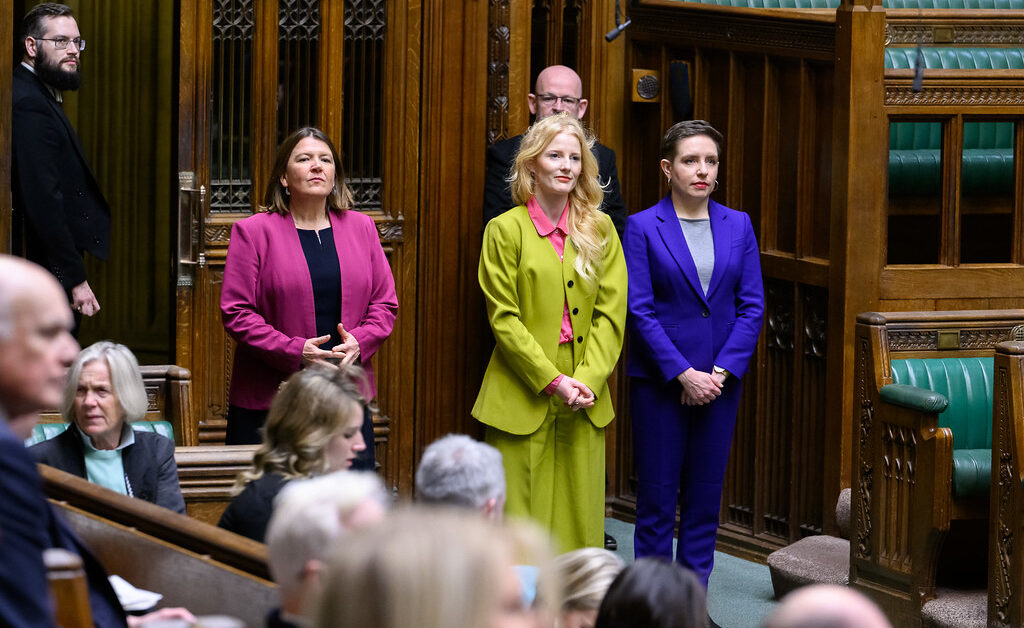
On 17 February, the National Assembly held a minute’s silence for Deranque with near-unanimous support. Formally, this was a tribute to his death. In reality, his death cannot be separated from the political activity in which he was engaged. MPs from LFI to the RN therefore ended up paying tribute to a neo-Nazi street activist. It is worth noting the contrast: Yaël Braun-Pivet, the president of the National Assembly, had reportedly hesitated over granting a minute’s silence to Aboubakar Cissé, who was stabbed 57 times while at a mosque, on the grounds that it was supposedly not a “terrorist act”.
Consequences and political realignment
Every advance by the far right brings with it racist violence, anti-LGBTQ+ violence, and attacks on left-wing activists. That has been true for decades. As the RN grows, fascist groupuscules multiply alongside it, feeding on the same hatreds and benefiting from the increasing indulgence of bourgeois society.
Alongside the violence directed at left-wing activists — something we must expect to continue over a prolonged period — immediate political consequences are already being felt.
What is at stake here is the classic pattern of an RN advance. Its strategy is one of dédiabolisation — “de-demonisation”, or political normalisation. That normalisation can proceed when more moderate parties adopt the RN’s themes and priorities as their own. Interior Minister Bruno Retailleau, serving in François Bayrou’s government, has been central to this process, with a Trump-style rhetoric that dismisses militant opposition to the far right as just another form of blind violence. That is why branding LFI itself as “extreme” is so important: it helps invert the old cordon sanitaire.
For all its incremental normalisation, and despite becoming the largest party in France by vote share in the 2024 legislative elections, Le Pen’s party has still not taken power. Each time the prospect of a national RN victory has loomed, the left and the centre-right have combined in what is known as the barrage républicain — tactical voting to block the far right. The RN needs to break that dam. It can only do so by driving institutional left and right so far apart that such a bloc becomes impossible in practice.
On 18 February, Jordan Bardella explicitly called for the reversal of the old republican-front tactic: LFI should be excluded from the cordon sanitaire, and the RN included within it. That such a project can now be stated so openly shows how far the ideological balance has already shifted to the right.
More unexpectedly, the higher education minister announced that meetings in universities could be banned if they posed a threat to public order. In practice, that gives the authorities a broad pretext for preventive bans on political meetings that might be disrupted by the fascist far right — in other words, left-wing meetings. If a far-right threat to mobilise is enough to make universities silence a basic democratic right, then the fascists have already won a major victory.
What is genuinely new is the public platform now being granted to militants from royalist and neo-fascist groups close to Reconquête. Bolloré’s media empire had already normalised the promotion of figures such as Éric Zemmour and Marion Maréchal. Now even fascist student organisations are invited onto mainstream broadcasters to shed crocodile tears.
The situation has plainly become more dangerous for left-wing activists. That is why the CGT and Solidaires trade unions have both issued warnings calling for vigilance. The CGT statement also called for “respect for the rule of law”, no doubt in part as a way of condemning far-right violence and discouraging adventurist responses from some comrades. But politically such language risks disarming us in the face of a far right that does not submit to the same rules.
At a moment like this, LFI is trapped between two distinct logics. The first is its radical image. The second is its purely electoral strategy and media-centred mode of operation: LFI must appear radical, while also remaining respectable enough to be heard on media platforms owned by the bourgeoisie.
That is why LFI’s antifascism is bankrupt. Having abandoned the streets, it expresses itself through the ballot box. It falls back on the barrage républicain and on electoral alliances with figures like Darmanin and Hollande — politicians who have not hesitated to repress antifascists while tolerating or legitimising fascist forces. But if the RN is rising rapidly, and its fascist satellites are growing bolder, that is because French capitalism — and a right wing radicalising in its image — is entering a deep crisis. LFI, which seeks only to administer this moribund capitalism, cannot offer a response on the scale the situation demands.
A petition circulated by LFI calling for Némésis to be dissolved by the state. That too is a symptom of our class’s demoralisation. The example of Lyon Populaire already shows the profound limits of this method. For an administrative ban to mean anything, the police must actually want to enforce it. That presupposes a repressive apparatus that is neutral towards fascists, which is plainly not the case. To rely on the bourgeois state in this question is therefore a dangerous illusion, born of a deep lack of confidence in the working class’s own capacities.
Get The Spark in your inbox
Workers Power’s weekly newsletter
What must be done
From now on, we must build the broadest possible workers’ alliance against the far-right offensive. That alliance has to be rooted in social and economic struggles, and in resistance to the repression of our class and of all the oppressed.
That means fighting actively alongside comrades with whom we may have profound and even irreconcilable political disagreements, in order to defend our democratic rights and social gains — while maintaining the organisational independence and full freedom of action of each participating force.
We should demand, immediately:
- No dissolution of Jeune Garde. Whatever our political disagreements with it, it has been engaged in self-defence against the fascist danger.
- No prosecutions against those implicated in Deranque’s death.
At the same time, we can rely only on our own forces to defeat the far right. It is therefore crucial to build a broad united front of all democratic organisations, human-rights groups, working-class organisations and youth organisations, aimed at defending immigrant communities, racialised people, LGBTQIA+ people, and political and trade-union activity.
For that:
- Build a mass anti-racist movement rooted in the trade unions and in immigrant and racialised communities.
- Organise self-defence against fascists and racists, and deny them any platform — in the media, in the unions, or on the streets.
Only the organised force of the workers’ movement can crush fascism.
Unite the struggles. Build the united front.