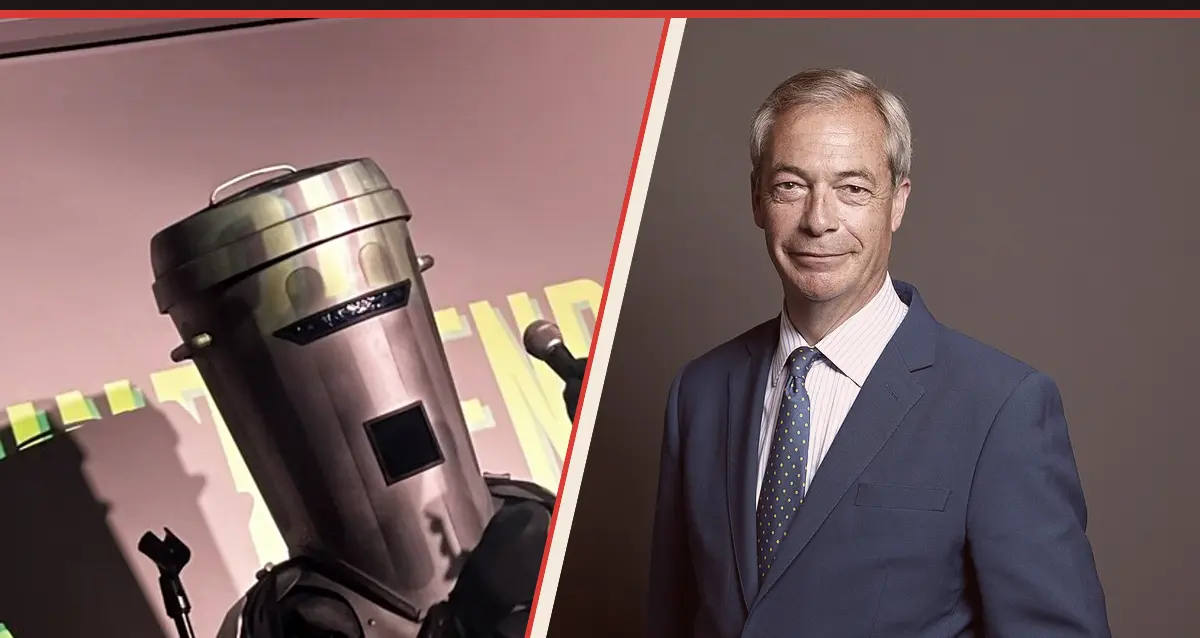
Nigel Farage’s decision to force Clacton into a by-election makes sense as a pre-emptive strike against an adverse standards finding. Re-election would let him dismiss any later sanction as Westminster persecution of a man whose conduct voters had already endorsed.
The decision that Farage has put onto the ballot is the idea that there was nothing wrong with accepting a £5 million gift from Thailand-based crypto billionaire Christopher Harborne and alleged support from George Cottrell without declaring them—and that voters shouldn’t care what parliamentary standards say. Farage denies disclosure was required. But if the rules are irrelevant, why force an election? Its purpose is to supply Farage with a political alibi.
The inquiries are paused while the seat is vacant, but don’t go away. The Commissioner can resume them if Farage is re-elected and may continue even if he loses. If he returns and an adverse finding produces a Commons-approved suspension of at least ten sitting days, a recall petition and another by-election could follow. Farage will gamble that Clacton voters will blame parliament more than him in the event of a second by-election.
The parliamentary unity candidate
Labour, the Conservatives, Liberal Democrats and Greens have declined to stand. Their withdrawal and praise have made Count Binface the unofficial candidate of the parliamentary centre, despite a record field of 34.
Kemi Badenoch suggested Binface may be the ‘people’s candidate’. Andy Burnham said he was carrying ‘the hopes of the nation’, while Rachel Reeves joked about Farage arguing with a bin. This parliamentary bonhomie lets them enjoy Farage’s discomfort without answering for their own records.
The spectacle of Labour, the Conservatives, Liberal Democrats and Greens standing aside while Westminster politicians cluster around Binface is unlikely to puncture Farage’s demagogy. It allows him to recast their cosy joke as proof that the ‘uniparty’ would rather make Clacton residents the butt of a national joke than address the grievances on which Reform has built its support. That charge is cynical—Farage himself forced this unnecessary election—but contempt from those above remains useful fuel for a politician who has spent years posing as its enemy.
Binface’s affordable home, Thames Water and 99 Flake jokes land because they prick at real grievances and recognisable absurdities. But satire is no substitute for class politics. However well-intentioned his candidacy, Westminster has made it a safe receptacle for discontent. The main parties evade their own records and nothing is left after polling day except a deeper well of cynicism.
Get The Spark in your inbox
Workers Power’s weekly newsletter
Faragism without Farage
The laughter conceals how much Farage has achieved for those now mocking him. For years, sections of the press, broadcasters, donors and the Tory right amplified him to pull politics rightwards, poach his voters and exert pressure over immigration, tax and Europe. There was no single conspiracy, only competing capitalist interests using him for their own purposes.
Now British politics has moved firmly onto his ground. The Conservatives embraced Brexit, intensified the hostile environment and attacked protest rights. Labour retained much of that inheritance and added its own anti-migrant rhetoric. As Workers Power has argued, the ‘insider’ parties chase the ‘outsider’ Farage.
Reliability is a strategic as well as financial question. Reform’s former leader in Wales, Nathan Gill was jailed for taking payments to promote pro-Kremlin positions. Farage argues that western expansion provoked Russia’s invasion of Ukraine and binds himself to Trump as Trump destabilises the Atlantic alliance. This does not establish foreign control over Farage. But for the British ruling class, a Farage government directing foreign policy, intelligence and the security services is far riskier than pressure from the margins. A useful pressure can easily become a liability as international alliances fracture and the war drums beat louder.
That perhaps helps explain the cooling with the right-wing press. Last year Farage courted Rupert Murdoch’s News UK; now several titles have attacked him, and he reportedly had a furious confrontation with Times editor Tony Gallagher. This conflict within the establishment shows sections of the ruling class want Farage disciplined while retaining the political settlement he created: Faragism without Farage.
Money talks
Of course none of this makes Farage a victim. His finances should be investigated, with full disclosure and restrictions on anonymous, company and cryptoasset funding. But a blanket cap on ‘large donations’ equates a billionaire’s cheque with a union political fund. The GMB and other unions have opposed proposals that could restrict affiliations funded by thousands of members. A workers’ party must be able to receive collectively authorised union support. The answer is democratic control by union members and restrictions on private fortunes and company money.
The proposed cryptoasset moratorium is not yet law. It concerns donations made in cryptoassets, not every cash payment or gift from a crypto billionaire. But capital mainly exerts influence through newspapers, lobbying, think tanks and control over investment. While regulation can obstruct particular routes, it can’t abolish that power or the conditions sustaining Reform: low wages, insecure work, collapsing services, housing misery and contempt for the parties responsible. Farage diverts that anger against migrants and other scapegoats.
Austria’s Ibiza corruption scandal brought down a government and damaged the far-right Freedom Party in 2019. Five years later, it won the general election with 28.8 per cent. Legal action creates hurdles but without a working-class alternative the right can reliably recycle sanctions into a persecution narrative.
None of Clacton’s 34 candidates offers that alternative. Workers Power calls for a spoiled ballot marked ‘No to Farage—no to rule by the rich’. The pressing task is to build a working-class party rooted in struggles over wages, housing and public services, fighting racism and offering a socialist answer to the crisis Farage exploits.