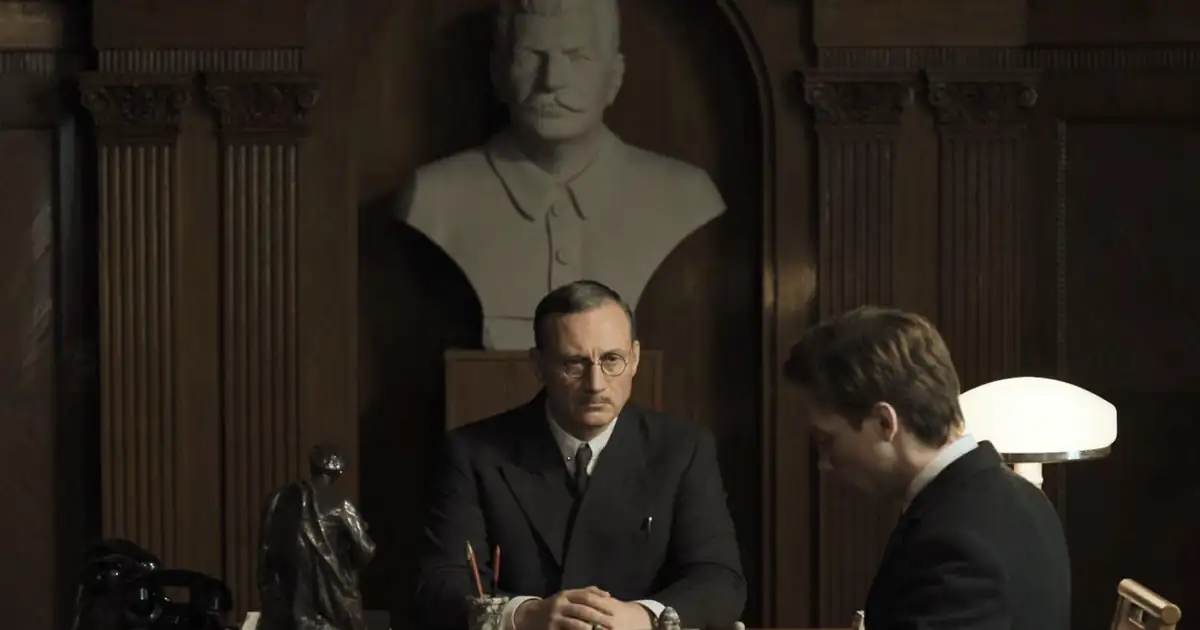
Two Prosecutors, directed by Sergei Loznitsa
This excellent film is set in the USSR in 1937, amid Stalin’s purges of what remained of the old Bolshevik revolutionaries and their replacement by people loyal to Stalin himself, willing to do whatever was required to gain status and what they perceived as power. Along with political opponents, or simply anyone political, tens of thousands of ordinary people were tortured and killed.
The film is directed by Ukrainian filmmaker Sergei Loznitsa, who fell out of favour because he is not a Ukrainian nationalist and argued that there should not be a boycott of Russian filmmakers who opposed Putin’s crimes. Loznitsa was expelled from the Ukrainian Film Academy and now lives in Berlin. One of his previous films, Babi Yar: Context, shows how Ukrainians took part in the Nazi massacre of 33,771 Kyiv Jews in the Babi Yar ravine, four miles north of the city, in 1941.
Stalinist bureaucracy
Two Prosecutors is a chilling and sinister representation of the mechanisms of the Stalinist bureaucracy, the ways in which it tries to obstruct and demoralise those who try to raise criticisms or expose injustice and cruelty. When lies and obstructive behaviour fail, arrest, beatings, starvation and death await.
This film opens in a prison where feeble and sick men sometimes simply drop dead. Warders joke about how incompetent they are. One old man is given a sack of papers to burn, which turn out to be letters written to the local prosecutor by the prisoners. But he saves one of the letters, written in blood, from prisoner Stepniak, himself a former prosecutor. Miraculously it escapes through a seemingly endless series of metal doors and reaches the outside world, where a young idealistic prosecutor reads it and goes to the prison to investigate Stepniak’s complaint. He is not to be put off, despite the tactics of the cruel and sleazy prison authorities — he is asked whether he is a virgin — and when eventually he reaches the depths of the prison and the letter writer’s cell, he sees the broken body of the dying prisoner.
The young prosecutor decides he must take this further and travels to Moscow to see the chief prosecutor, who he genuinely believes will be shocked by the illegal activities of the security services, the NKVD. After waiting for hours and insisting on a meeting, the young man seals his fate by asking for “rogue elements” who have corrupted the NKVD to be brought to “Soviet justice”.
He is provided with a travel pass and told to go back and bring proof of his accusations. Whereas on his journey to the capital he was in a packed carriage on wooden benches with ordinary folk, including an old amputee soldier, his return is in a comfortable four-berth couchette where two men offer him food and drink and a sing-along to a Stalinist teamwork song. The men, like many other sleazy individuals in the film, ask the young prosecutor if he is a virgin, whether girls “give it up easily to him” and so on. This can be understood on many levels. Perhaps they think he is not sexually interested in women, or that he is naive, inexperienced and just “too young”. Or are they mocking him because he will not tell them his “secrets”, secrets that can be extracted through torture?
These men are not what they seem and the trusting young prosecutor’s mission comes to an end in a way he did not expect.
The film is shot in muted colours: greys and browns; we never see a hint of sunshine. It creates a quietly menacing atmosphere, with mercifully none of the noisy sound effects and constantly busy soundtracks so usual in films these days. We hear the groans of the tortured, the slamming of the metal doors, the creaks of the hinges. The camera dwells on the inscrutable faces of the functionaries. There are long periods of silence and looks. When people look, it matters; when people speak, we listen.
Get The Spark in your inbox
Workers Power’s weekly newsletter
Who should be memorialised
Estimates of those killed during the “Great Purge” of 1937–38 are between 700,000 and one million people. Some years ago I visited an exhibition at The Photographers’ Gallery in London, which showed Soviet-era photographs of prisoners in Stalin’s jails awaiting execution. They were ordinary people from all walks of life, accused on all sorts of trumped-up charges. These are the people who deserve to be memorialised, not Stalin’s busts and portraits, which appear in the offices of the bureaucrats. There are a few of Lenin as well.
Stalin and his executioners poisoned the name of communism for generations to come.
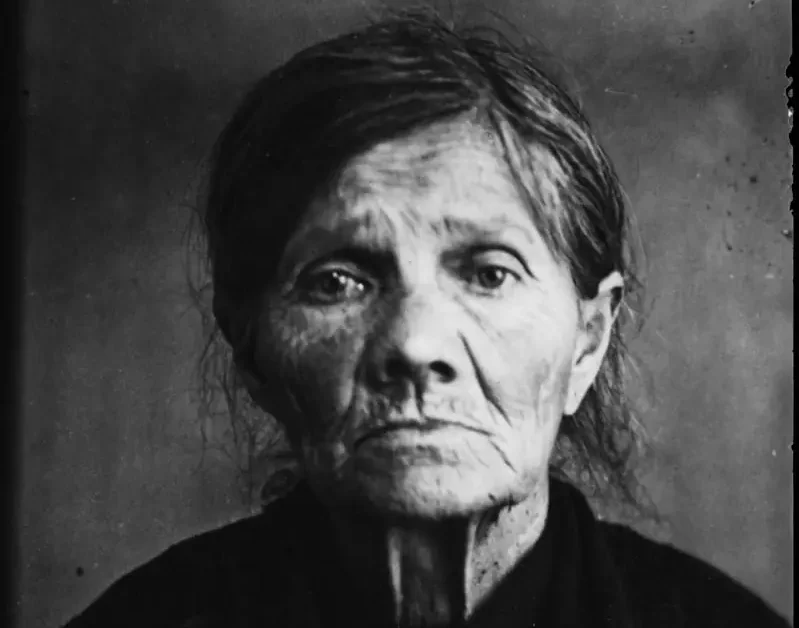
Marfa Ilichna Ryazantseva: Russian; born in 1866 in Makhachkala, Tverskaya Oblast; uneducated; no party affiliation; retired; lived in Moscow, 62/26 1st Meshchanskaya Street. Arrested 27 August 1937. Sentenced to death 8 October 1937. Executed 11 October 1937. Rehabilitated in 1989.