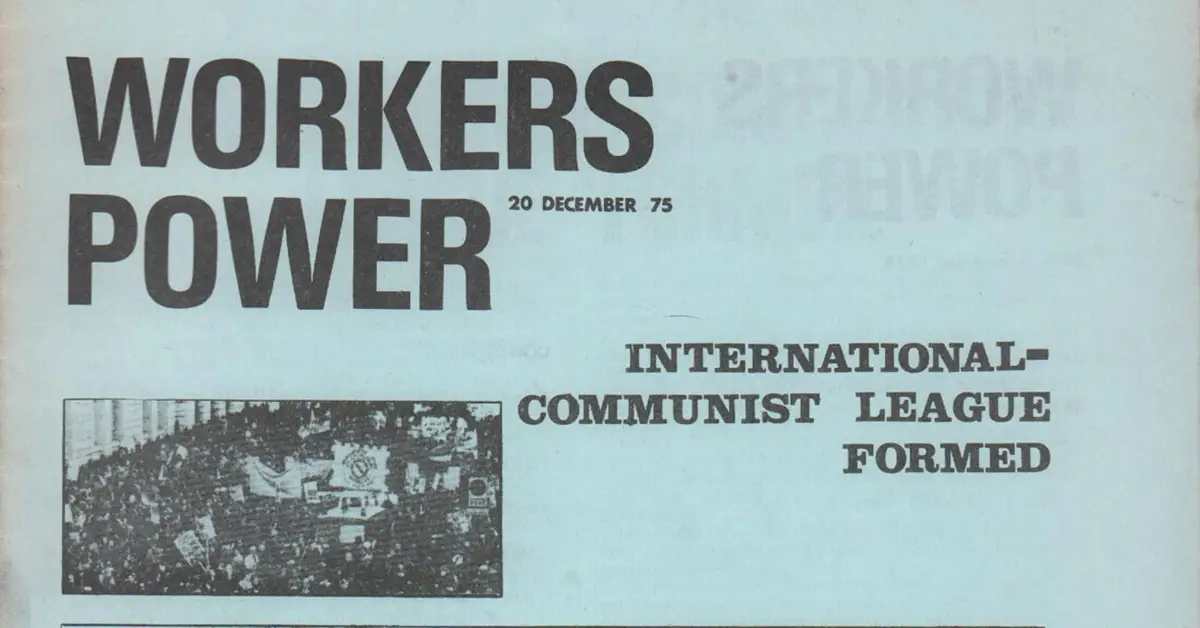
The protest march of 25,000 workers in London against unemployment represents a significant hardening of opposition by sections of workers to the policies of the Wilson government. Branches of all major unions were represented as well as District Committees, Trades Councils and unemployed workers. Especially evident were contingents of workers from Chrysler and the building industry.
The slogans for the march were openly anti-government, echoing as they did the demands for nationalisation and for work sharing with no loss of pay. This makes one thing clear. The fight against unemployment has definitely begun. Rank and file pressure has even forced the TGWU Executive Council to recognise that ‘the present level of unemployment is totally unacceptable’. It has taken the trade union leaders long enough to realise. What do they now intend to do about it?
They intend to pressurise the Labour government to take action to cut down the level of unemployment. Erif Heffer promised the Liverpool demonstration to fight to get unemployment down to the million level by the end of the year.
What action do they want the government to take? Are they demanding nationalisation without compensation for all firms declaring redundancy? No. Are they demanding public works under trade union control while out schools and hospitals collapse and 170,000 workers are unemployed? No. Are they demanding work or full pay? No.
They are calling for a lessening of HP restriction, for selective import controls so that workers elsewhere will feel the brunt of unemployment and for a reduction of VAT on consumer durable; plus they are calling for more government aid for training and for areas of high unemployment (which areas are not?). These policies just do not answer the problems — they accept that workers must pay the price for the crisis; they just want the price reduced a little.
And what pressure do they intend to bring on the bosses and the Labour government? Are they campaigning against overtime and for work sharing on full pay? No. Personna workers even had to send flying pickets to AUEW headquarters to pressure the executive. Are they fighting to organise demonstrations and occupations? No. Their idea of pressure is closed meetings with the government and the CBI to plead that unemployment levels are becoming unacceptable. What kind of pressure is that?
That movement that has built up over the last few months must go forward. But, in order to do so, it needs clear alternative policies and organisation to the leadership of the trade union movement. That is why we call for the building of trade union committees against unemployment in the localities. These must involve as broad a number of workers as possible. There is no point in a small group of militants declaring themselves to be such a committee unless the trade union movement in the areas at branch, Trades Council and shop stewards committee level, will not act. We must work to force them to act.
Trades Councils
Not only do Trades Councils not represent all trade union branches in the area, they do not represent the unemployed or shop steward committees. Trades Council campaign committees must be broadened to include shop stewards representatives if they are to organise support in the workplaces where our strength lies.
But, such campaigns do not just need a few ‘structural changes’. They need a clear campaign of action to involve all workers and to relate to all the problems that unemployment poses to groups of workers.
Organise support
They must be able to mobilise support — collections, blacking and picketing for all groups of workers fighting redundancies. The Hull dockers’ blacking of all Phillip Morris goods in support of the Personna workers shows the way forward.
They must organise meetings with speakers involved in struggles and take these meetings to the factory gates.
Fight for policies
All committees must have clear policies for how to fight redundancy. They must argue with all threatened workers not only for work sharing on full pay, not only for occupations to ensure secure jobs but must prove that they can deliver support and assistance.
They must arrange for the books and profits of local companies to be examined to expose the lies and frauds of the bosses.
Employed workers
Unemployment campaigns must fight against overtime, productivity deals and voluntary redundancies. They must fight for the 35-hour week now with no loss of pay. This must be done both inside official trade union machine — District Committees, shop stewards’ committees and trade union branches — and outside, for example using unemployed workers, where they are organised, to leaflet and persuade workers who are still working overtime.
The unemployed
We must campaign for the trade union movement to take up the fight of the unemployed. We must fight for trade union registration of the unemployed and for the formation of unemployed workers’ committees recognised and supported by the local labour movement. This is not always easy. In many areas the unemployed have little previous experience of organisation or have seen their jobs sold down the river by the trade union movement. Special TU schools for the unemployed organised near the doles are just one way that the local committees can take up to cement the links between employed and unemployed workers.
Women, blacks and youth
At our peril we will ignore the problems that women, blacks and youth face in the present fight against redundancy; we must approach all organisations representing black workers and discuss their specific problems and they must be involved in the campaign. Likewise we must recognise the effect of unemployment on women workers. The traditional attitudes and prejudices of male workers, the extent of part-time working and traditionally low levels of unionisation all make women particularly vulnerable. Rank and file committees or Trades Council committees must ensure that local Trades Councils’ Women sub-committees and Working Women’s Charter groups are drawn into the campaign if it is to be solid and overcome the divisions.
Outside the trade union movement, straight from school with no prospects or future, youth are open to the appeals of army recruitment and the National Front unless we can offer them a fight and an alternative. Trade Union Committees against unemployment must organise meetings to appeal to youth — not in the patronising style of so many labour movement organisations, but in a style and with policies that young workers can understand and relate to.
We must build these clear and united campaigns in the areas. The London demonstration showed that the numbers and the anger exists to go ahead. Such a movement can be built which will not just ask for improved HP terms. It will be a movement that will not just politically pressurise Healey and Wilson and their CBI friends.
Revolutionaries must have clear policies inside these campaigns. We can put to the test the solutions and the campaigns of the Labour Left and Trade Union leaders. With clear policies we can offer our alternatives to the bosses’ crisis and prove ourselves the most effective fighters against unemployment.