
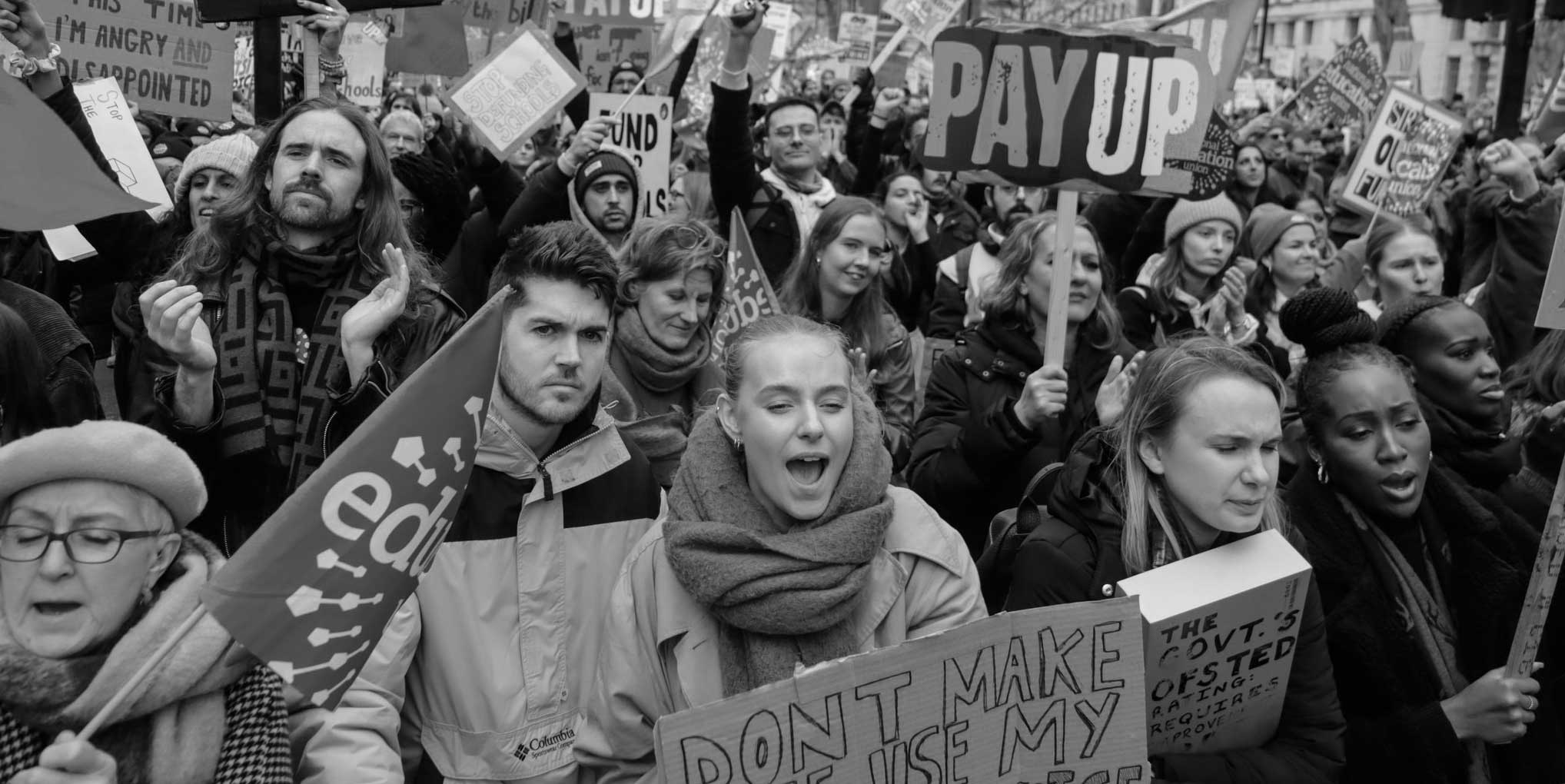
The National Education Union will launch an indicative strike ballot on 28th February over the government’s latest pay rise offer of 6.5% (over 3 years) for teachers. Teachers should get out a massive yes vote and demand a legal ballot to follow.
The offer is an insult, a pay cut on its own terms, when the CPI rate of inflation hit 3.4% in December, with food and housing prices rising even higher. At best it is predicted to flatten out to 2% by 2027. The background is an 18% fall in real pay since 2010, according to the School Teacher’s Review Body. Worse, no new money is budgeted, so schools need to make ‘efficiencies’ to pay teachers, cutting jobs, hiking workloads and making students worse off.
There are no ‘efficiencies’ left to be made. Adjusting for inflation, a school today gets £558 less per pupil each year than in 2010 (NEU, 2025). Many schools are running on empty, with chronic understaffing and lack of resources: 40% of teachers buy ‘key supplies’ like pencils out of their own pocket (Public First, 2023).
The National Association of Headteachers found that 98% of its members said they did not have the resources to meet the needs of all their SEND (special educational needs and/or disabilities) students: one in five pupils in mainstream education and rising.
To add injury to insult, the government wants to increase teacher workload even more by loosening rules around ‘directed time’ or contracted hours, currently averaging 6.5 hours per school day and including training and some (not all) time for lesson prep. Directed time provisions were won from industrial action in the 1980s, including strikes and a ‘withdrawal of goodwill’ where teachers refused to supervise lunchtimes on their breaks.
Education Secretary Bridget Phillipson has described directed time as an “an unusual contractual provision” constraining “schools’ deployment of teachers”. Teachers already work outside of directed hours, with the NEU’s research last year finding an average working week of over 50 hours – approximately 20 hours being unpaid overtime. Rather than giving schools the budget for more staff, the government would prefer teachers lose their lunch hour.
Back to square one
The NEU’s last indicative ballot, less than a year ago, saw 84% of voting members vote to strike over a paltry 2.8% pay offer, but with a turnout just below the legal 50% threshold for industrial action. After weeks of being told to ‘get strike ready’, the NEC voted against launching a proper ballot, returning instead to the negotiating table – we can see where that got us.
Ironically this undemocratic threshold may soon be abolished with the passing of the Employment Relations Act, though Labour is prevaricating over this and need to be threatened with decisive action. Either way, we should aim for the highest possible turnout, because this prepares us for an active strike.
Teachers want (and deserve) higher pay, but they are worried by an unfunded pay rise eating into school budgets. Some members say they would strike for a bigger school budget and improvement in conditions over a pay rise. Things are so bad you even hear some headteachers supporting a strike if it means more funding for schools!
For years we were told to “wait until the Tories are out”, but despite Starmer’s promises on education, such as 6,500 new teachers and reform to Ofsted, little has been delivered. While the cruelty of the single-word Ofsted judgment has been replaced by a ‘Nando’s menu’ style ranking, the crushing pressure of inspections remains.
Throwing money at bursaries for new teachers ignores the deeper crisis: retention. An estimated 40,000 teachers quit each year, and 10% trainees fail to complete their first year due to horrific workplace conditions, unmanageable workloads and declining pay. Government tinkering around the edges won’t fix our broken education system; we need radical change.
Teachers should remember that we have the power. A national strike in schools, across all staff, would hit large parts of the economy. But our workplaces are divided. Teaching assistants, cleaners and catering staff are organised in GMB, Unite and Unison, still battling the NEU over ‘poaching’ support staff who have joined it due to its more combative stance.
The NEU is the largest teachers union with around 500,000 members. The more moderate NASUWT has 259,000. It has not commented on the upcoming NEU ballot, but in 2024, 78% of its members rejected moving to a formal ballot, with the leadership preferring to focus on ‘political campaigning’.
NASUWT also has a less vibrant democracy, with its latest general secretary Matt Wrack granted the post unopposed, despite never having worked in a school. Elections were opened again following legal action from a challenger, who lost to Wrack on a pitiful 4.7% turnout.
Let’s get strike ready
The NEU needs to be much more dynamic and aggressive to convince NASUWT members to join us on strike, and if necessary go out without them to lead by example. Without lapsing into cheap cynicism, the NEU’s general secretary Daniel Kebede, who loves to decry the pay of academy trust CEOs, is himself raking in a whopping £122,000 – while teaching assistants are sworn at, spat at, bitten and bruised for less than the £17,000 he claimed in expenses last year. Perhaps the bureaucrats at the top in their comfy positions prefer friendly relations with the government to actually fighting for change.
NEU activists need to get organised to win a yes vote and insist on a strike ballot. Three years ago many schools and branches set up strike committees. which were great mobilisers but came too late to change the course of the dispute, leaving us with a below-inflation pay rise.
This time let’s set them up by electing strike committees now, at the start of the campaign. We should aim to draw members of the other unions into the pay debate, inspiring them to demand their unions follow suit: all staff need a real living wage. By demanding more, not fewer funds for teaching and SEND support, we can win parents and pupils to our side.
So let’s use the upcoming ballot campaign to get ‘strike ready’, building rank and file organisation in our schools to ensure a successful strike and struggle for the radical change we need in education. Solidarity to all school staff!