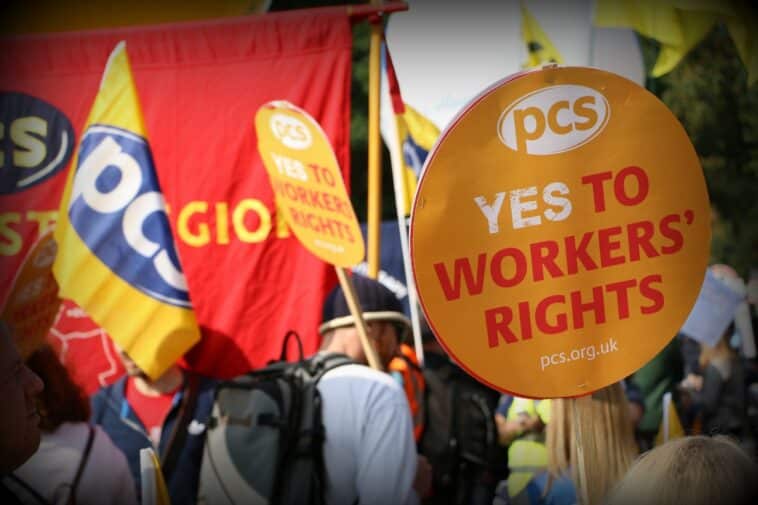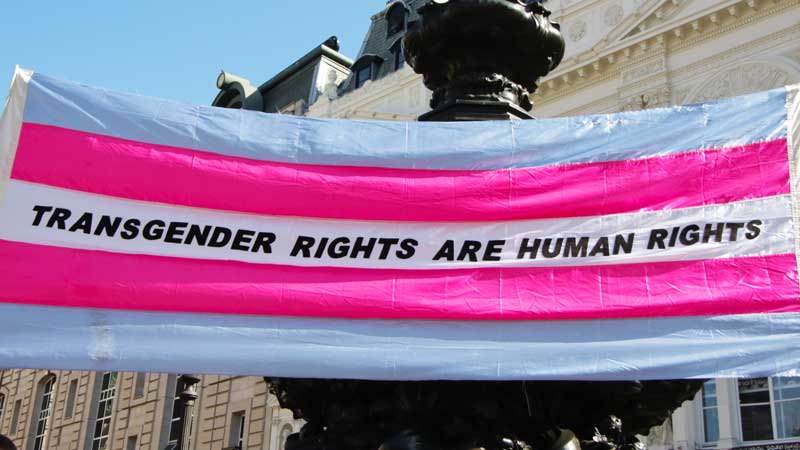

The 2026 Annual Delegate Conference of the Public and Commercial Services Union (PCS) has passed policy opposing the 2025 Supreme Court judgment on sex in the Equality Act. After a year in which the union leadership retreated from established pro-trans positions, the vote was a clear sign that many PCS members and activists want the union to resist, not accommodate, the legal offensive against trans rights.
The ruling was part of a wider legal and political offensive to redefine gender in ways that exclude trans people from public life. As Workers Power argued after the Supreme Court judgment, the issue cannot be left to lawyers or official guidance: it has to be taken up by the labour movement.
Leadership retreat
The significance of this year’s vote can only be understood against the background of the 2025 conference, which became a flashpoint when the union leadership instructed trans delegates to use accessible toilets and refused to print motions opposing the Supreme Court judgment or reaffirming the union’s existing pro-trans rights policy. The effect was to shut down democratic discussion at exactly the moment when members needed a clear, militant response to an escalating attack on trans rights.
This year’s conference began in a similar vein. PCS Proud condemned outgoing president Martin Cavanagh’s repeated references to the ‘LGB community’, insisting: ‘No LGBT without the T.’ Most motions on trans rights were kept off the agenda. Yet the attempt to narrow debate only exposed the gap between the leadership and the wider membership: the sole motion that was printed was carried by an overwhelming majority.
Get The Spark in your inbox
Workers Power’s weekly newsletter
A vote for resistance
That result matters politically as well as procedurally. The carried motion committed PCS to strengthen its defence of trans+ members, restore trans awareness training, seek legal advice so the union can defend members’ rights, and call for full parliamentary scrutiny of the EHRC’s updated Code of Practice. In other words, despite the filtering of motions and the caution of the outgoing leadership, delegates still voted decisively for a position rooted in solidarity, democratic control and opposition to trans exclusion.
The timing made the vote especially important. On 21 May 2026, the EHRC’s updated Code of Practice for services, public functions and associations was laid before Parliament. If approved, it will give statutory force to guidance shaped by the Supreme Court judgment and encourage service providers to exclude trans people from spaces aligned with their affirmed gender. PCS delegates were therefore not debating an abstract question. They were deciding, in real time, whether the union would accommodate a reactionary shift in the law’s application or organise against it.
The code and the workplace
The EHRC guidance is dangerous not only because of its immediate impact on toilets and changing spaces, but because of the wider social logic it advances. Toilets are the symbolic issue through which a broader programme is being pushed: the normalisation of trans exclusion from public life and the policing of sex, gender and appearance more widely.
By treating access to single-sex services according to affirmed gender as something that could strip those services of their legal status and expose providers to challenge, the guidance encourages organisations to make exclusion the safest administrative option. That creates a chilling effect far beyond any single setting.
This is why the question cannot be separated from workplace organisation. As Workers Power argued in defending trans rights at work, union activists cannot wait for cautious officials or employer lawyers. Branches need to organise collectively before management rewrites policies, isolates trans workers or presents exclusion as a neutral legal necessity.
What activists should do
The lesson of the PCS conference is clear: trade unionists must organise against transphobia and defend trans rights in the workplace and across society. That means refusing to treat trans rights as a side issue or culture-war distraction. Employers and governments use division to weaken collective organisation, and every retreat on trans equality makes the whole working class weaker. A serious union response has to combine political opposition to discriminatory guidance with practical solidarity for members facing harassment, exclusion or victimisation.
There are concrete steps union activists can take. Branches can pass motions reaffirming trans-inclusive policy, demand that employers maintain inclusive facilities, and organise members around that demand. PCS reps and members should use the training agreed by conference to equip themselves with the knowledge and arguments needed to defend trans rights in the workplace and beyond.
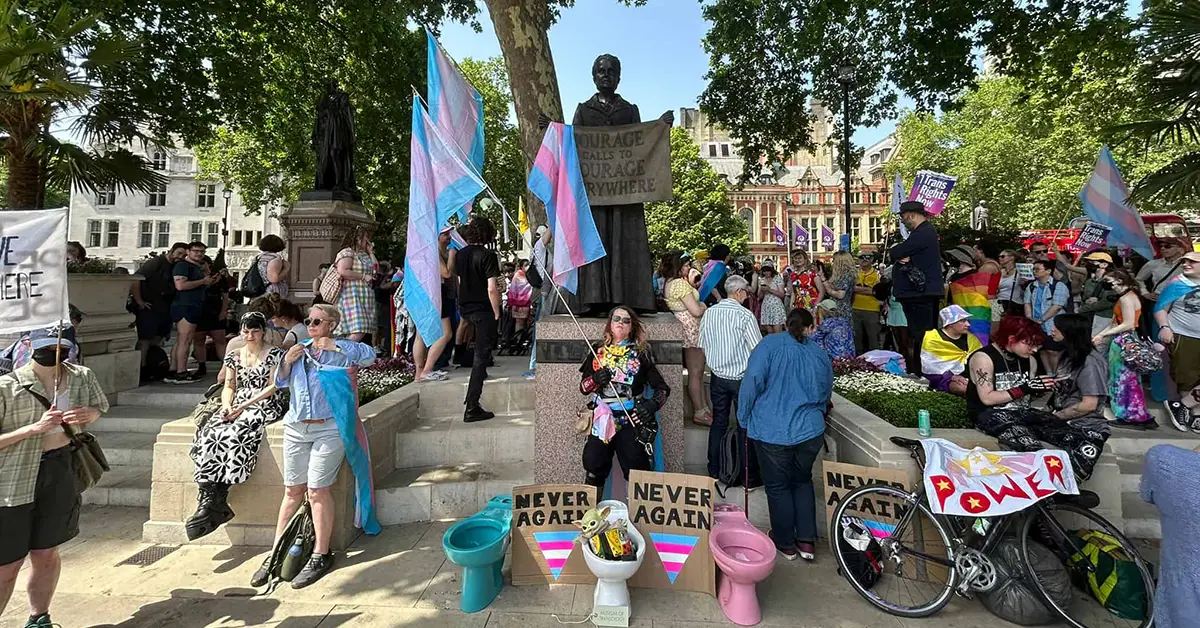
Trade unionists should also participate in the wider resistance to the Supreme Court judgment and EHRC guidance: joining demonstrations, backing trans-led campaigns and making clear in practice that an injury to one is an injury to all. The protests that followed the Supreme Court ruling showed that the attack can be met with organised resistance.
A new leadership will be judged by action
As a result of leadership elections held before conference, and National Standing Orders Committee elections held at conference, PCS now has a majority leadership and NSOC that support trans rights. That is a gain. But winning positions is only the beginning of the battle.
The new leadership must arm members with the tools, advice and support needed to defeat discriminatory workplace policies. It must give practical backing to reps and members who refuse to police trans colleagues. And it must ensure PCS is visible in the wider fightback: not as a cautious observer, but as a union committed to defending every member against reactionary attacks.