
Buffeted by parties to the left and right, enmired in scandal, plagued by indecision, only a leadership vacuum keeps Starmer in Number 10, argues Rebecca Anderson
Labour’s humiliation in the Gorton and Denton by-election confirms the Labour Party faces one of the deepest crises in its history. Its electoral base is fragmenting, its authority is collapsing and its relationship with the trade unions is under strain.
Since winning a landslide majority in 2024, Labour has gone from hero to zero, with polls now suggesting it could come third nationally, behind Reform UK, and retain as few as 64 seats in a general election were held to. Party membership has reportedly fallen below that of Reform.
As British politics polarises, Labour is losing support to both left and right, largely due to Keir Starmer’s failure to deliver on his central promises to relieve the cost of living, NHS waiting lists and the housing crisis less than two years into government. Arguments he must stay the course after Gorton to deliver growth ring hollow against the reality of cuts and policy drift.
Rather than break with the Conservative legacy, Starmer has doubled down on it—cracking down on protest, attacking migrants, boosting military spending, and posturing patriotically in an attempt to outflank the right.
Then came the scandal of appointment of arch-Blairite Peter Mandelson as US ambassador, fast-tracked despite his long-known links to Jeffrey Epstein. Starmer’s evasive and contradictory explanation shattered what remained of his authority.
These betrayals have created fertile ground for Labour’s rivals. Reform UK has capitalised on anger over stagnation and immigration, while the Greens have attracted disillusioned Labour voters—particularly young people, Muslims, and urban voters—by opposing austerity and Israel’s war on Gaza. May’s local elections are likely to deepen Labour’s crisis further.
Polarisation
The rise of both Reform and the Greens is not accidental. It reflects decades of stagnant wages, rising inequality, and decaying public services, alongside a widespread belief that mainstream parties are incapable of addressing structural problems.
This crisis has an international dimension. Across Europe and beyond, social democratic parties have been hollowed out as capitalism enters a prolonged period of low profitability, economic instability, and social polarisation. From Orbán in Hungary to Trump in the United States, authoritarian and populist forces have grown as centre-left parties cling to an eroding political middle ground.
Labour’s predicament is compounded by a profound leadership vacuum as no successor is clear. Wes Streeting is closely associated with Mandelson and Angela Rayner remains tainted by the Brighton flat scandal, while Starmer blocked Manchester mayor Andy Burnham from entering parliament, fearing a leadership challenge.
Yet any new leader would face the same constraints, as head of a reformist party committed to managing capitalism and with no alternative to austerity when growth is weak, profits are low and Trump’s tariffs destabilise markets. The crisis is political, not one of personality.
Some in the party leadership dismiss Gorton as a protest vote and argue that the Greens and Reform are both ‘extremist’ and unable to form a government. But such reassurances are increasingly implausible. A Farage-led government may seem unlikely, but it could be Starmer’s only legacy.
Labour’s base
Green leader Zack Polanski and Your Party’s Zara Sultana have declared ‘Labour is dead,’ but that is premature. The party retains one decisive advantage that could stave off complete collapse which explains its historic resilience: its links to the trade unions.
Marxists have long characterised Labour as a ‘bourgeois workers’ party’—capitalist in leadership and programme, yet rooted in the working class through the unions. This contradiction defines Labour’s character. Trade unions remain its main source of funding, organisational strength, and its claim to represent workers’ interests.
So long as these links persist, Labour retains the capacity to recover, as it did after 2010. By contrast the Greens’ lack of organic ties to organised labour places a ceiling on their growth and makes this unstable. Most importantly it limits their ability to mobilise mass support, particularly if they were ever in government (see page xx)
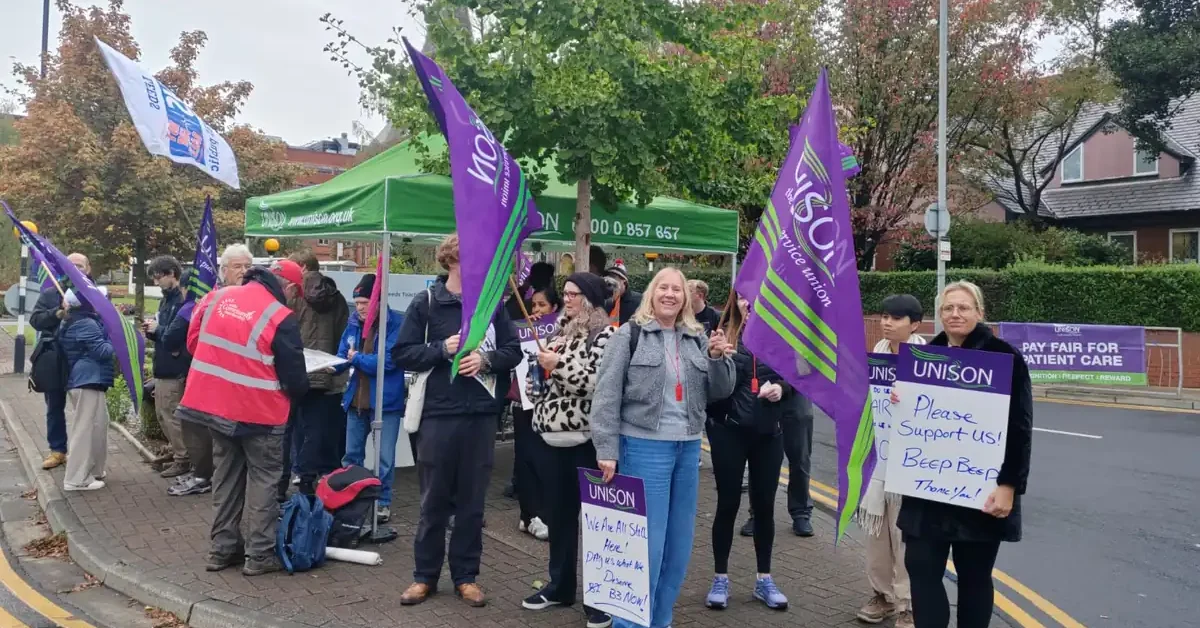
This relationship, however, is under strain. Unite General Secretary Sharon Graham has sharply criticised Labour’s retreat from its election promises on workers’ rights. In response, Unite funded individual MPs rather than the central party in 2024, while union donations overall have halved since 2019.
Unite’s conference voted to reopen the question of affiliation. Unison’s new general secretary Andrea Egan campaigned on similar promises, though she is a fan of Burnham for leader too.
A decision by Unite to disaffiliate would be historic. While it is unlikely that all unions would leave Labour, even partial disaffiliation would deepen the party’s crisis and further weaken its political authority. At the same time, such moves risk depoliticising the unions themselves unless they are coupled with a serious effort to build a new workers’ party.
After all, union leaders already possess substantial leverage within Labour. If they used it, they could destabilise Starmer’s leadership and challenge his strategy. In practice, they have shown little appetite for confrontation.
Lacking a political alternative and fearful of breaking with Labour entirely, the union bureaucracy has relied on passive tactics—freezing funding or issuing threats when pressure from members becomes intense. Without a project to build a new party, even disaffiliation would represent not militancy but retreat.
For a new working class party
As Workers Power has argued consistently, the unions’ political funds should not be used to prop up a party that serves the interests of capital. They should instead be mobilised to build a new working class party: one committed to socialism rather than austerity, and controlled by the rank and file rather than bureaucratic elites.
Labour’s contradictory character also shapes electoral tactics. Communists have critically supported Labour across elections, but each contest must be assessed concretely.
Protest votes rise during by-elections but usually fall when a general election raises the question of government. Sections of the most militant workers may break from Labour temporarily, only to return under different conditions, especially under a new, more popular leader. Labour’s organic ties to the trade unions ensure it can fall before a new leader and spell out of power see its brand of reformism recover. But the decisive question for the labour movement is not simply whether to break with Labour. It is whether this moment can be seized to construct a genuine alternative: a party rooted in working-class struggle, independent of the bosses, and won to a programme of revolutionary change.