Central government has cut £487M off education expenditure. The projected student intake for 1981 has been cut from 750,000 to 640,000. Local authorities have implemented cuts over and above those of central government in a bid to keep rates down and stretch their dwindling budget a bit further.
The cuts have meant no provision for nursery education, a partial freeze of school building programmes, bigger classes and fewer teachers. In higher education courses and facilities have been cut and redundancies have been threatened. For instance, more than 100 lecturers face the possibility of redundancy if the proposed merger of Newcastle Polytechnic and Northern Counties College of Education goes through. The number of education students will be reduced from 1,470 to 650.
Job vacancies in academic, technical, research and ancillary posts remain unfilled or have been cut. Birmingham University has cut teaching and research jobs by 10% — a loss of about 120 jobs.
Students in higher and further education are still fighting meagre grants, a discriminatory grants system, soaring hall fees and canteen prices and the more general effects of inflation on their grants. Meanwhile education standards are deteriorating because of the cuts.
Easy meat for the right
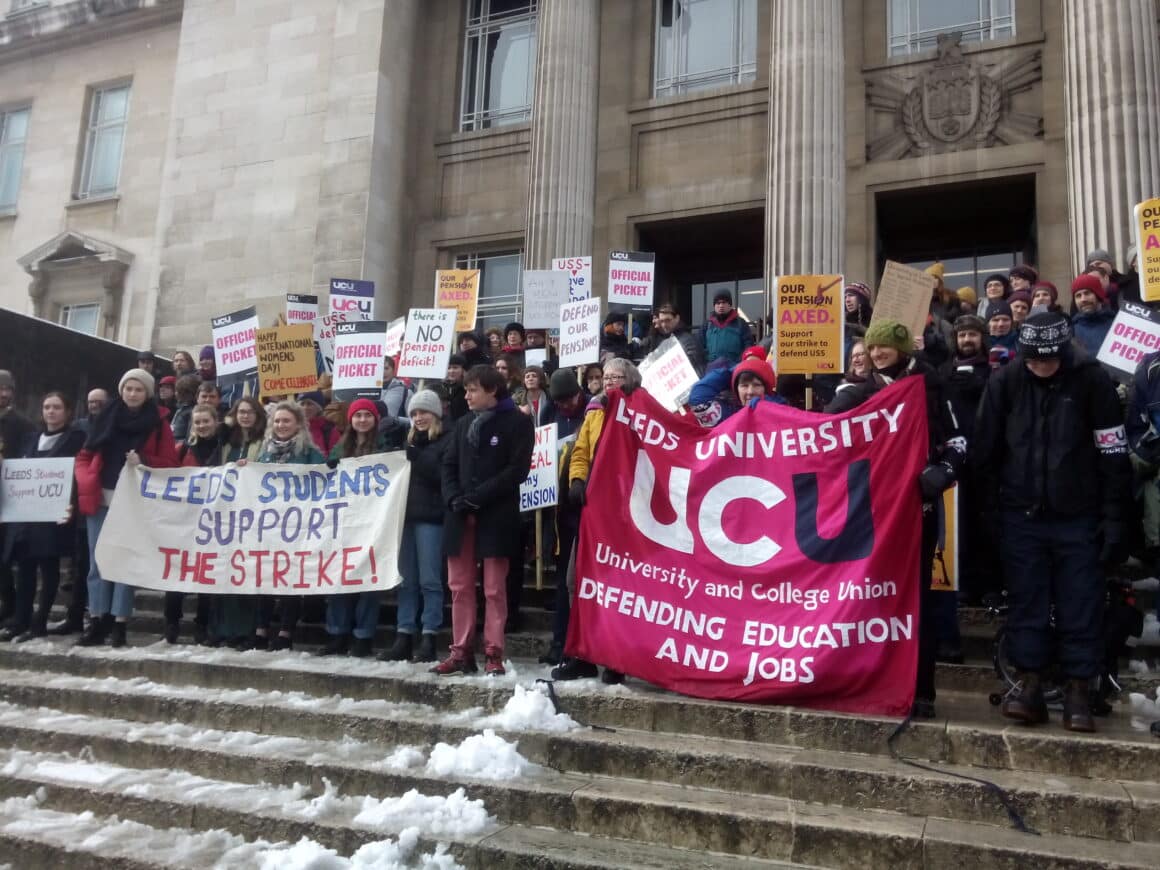
On December 3rd a series of local initiatives on the issue of the cuts and the grants system took place. In Glamorgan Colleges of Further Education, the Art College plus the Polytechnic of Wales organised sit-ins and a demonstration. Various inter-union committees against the cuts in education have been formed, a particularly successful one being formed in Avon. However what has characterised the response to the cuts has been its sectional and localised nature. For instance the NUS has completely opted out of any nationally co-ordinated campaign and settled for local days of action and tactics which can only spread demoralisation and disillusion amongst students. This is borne out by Aston University Students’ Union’s decision to leave NUS.
Obviously the students could not see the relevance of NUS and hence became easy meat for right-wing rhetoric, even though the right-wing within the student movements have no concrete programme of action against the cuts.
Politically the Broad Left NUS leadership’s response to the cuts has been to argue that cut-backs are a short-sighted response to the crisis and that if continued British capitalism will be unable to take advantage of any future boom, because of a lack of suitably qualified personnel. However, such an argument misses the main point: that workers and students should refuse to pay the cost of bailing out the bosses and their system. In fact, we fight to place the cost of the crisis on the shoulders of those who created it — the bosses.
A socialist answer
In this period of capitalist crisis when all fields of public expenditure are under attack there can be no talk of welfare or social priorities; all areas of social and welfare spending are important for workers and students. It can only be on this basis that any meaningful fight-back takes place. Students, teachers and workers in education must join forces with workers in both the public sector and private sector of the economy. The fight-back itself cannot be on a merely local basis. It must be co-ordinated at a national level.
We believe that such an alliance should campaign around the following demands for higher education:
- Restoration of all cuts and the expansion of education expenditure to ensure that higher education is a right for all — no cuts in student numbers.
- Freely available and adequate grants for all students — awards without means testing and no discriminatory awards.
- Immediate rise in grants to compensate for inflation and rising fees and rents.
- The fight for a sliding scale of grants based upon an NUS drawn-up cost of living index.
- Abolition of overseas student fees — against all attempts to limit overseas student numbers.
- A complete freeze on hall rents and canteen prices.
- All vacancies to be immediately filled — no to natural wastage. No to all redundancies.
All qualified teachers must be employed.
The only way that these demands will be secured is by militant action. The formation of a genuine united front to fight for these demands is the only way to solve the crisis facing the working class at the expense of the bosses. It will also aid the building of an effective, independent rank and file movement of all trade unionists.