
Jeremy Corbyn’s slate has won a clear majority on Your Party’s new Central Executive Committee. That is a setback or those who wanted the party built as a democratic, combative organisation from below, but it isn’t the end of the story.
More than 25,000 members voted. Grassroots Left has won a substantial minority on the CEC and has support among many of the members actually trying to build real party life in towns, cities and branches. The election result is a reflection of the bigger question hanging over the whole project: what sort of party is Your Party supposed to be?
For the leadership, the centre of gravity is parliament, elections and media profile. On that model, the party exists to run candidates, relay the line from the top and provide campaign labour when required. Members are expected to canvass and branches are structured as local election machines.
If that is the extent of Your Party’s ambition, then do we need it at all?
The Greens already occupy the same space: a broad left-liberal electoral formation with a large membership and an apparatus geared to fighting elections. A new party built on the same basis but with different marketing, would add very little. It would duplicate an existing model while throwing away the real political opening that exists.
The alternative is something different. If a new party is worth building, it has to be more than an electoral vehicle with a membership attached. It has to be a real working-class party: rooted in branches, active in the unions and workplaces, present in local struggles, and shaped by its members rather than managed over our heads. Its representatives should answer to the membership on the basis of a socialist programme.
That is the real division in the party. It is not “factionalism” in the pejorative sense. It is a fight over what the party is for.
Why this matters
Corbyn’s supporters say this is all just a row about internal process. It is not. The organisational question and the political question are inseparable.
A party without functioning branches, real democracy and pressure from below will not remain radical for long. It will adapt, and adapt quickly, to the pressures of parliament, the apparatus and the electoral cycle. If members are treated as an fan club, and local initiative as a nuisance that needs to be managed, the result will be another hollow shell: plenty of branding, very little political life.
That is why the fight for branches, accountability and democratic control is not secondary procedural side issues—they determine whether the membership can shape the direction of the party, or whether the party becomes something done to them from above.
The proof of this is that almost everything serious in Your Party so far has been a product of initiative from below. In the absence of any national infrastructure or resources, members have begun building their own: meetings, branch networks, regional coordination, delegate gatherings, local campaigns. That is where the real life of the party has been. That impulse should be backed, organised and generalised.
What now?
The wrong response to this result is to throw up our hands and write the whole thing off. The SWP has already announced its departure, the Socialist Party will follow, and the litter of Marxist sects will circle the wagons around their blackboards.
We don’t agree. The think the task is to politically equip and organise the struggle for a democratic, working class and socialist party against the top-down electoral machine that Karie Murphy and her office boys are trying to impose.
First, branches need to be built. Real party life does not begin when the centre grants permission. It begins when members meet, plan and act together. If the leadership tries to smother that development, the answer is more organisation from below, not less.
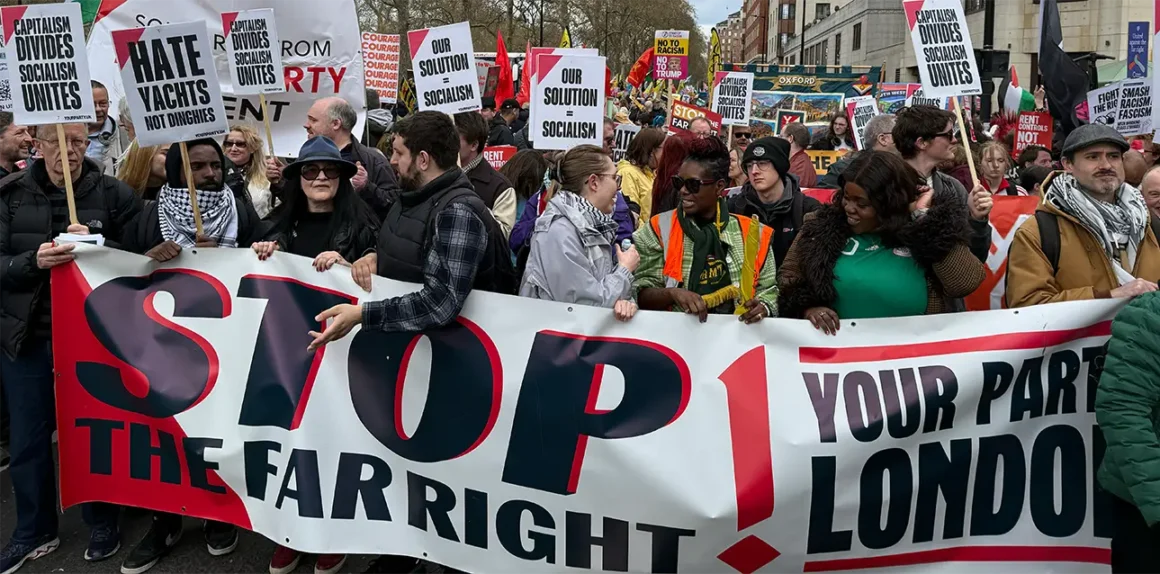
Second, the party has to prove in practice what kind of organisation it wants to be. If it appears only at election time, or exists mainly as press releases, and social media clips, it will fail. A working-class party has to be visible in the unions, in anti-racist mobilisation, in local campaigns, and in struggles over pay, housing, cuts and living standards. It has to give leadership and organisation to those fights, not simply express solidarity.
Third, the local elections. Standing candidates can help give confidence, profile and focus to local organisation. Your Party’s leadership is trying to obstruct the nomination of official Your Party candidates in favour of an alliance of non-party independents. The CEC should endorse candidates selected by local branches, provide resources, and help coordinate a national campaign.
The fight continues
Your Party will only be worth building if it becomes a real party of class struggle: democratic, socialist, rooted in branches, active in the unions and serious about working-class self-organisation.
The CEC result shows that party is still a party fighting to be born. One side is acting as midwife—and the other is trying to strangle it at birth. Now is not the time to leave the room.